If you want to convert an existing shelf warehouse to goods-to-person picking, you have fewer vendors to choose from than the usual top-10 lists suggest. Most systems need their own racks, a grid or a fixed installation. This overview sorts the providers by whether your existing shelving stays, whether the picker really works at a fixed station, and whether people and robots can work in the same area.
Three questions separate the providers
Goods-to-person means the goods come to the picker, not the other way round. Vendors sell systems under that label today that have little in common in construction or economics. For a warehouse with existing shelving, three questions decide which providers are relevant at all:
- Does your existing shelving stay? Or does the system need its own mobile racks, the vendor's high-bay rack, a grid or a shuttle installation?
- Does the picker work at a fixed station? Or does the picker keep walking the aisles while the robot only carries?
- Can people and robots work in the same area? Or is the robot area fenced off, so manual and automated picking run in separate zones?
The first question decides on rebuild and downtime, the second on walking and ergonomics, the third on whether you can switch over step by step and absorb peaks with extra staff in the same process. The comparison of AMR and fixed automation explains the system classes behind this in more detail.
Providers that work in existing shelving
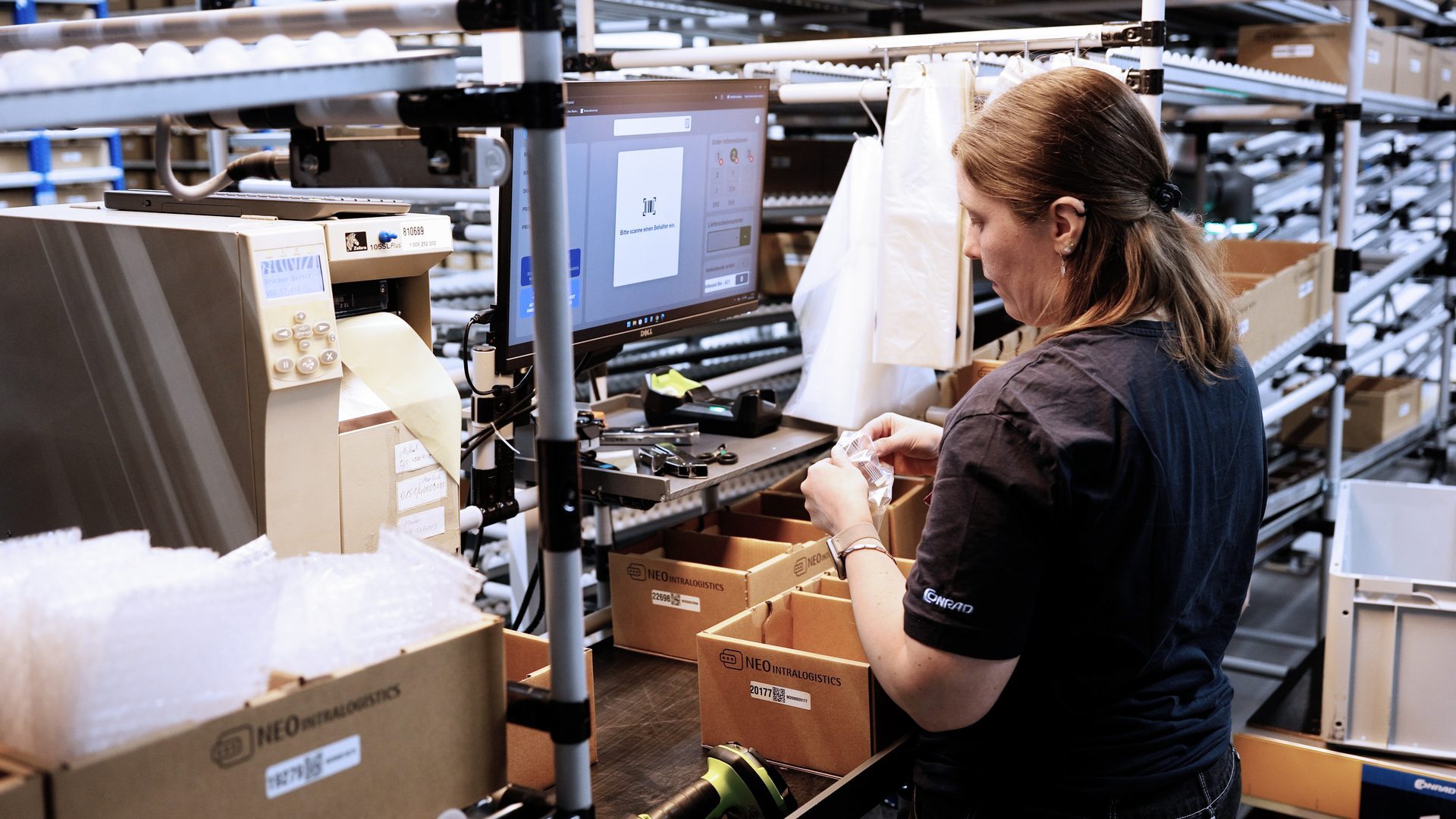
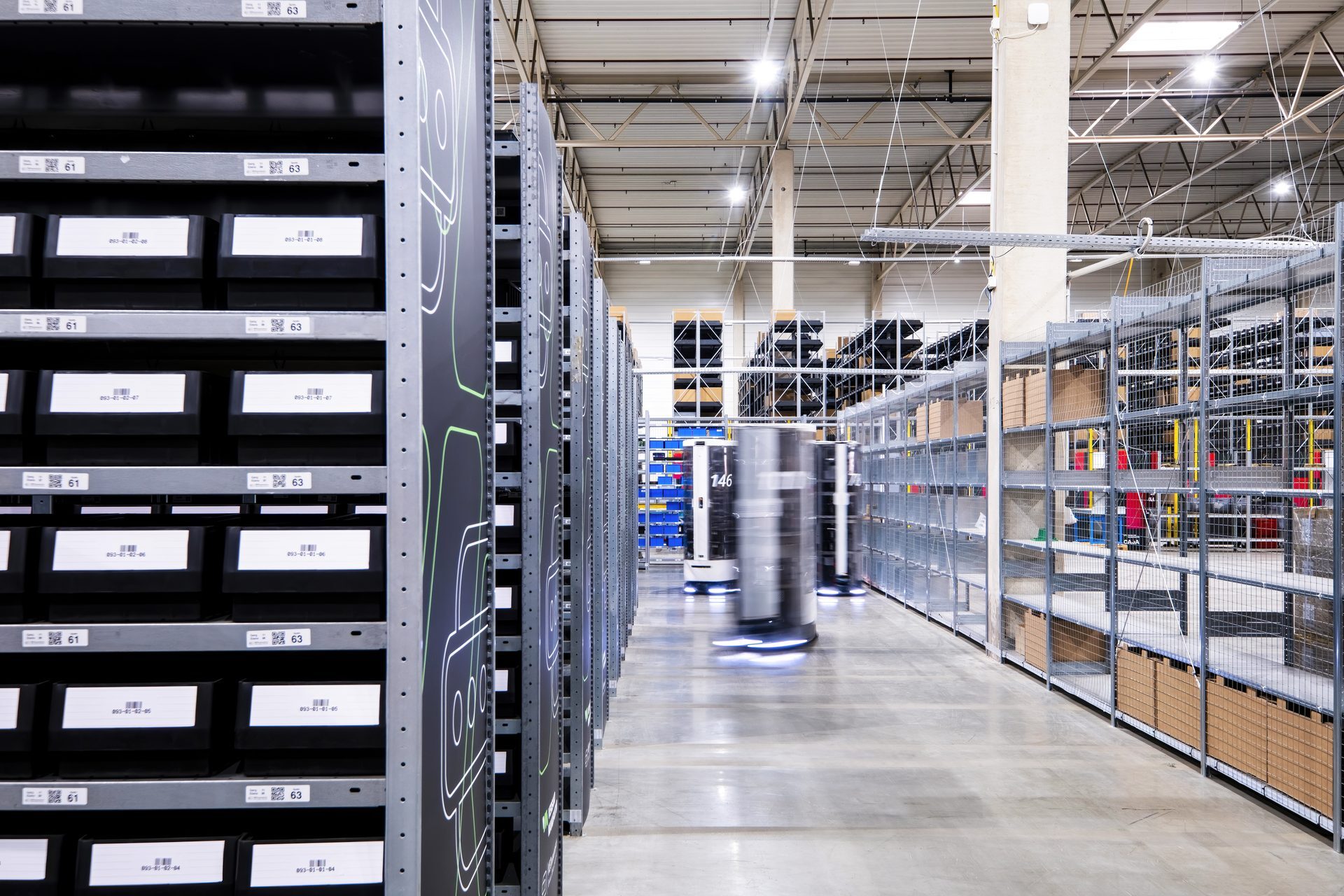
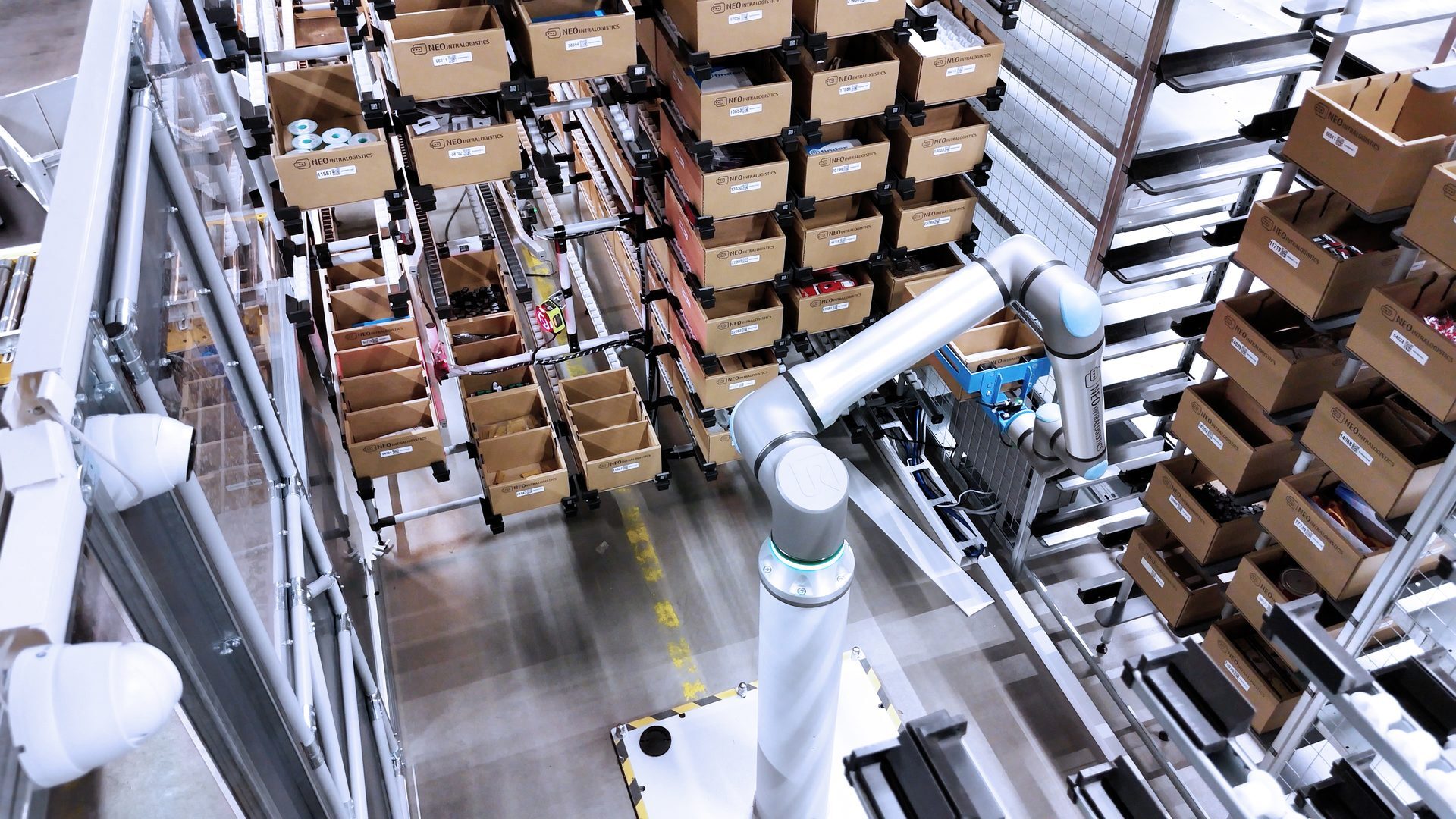
In this group, mobile robots take individual bins from your existing shelving and bring them to a fixed picking station. The shelving stays, the picker stands at the station. These are the main providers active in the DACH region:
| Provider | Existing shelving | Usable height | Business model |
|---|---|---|---|
| NEOintralogistics (NEO) | stays unchanged | up to 250 cm | Pay-per-pick |
| Caja Robotics (Fives) | standard shelving via rack adapter | up to 5.3 m | Purchase or lease |
| SSI Schäfer RackBot | largely | up to 11.5 m | Purchase |
| Brightpick Giraffe | partly, stronger in taller racking | up to 5.8 m | Purchase or robotics-as-a-service |
Competitor details based on public vendor information as of May 2026. Check them with each vendor directly, as products and terms change.
On height, Caja, RackBot and Brightpick lead: if you want to automate shelving above 2.5 meters, NEO is the wrong choice. On business model, NEO differs from the others: it bills per pick, with no upfront investment. In operation, pickers and robots work in the same aisle at the same shelving, so part of the warehouse keeps running manually while the other part is automated. How other systems handle this is best clarified directly with each vendor. How the warehouse retrofit works and what pay-per-pick includes is set out on those pages.
Providers with their own racking system
Two groups also use mobile robots and fixed stations, but require their own racking system. They replace your existing shelving or need their own floor space.
Bin robots in the vendor's high-bay rack. Exotec (Skypod) uses robots that drive and climb its own high-bay rack up to 12 meters. Density is high, but the rack is part of the system and is built new. That suits large volumes and new builds more than a running existing warehouse.
Shelf-to-person. Geek+, GreyOrange, Hörmann Intralogistics (Moving Racks) and SAFELOG (GT1) drive robots under mobile shelf units and bring the entire shelf to the station. The concept is mature and strong in greenfield sites. It does, however, need shelving the robot can drive under, usually the vendor's own, and a level floor with sufficient load capacity.
Robot assistance without a fixed station
Locus Robotics and comparable vendors replace the picking cart with a mobile robot that meets the picker at the shelf. The shelving stays unchanged, deployment is fast, and billing is usually robotics-as-a-service. The picker keeps walking, though: walking time falls, it does not disappear. Strictly speaking this is person-to-goods with robot assistance. The comparison of robotic and manual picking sets out how it differs from true goods-to-person.
Fixed installations: cube, shuttle and mini-load
General warehouse automation vendor lists usually feature the big names in fixed automation: AutoStore as cube storage (sold through integrators such as Element Logic and Swisslog), and shuttle systems and mini-load AS/RS from KNAPP, Dematic, Swisslog, Kardex and SSI Schäfer. They deliver the highest density and high throughput, but require a multi-million investment, cleared floor space and typically 12 to 36 months to go-live. Your shelving is replaced. Since 2026, AutoStore installations are also available on a rental basis through Element Logic; the construction phase stays the same.
Where these systems outperform a retrofit is covered in the comparisons with cube storage and shuttle systems.
Questions to ask every vendor
Vendor brochures look alike: autonomous robots, goods-to-person, cloud software, two to four times the productivity. These questions separate the offers:
- What happens to my existing shelving? Does it stay, get adapted or get replaced?
- Up to what height and bin weight does the system work? And what share of my range lies above that?
- May pickers keep picking manually in the automated area? Or is the area fenced off?
- What do I pay upfront, and what at half utilization? Purchase, lease, rental and pay-per-pick distribute the volume risk differently.
- How many weeks pass from decision to the first automated pick? Including WMS integration.
- Who provides the software between WMS and robots? The vendor itself, or an integrator whose system you maintain as well?
When NEO is not the right fit
NEO automates shelving up to 250 cm usable height, in aisles from 85 cm, with bins up to 380 × 270 × 140 mm and items up to 5 kg. We recommend it from 5,000 picks per day. If you want to automate taller racking, pick pallets, handle heavier or larger items, or run clearly lower volumes, another provider from this list, or manual picking, will serve you better.
Next step
Which group fits your warehouse depends on shelf height, product range and volume. In the Fit-Check we assess this against your numbers, and we tell you when a different approach fits better.