See NEO in action

AMR or Fixed Automation - Which Approach Fits Your Warehouse?

Before you choose a vendor, you choose a philosophy: fixed, infrastructure-bound automation or flexible mobile robots. Which class fits depends on building, budget, time, and volume - not on the datasheet.

Fixed systems - AS/RS, shuttle, cube-storage, conveyor - deliver maximum density and throughput, but demand multi-million investment, one to three years of lead time, and usually a new building. AMR work inside your existing warehouse, with no construction and no upfront investment. Which class fits depends on building, budget, time, and volume.

Flexible or fixed automation - the architecture decision that comes first

This page frames the two classes and routes you to the right architecture. If you already know you are evaluating a fixed system, the direct comparisons against the NEO retrofit sit further down.
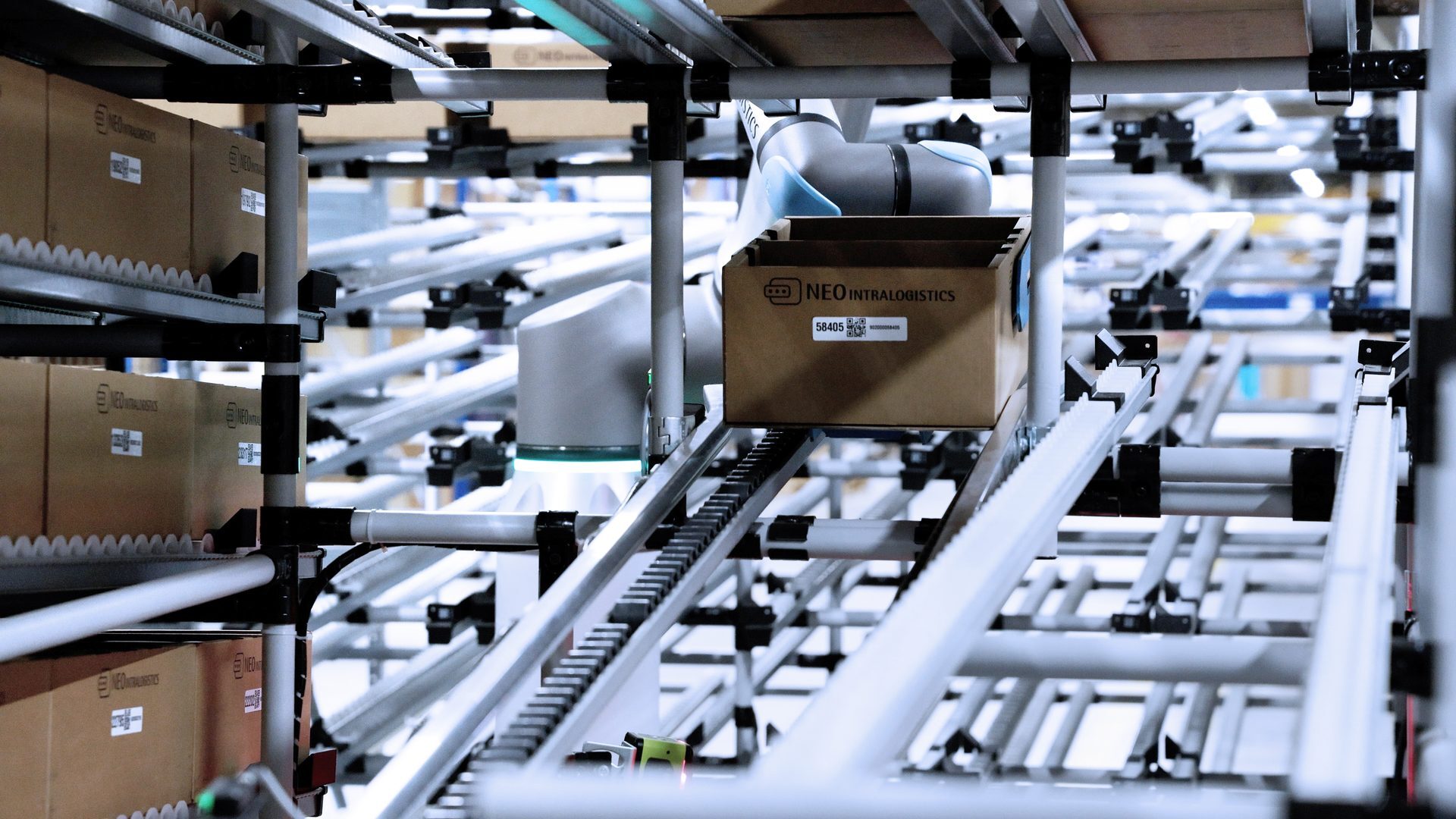
Bin on a roller conveyor - conveyor links fixed systems to pack and dispatch zones

Fixed automation - what counts as fixed

Fixed automation ties goods to built infrastructure. A few architectures dominate the market, and they share one logic: first the system is built, then goods flow through it.

An AS/RS crane system runs a rail-guided crane through narrow aisles between tall racking and hands bins to conveyors. Shuttle systems use multiple vehicles per level, connected by vertical lifts, with more throughput than a crane system and more moving parts. Cube-storage stacks bins without aisles in a grid; robots drive across the top and lift bins from above. Conveyor links these systems to pack and dispatch zones, but is the connective element rather than a standalone goods-to-person concept.

Different as they are in detail, these forms share two traits: each needs a built installation, and each fixes its capacity before the first pick.

Strengths and structural limits

Fixed systems win where floor space and throughput are scarce. They pay for it with capital, lead time, and a capacity that is set before the build.

Density, throughput, maturity

Fixed systems are strong where space is scarce and volume is high and steady. Cube-storage reaches the highest storage density per square meter because it works without aisles. Shuttle systems deliver the highest throughput when enough lifts feed the flow. Crane-based AS/RS have run for decades and are built mechanically for 15 to 20 years.

For new builds with a tall hall, predictable high volume, and a standardized bin range, fixed automation is often the more economical choice. When maximum density is the actual problem, the fixed system wins.

Capex, lead time, new build

The strengths carry a price, and it is structural, not negotiable. Fixed automation locks up capital on a scale that requires board-level sign-off in most mid-sized companies, frequently in the tens of millions. That approval process runs for months, sometimes longer than the installation itself.

Time to go-live runs 12 to 36 months for crane, shuttle, and cube-storage systems alike. Crane and shuttle usually require a new build or major conversion; cube-storage needs a fully cleared, load-bearing floor where the existing racking is dismantled first. A parallel switch during live operation is barely feasible.

The most underrated point is capacity planning. A fixed system's throughput is set before it is built. Size it for the average, and you break during peak. Size it for peak, and you pay eleven months a year for idle infrastructure. This either-or cannot be resolved inside a fixed architecture.
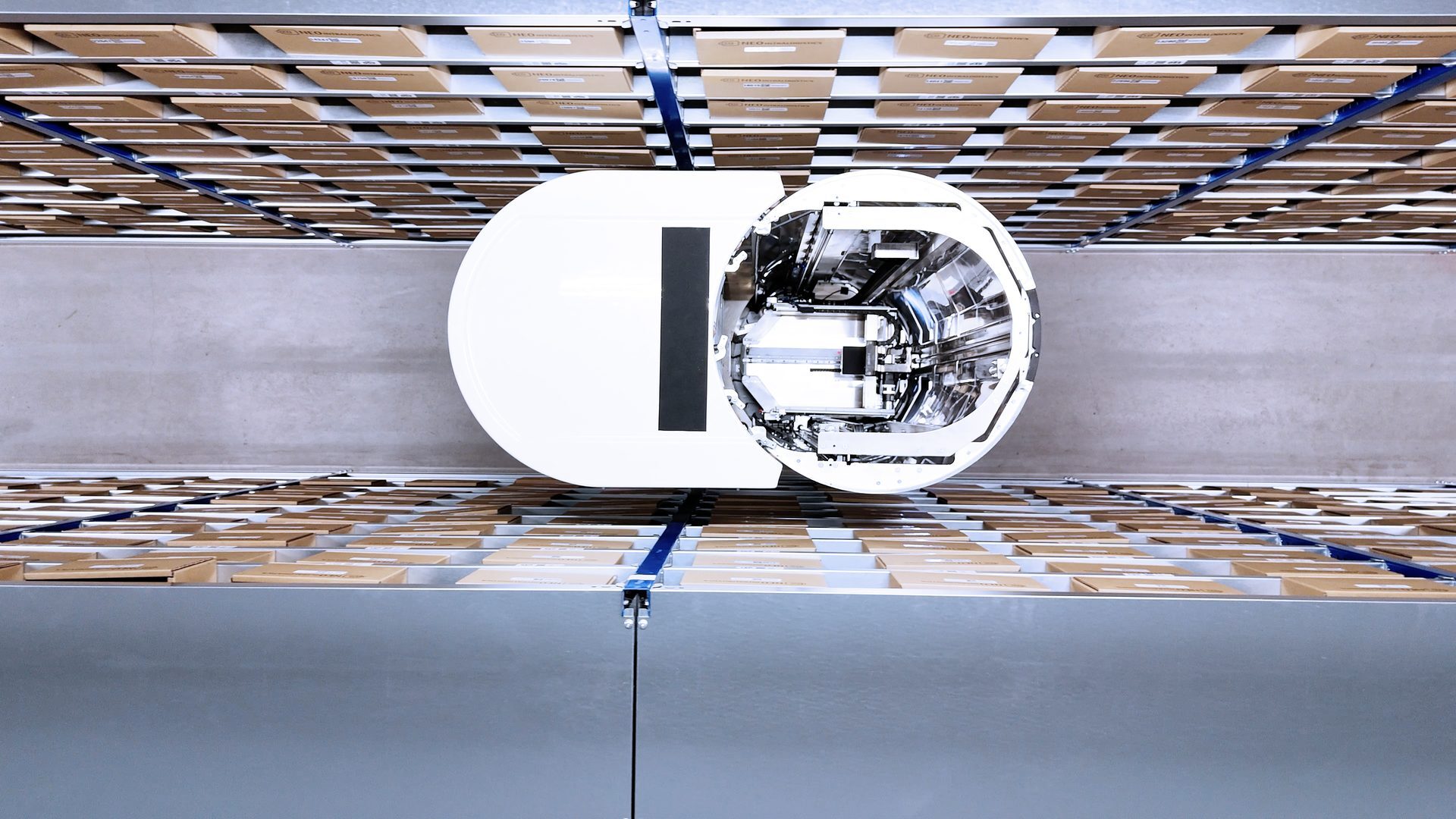
Autonomous mobile robot seen from above in the aisle - navigation without rails or installed guidance

AMR / flexible automation in the existing warehouse

AMR are the only architecture class that works without fixed infrastructure. That changes the entire deployment logic, not only the technology.

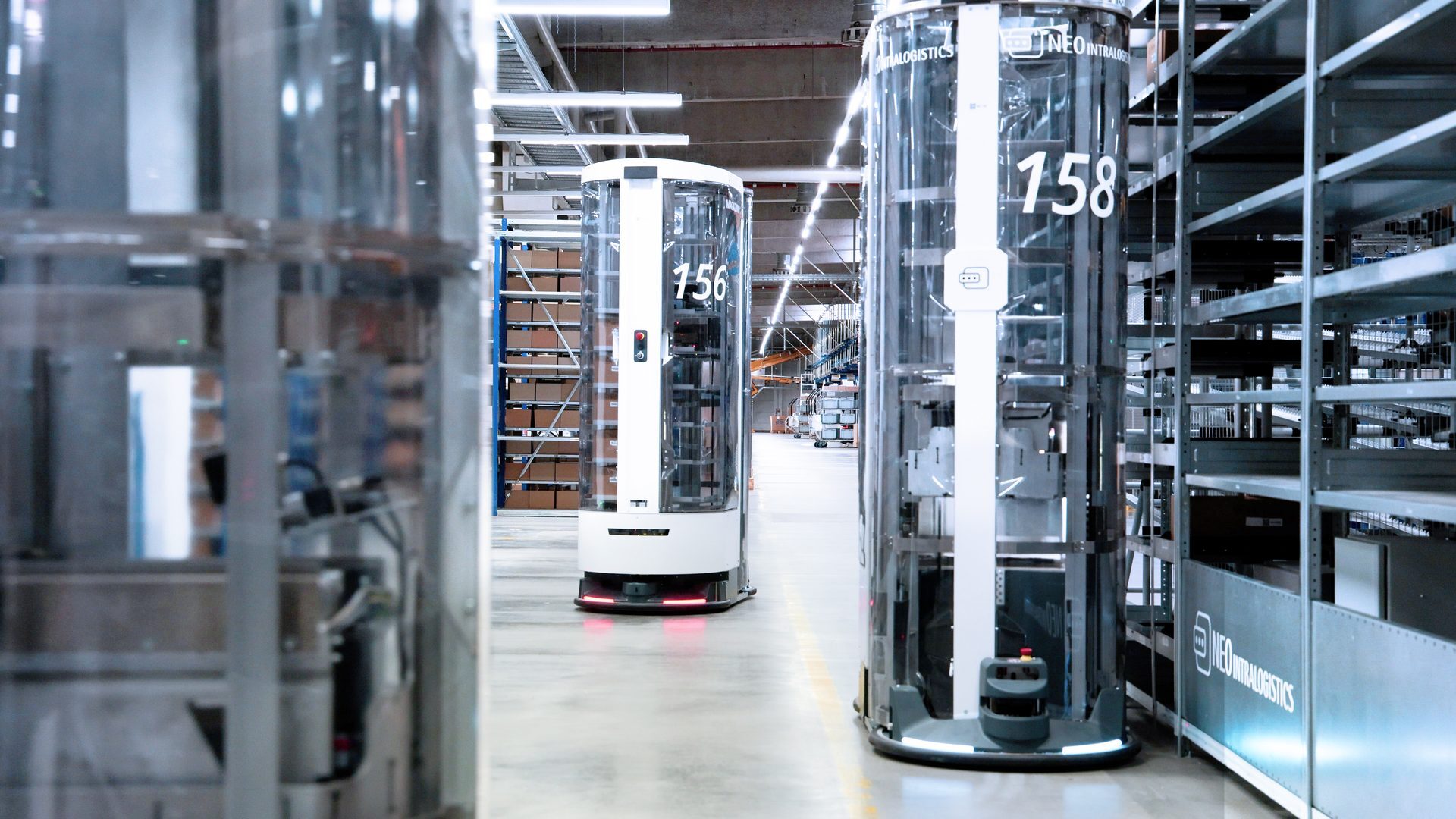
Autonomous mobile robots navigate the warehouse on their own, without rails and without installed guidance. Within the class, several approaches differ sharply in how much they automate (the AMR glossary entry covers the variants). The NEO approach is bin-to-person from existing shelving: a vertically reaching robot pulls individual bins straight from the shelf compartment and brings them to a stationary goods-to-person station, where the picker works without walking. The existing racking, the grown storage order, and the aisles stay untouched.
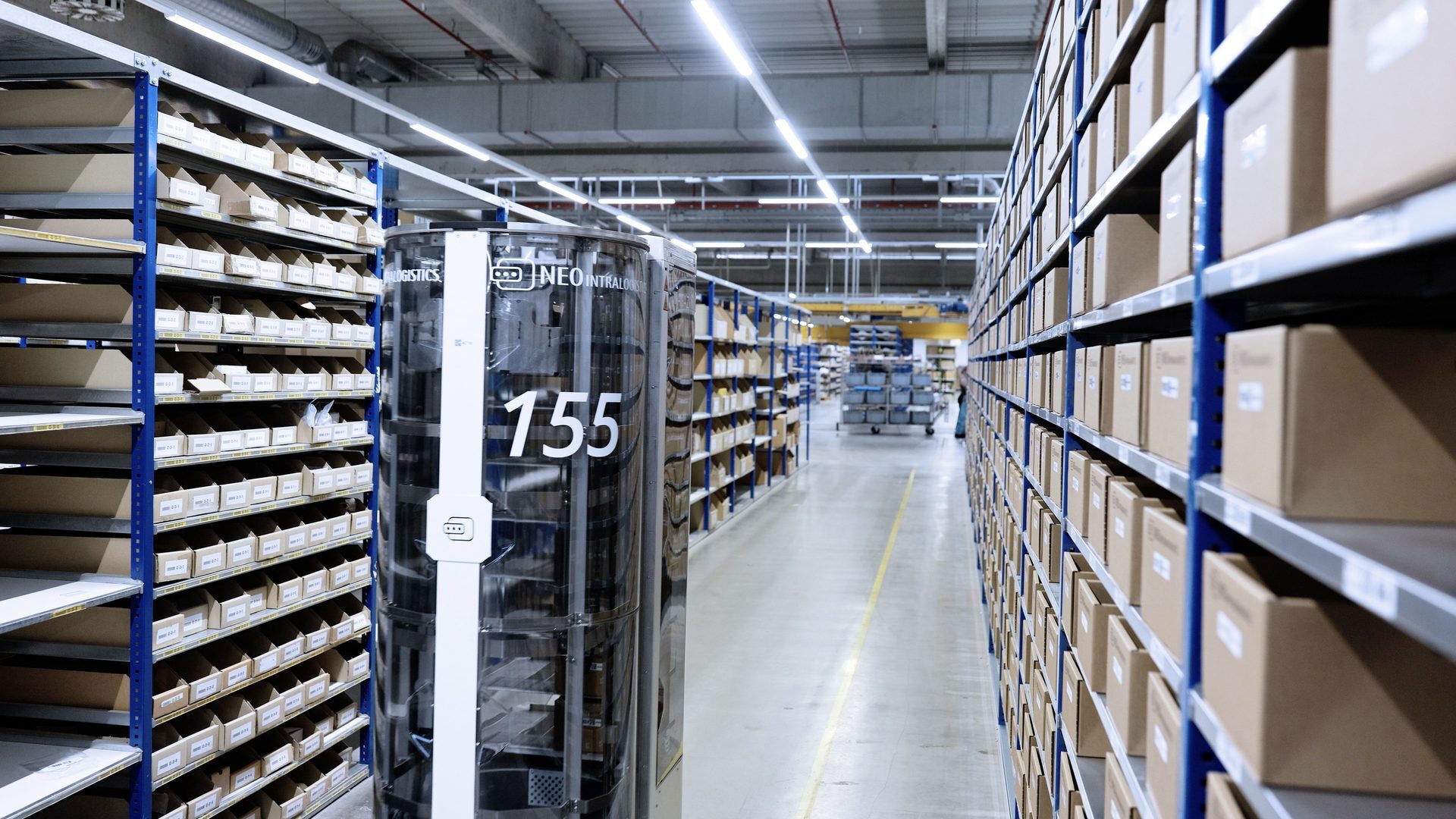
Automated and manual racking areas side by side - mixed operation from day one

What the retrofit makes possible

AMR integrate into the existing racking without heavy construction. No racking teardown, no floor rebuild, no structural prerequisite beyond adequate aisle width - NEO operates from aisles as narrow as 85 cm and shelf heights up to 250 cm. Deployment is measured in weeks, not months: NEO goes live in 6-8 weeks from contract to first automated pick, because no structural work is needed.

Because no plant is built, the mandatory upfront investment disappears. AMR are the only class broadly available as an operating-cost model - at NEO as pay-per-pick, a fee per order actually picked, with no capex. That also shortens the approval path, since an operating expense skips the multi-year investment procedure.

Two properties no fixed architecture can match to the same degree. First, mixed operation from day one: part of the warehouse runs automated while the rest stays manual, and the boundary shifts gradually without stopping operations. Second, scaling during live operation: robots added within days, no construction and no lead time, and just as easily removed when demand falls.
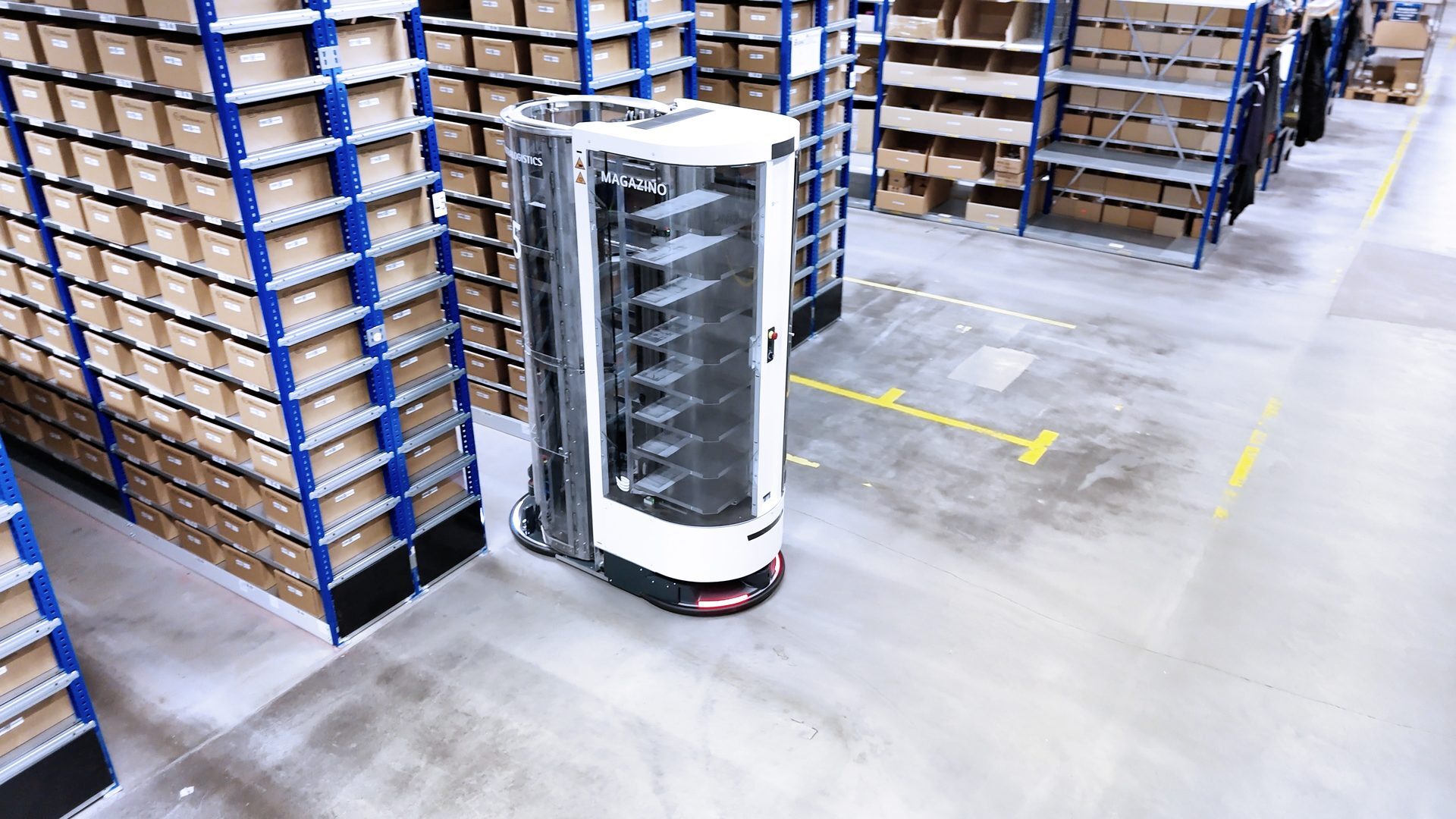
Single robot in an open aisle - AMR need aisles, which caps storage density

Where AMR hit their limits

AMR need aisles to navigate. Their storage density therefore sits below cube-storage, which needs no aisles, and below shuttle systems in very tall halls. If lack of space is the real problem, that is a genuine drawback - no messaging removes the aisles.

There is a ceiling at the top, too. From around 10,000 order lines per hour, mobile systems hit physical limits, because only a limited number of robots can work the same aisle at once. For steadily very high volumes in that range, shuttle systems or hybrid architectures are the better fit.
The direct comparison

AMR / flexible (NEO) Fixed automation (AS/RS / shuttle / cube / conveyor)
Infrastructure No fixed infrastructure, works in the existing racking Built installation - racking plus rails, grid, or lifts
Building Existing building, from 85 cm aisle width New build, cleared floor, or tall hall
Investment €0 upfront possible (pay-per-pick, opex) Multi-million, often tens of millions, capex
Time-to-value 6-8 weeks to go-live 12-36 months to go-live
Scaling Add robots, during operation, no structural limit Construction project or up to lift/grid limit
Storage density Medium - aisles remain necessary High to very high
Mixed operation Yes - from day one No (cube-storage: only partly)

AMR / flexible is the better choice for:

  • An existing warehouse in live operation
  • No capex budget, or none wanted
  • A near-term need measured in weeks
  • A leased or time-limited site
  • Fluctuating or seasonal volume
  • The wish to pilot before scaling

Fixed automation is the better choice for:

  • A new build or greenfield site
  • Stable and very high throughput
  • Maximum density on minimum floor
  • Standardized bins
  • A location secured for 10 to 15 years
  • A bearable capex

Suitability by condition

AMR / flexible Fixed automation
Existing warehouse in live operation ●●● first choice - structurally unsuitable
New build / greenfield ● possible with constraints ●●● first choice
No capex budget (opex required) ●●● first choice ● possible with constraints
Go-live within a few weeks ●●● first choice - structurally unsuitable
Maximum density on minimum floor ● possible with constraints ●●● first choice
Very high, steady throughput ●● suitable ●●● first choice
Fluctuating / seasonal volume ●●● first choice ●● suitable
Mixed operation during live running ●●● first choice ● possible with constraints

If fixed automation is the answer - which one?

Once the decision goes to a fixed form, the next question is which one. The forms differ in density, throughput, and investment logic - two have their own comparison against the NEO retrofit.

Shuttle - vehicles on rails plus lifts

Multiple shuttles per level, more modular and faster than a crane system, but more complex in maintenance and lift capacity.

NEO vs. shuttle systems

Cube-storage - robots on the grid

Highest storage density without aisles, suited to new-build projects with standard bins and a clear ABC pattern.

NEO vs. cube-based AS/RS

Crane-based AS/RS - in the aisle

One crane per aisle, built for tall halls and steady throughput. Highest maturity, lowest flexibility - the reference point the two comparisons above measure against.

Two robots in an existing warehouse - the fleet grows during live operation

The hybrid path - AMR as the entry before fixed investment

Fixed and flexible are not mutually exclusive. In practice, companies use AMR as a fast entry in the existing building and invest in fixed automation later, once volume and location certainty justify it.

The advantage of that order lies in the data. An AMR retrofit ties up no capital and builds operational experience within weeks. The pay-per-pick data from live operation give a solid basis for a later investment decision - real picks instead of projections. Starting with AMR lowers the risk: no purpose-built hall, no multi-million budget, and automated picking all the same.

For the seasonal peak, NEO resolves the capacity dilemma of fixed systems through collaborative picking: robots and human pickers work the same picking cycle. The fleet is sized for the base load and topped up with additional pickers during peak season, working right alongside the robots - no idle capacity out of season, no fixed peak sizing.
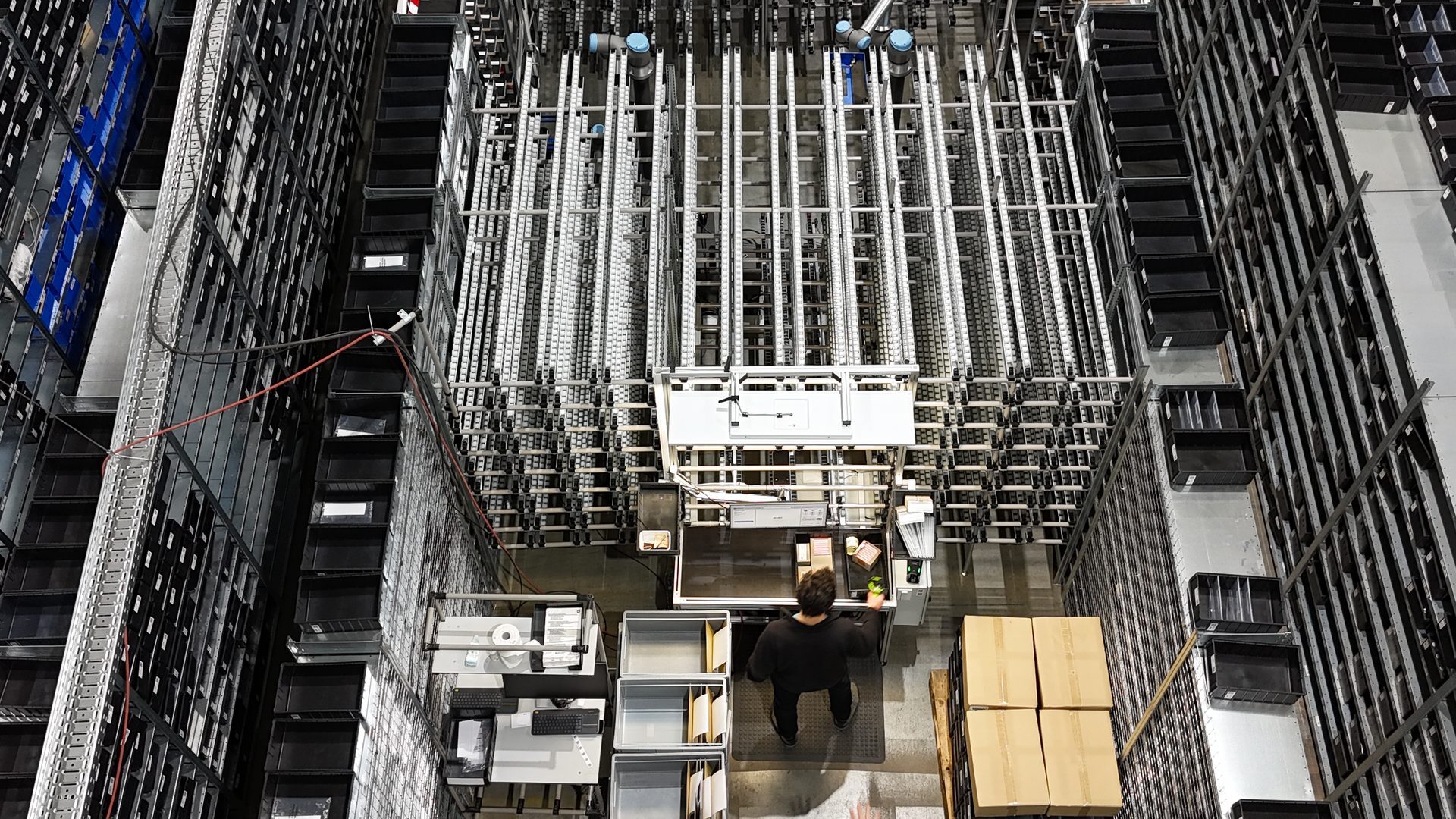
Goods-to-person station from above - picker in the centre, bin buffer all around

NEO in your existing shelving

NEO brings true goods-to-person into your existing shelf-based warehouse - no new building, no upfront investment. The robot fleet pulls bins from the shelf, the goods-to-person station presents them to the picker without walking, and NEO:os connects the whole to your existing WMS through standard interfaces. The platform overview shows how software, fleet, and station work together; the warehouse retrofit page covers the physical setup.

Frequently asked questions

What is the difference between AMR and fixed automation?

Not whether robots are involved - both classes use robots. It is the infrastructure. Fixed automation (AS/RS, shuttle, cube-storage) ties goods to a built plant with rails, lifts, or a grid. AMR navigate the existing warehouse freely, with no fixed installation. Every other difference - investment, lead time, construction, flexibility - follows from that.

Is fixed automation always more capable than AMR?

No. On storage density and peak throughput, fixed systems lead, especially cube-storage and shuttle in tall halls. On flexibility, deployment time, and capital commitment, the AMR class leads. “More capable” depends on which resource is scarce in your warehouse - floor and throughput, or time and budget.

Can I add AMR to my existing warehouse without rebuilding?

Yes. AMR are the only architecture class that works in the existing racking without structural change. NEO reuses your current shelving; it needs adequate aisle width (from 85 cm), a driveable floor, and a connection to your WMS. The items in the automated area are repacked into NEO bins; this happens area by area during live operation.

How much faster is AMR to deploy than fixed automation?

Substantially. NEO goes from decision to first automated pick in 6-8 weeks. A crane, shuttle, or cube system needs 12 to 36 months - plus the internal approval process for a multi-million investment, which costs its own months.

At what volume does fixed automation pay off?

At stable, very high throughput with a maximum density requirement. From around 10,000 order lines per hour, mobile systems hit physical limits; at that scale, with a location secured for many years, a fixed plant plays to its strength. For existing warehouses with fluctuating or moderate volume, the AMR retrofit is usually the more economical choice.

Can I start with AMR and add fixed automation later?

Yes, and it is a proven sequence. AMR ties up no capital and generates real pick data from day-to-day operation. That data turns a later decision on a fixed plant into something grounded in measured demand rather than projections. Both layers can run under the same WMS, so the transition adds a system instead of replacing one.

How does AMR handle seasonal peaks?

Through collaborative picking. Instead of fixing capacity for peak in advance like a built plant, NEO sizes the robot fleet for the base load and tops it up with additional pickers during peak season, working right alongside the robots. Operational capacity tracks real demand, with no capital locked into infrastructure that sits idle most of the year.

Results at a glance

6-8weeks
Time-to-value with NEO
0
Upfront investment (pay-per-pick)
12-36months
Lead time for fixed automation
1station
Minimum start

Fixed automation or an AMR retrofit - which fits your warehouse?

Not sure which class fits your building? In a Fit-Check we assess your infrastructure, item spectrum, and investment framework - honestly and vendor-independently. If a fixed form fits better, we say so.

See NEO in action