See NEO in action

Warehouse Automation Without CapEx - You Only Pay for What You Pick

NEO automates your existing shelf-based warehouse on a pay-per-pick basis: you pay a fixed price per pick – no upfront investment, no lease, no fixed hardware costs. Robots, software, maintenance, and support are all included in the pick price. Your warehouse gets more productive. Your balance sheet stays clean.

Pay-per-pick from NEOintralogistics converts warehouse automation from a capital expenditure into an operating cost. Companies pay per completed pick - including the NEO:runner fleet (autonomous mobile robots), picking station (goods-to-person workstation), NEO:os software, and full service. There is no upfront investment, no lease agreement, and no asset on the balance sheet. The solution goes live in 6-8 weeks.

What Is Pay-per-Pick?

Pay-per-pick is an operating-cost model for warehouse automation. Instead of buying or leasing robots, software, and infrastructure, you pay a fixed amount per completed pick.

1

Assessment

NEO evaluates your warehouse, SKU profile, and picking volume.

2

Installation

We integrate our NEO:runner fleet and picking station into your existing shelving - no reconstruction, no downtime. Go-live in 6-8 weeks.

3

Operation

You pick. We count. You pay only for what gets picked.

4

Scaling

Volume goes up? We scale the fleet. Volume goes down? Your costs go down with it.

The result: automation becomes a variable operating expense (OpEx) - no asset on the balance sheet, no depreciation schedule, no tied-up capital.

Pay-per-Pick: Impact in Numbers

0€
upfront investment
70%
less picking labor
2-3×
storage capacity
6-8weeks
to go-live

What’s Included in the Price?

The pay-per-pick price is all-inclusive. You do not need a separate budget for hardware, software, or maintenance.

NEO:runner Fleet and NEO:pickstation

The NEO:runner fleet (autonomous mobile robots) and the picking station (goods-to-person workstation) with robot arm are included in the pick price - including installation and commissioning.

NEO:os Software

Orchestration, WMS integration, dashboard, and all software updates are included. No separate license agreement needed.

Maintenance, Support, and Scaling

Hardware maintenance, repair, remote and on-site support, and additional robots as volume grows - all included in the pick price.

What’s not included: Your existing shelving system, warehouse floor space, network infrastructure, and WMS licenses remain your responsibility. NEO integrates into your existing infrastructure - we don’t replace it.

ComponentIncluded
NEO:runner fleet (AMR)Yes
NEO:pickstation (goods-to-person workstation)Yes
NEO:os software platform (orchestration, WMS integration, dashboard)Yes
Installation and commissioningYes
Maintenance and repair - hardware and softwareYes
Software updates and new featuresYes
Support - remote and on-siteYes
Scaling - additional robots as volume growsYes

What’s not included: Your existing shelving system, warehouse floor space, network infrastructure, and WMS licenses remain your responsibility. NEO integrates into your existing infrastructure - we don’t replace it.

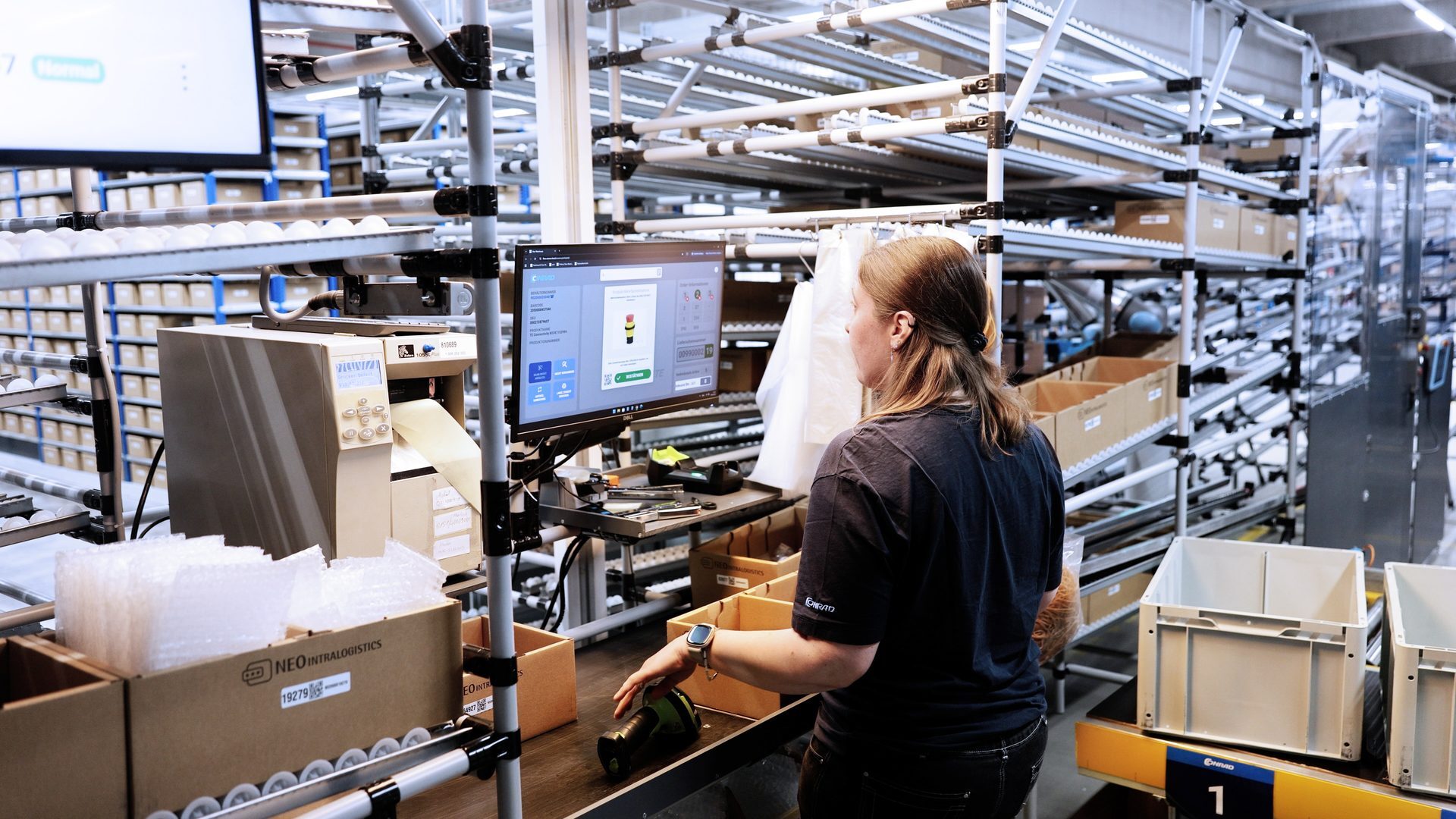
Operator at picking workstation - collaborative picking with AMR fleet, economically enabled by pay-per-pick

Pay-per-Pick Makes Collaborative Picking Economically Viable

Pay-per-pick isn’t just a convenient cost model - it’s the economic precondition that makes collaborative picking (robots and human pickers in the same picking cycle) actually work in practice.

The dilemma of conventional warehouse automation: the system is built once, locking capacity in for years. Size it for peak demand and you depreciate idle capacity eleven months a year. Size it for average and you break during peak season.

With NEO and pay-per-pick, the math works differently:

  • You size the robot fleet for average load - and you only pay for picks the robots actually perform.
  • During peak season, you add human pickers alongside the robots - more picks per day, pay-per-pick scales proportionally with volume.
  • Off-peak, volume drops, costs drop - no depreciation on hardware that sits idle.

A CapEx model would penalize this flexibility: you’d have bought hardware that’s either too much or too little for ten months out of twelve. Pay-per-pick ties cost directly to performance - the key that makes humans + robots in the same warehouse economically possible without you carrying the volume risk.
Pay-per-Pick vs. CapEx vs. Leasing: Comparison

Pay-per-Pick (NEO) CapEx (traditional AS/RS, mini-load)
Upfront investment €0 Multi-million investment, often tens of millions (Leasing: €0 + deposit)
Balance sheet impact OpEx - no capitalization Fixed asset + depreciation (Leasing: depends on lease type, on/off-balance)
Cost when volume drops Decreases proportionally Stays fixed (Leasing: fixed payment)
Cost when volume grows Increases proportionally Capacity ceiling → new investment (Leasing: new contract)
Peak capacity (collaborative picking) Robots + human pickers in the same picking cycle - add people seasonally without buying hardware Built-in fixed capacity - seasonal expansion requires additional hardware or downtime (Leasing: same constraint, plus contract term)
Implementation time 6-8 weeks 12-36 months (Leasing: 12-36 months + procurement)
Maintenance and support Included Separate service contract (Leasing: also separate)
Technology risk With NEO - you always use current tech With you - depreciation over 10+ years (Leasing: shared risk)
Flexibility High - scalable, terminable Low - tied to infrastructure (Leasing: medium - tied to contract term)
Best suited for Variable volumes, 3PL, mid-market Stable high-volume sites (Leasing: companies with credit lines)

Budget, Procurement, Volume: the Questions Before Sign-Off

Pay-per-pick takes the investment out of the project. The questions controlling and procurement ask before they approve it remain. Here are the five most common, each with a short answer.

How do you budget for picking without an investment line?

The per-pick price runs as operating expense through the same budget line as today’s picking wages and temporary labor. The figure to compare it with is your current fully loaded cost per pick: direct wage plus shift premiums, team leadership, temporary labor at peak, turnover, onboarding and error costs. The picking cost calculator works it out from five inputs. What gets approved is usually an operating budget rather than a capital request.

What if procurement has no template for usage-based contracts?

The contract sets out the scope of service, the price per pick and the term. NEO remains the owner of robots and station. If you report under IFRS, clarify how a contract with a minimum term is classified with your auditor. How operations, IT and finance reach a joint decision is covered in Building the Warehouse Automation Business Case.

From what volume does pay-per-pick pay off?

We recommend it from 5,000 picks per day. Below that, manual picking often remains the more economical choice, as the comparison of robotic and manual picking shows. The system ceiling is 100,000 picks per day. The minimum contract term is set in the quote and depends on the project scope.

What happens if volume drops or rises in peak season?

If volume drops, costs drop with it, because only picking actually performed is billed. If it rises, NEO adds robots to the fleet, or additional pickers work alongside them in the same process through collaborative picking. A fixed installation is sized once: for the peak, which leaves capacity idle for the rest of the year, or for the average, which falls short in peak season.

When is buying the better choice?

If you run at constant full load for years, a variable model costs more in total than a purchase, because the per-pick price includes the vendor carrying the risk. For warehouses with stable utilization over seven years or more, buying remains the lowest cost per unit. With seasonality, growth or uncertain multi-year planning, the picture reverses. The trade-off in detail is in Warehouse Automation Cost: What Mid-Size Companies Pay.

What a Pick Costs You Today

Work it out yourself. The picking cost calculator adds to your direct wage the items that rarely make it into the calculation: shift premiums, a share of team leadership, temporary labour in season, sickness and turnover, onboarding, pick errors and overtime. The result is your all-in cost per order line.

It takes five inputs: picks on a normal day, number of pickers, fully loaded cost per full-time equivalent and year, working days and shift pattern. Any cost block you do not carry can be switched off.

Next to it stands what the same volume would cost through NEO, with the price per order line and the people at the picking stations. No sign-up, and the result can be copied and passed on.

Open the picking cost calculator

Would you rather walk through the numbers together? Book a Fit-Check.

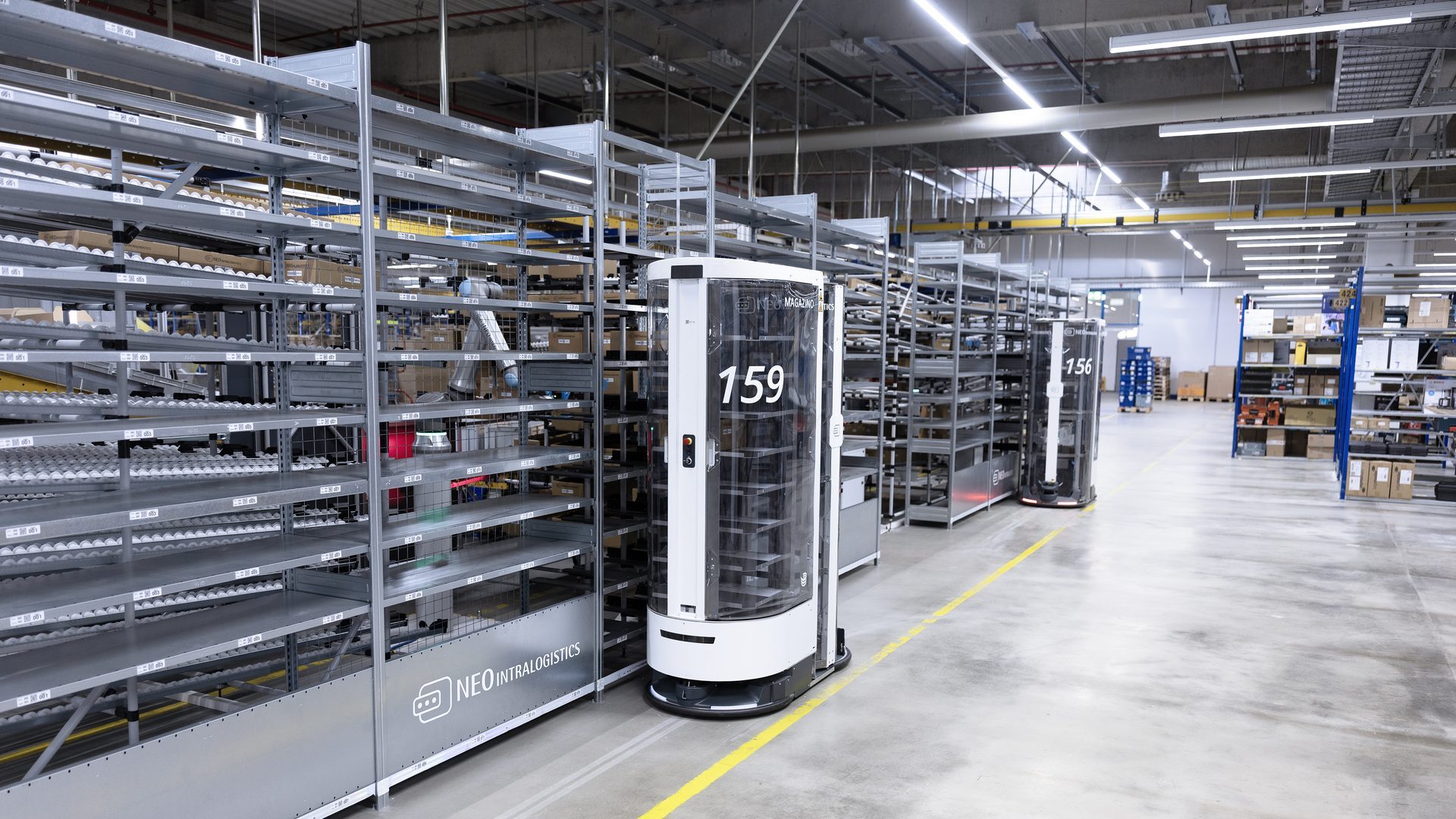
NEO:runner fleet in shelf warehouse - scalable pay-per-pick model

Who Benefits from Pay-per-Pick?

Pay-per-pick is ideal for:

  • 3PL operators with fluctuating client volumes - costs adjust automatically. Learn more about the 3PL use case
  • Mid-market companies that cannot justify a seven-figure investment in warehouse automation
  • Companies with seasonal fluctuations - you pay less in the off-season
  • CFOs and procurement teams that prefer OpEx over CapEx and want to minimize tied-up capital
  • Sites with existing shelf-based racking - no infrastructure investment needed. How the retrofit works

Not the best fit for:

  • Ultra-high-volume sites with >100,000 picks/day where a fully automated AS/RS is more economical
  • Companies that require ownership of hardware assets (e.g., for regulatory reasons)
  • Warehouses handling exclusively pallets (NEO automates shelf-based storage, not pallet warehouses)

References

Versandmanufaktur / GLS: Automated picking in an existing shelf-based warehouse - live in under 8 weeks. → Read the case study

Versandmanufaktur GmbH (GLS Group)

Conrad Electronic: Existing warehouse automated with zero reconstruction and zero downtime. → Read the case study

Conrad Electronic SE

FAQ

What is a pay-per-pick model?

A pay-per-pick model means you do not pay a purchase price or a lease payment for warehouse automation. Instead, you pay a fixed amount for every pick the robots perform in your warehouse. All costs for hardware, software, maintenance, and support are included in this per-pick price.

How does pay-per-pick differ from leasing?

With leasing, you pay a fixed monthly rate - regardless of how much you pick. Pay-per-pick is volume-dependent: fewer picks = lower costs. Additionally, pay-per-pick includes maintenance, support, and software updates, while leasing typically only covers hardware financing.

Can you rent picking robots?

Yes, but “renting” covers three different models in this market. With rental or robotics-as-a-service you usually pay a monthly fee per robot, often with a minimum term and sometimes tied to performance metrics. With leasing you finance an asset through a fixed payment. With pay-per-pick you pay a price per pick, and robots, station, software and maintenance are included. NEO bills exclusively on pay-per-pick.

What does a single pick cost?

The per-pick price depends on your volume, SKU profile, and warehouse layout. There is no list price - we calculate individually based on your actual requirements. Request a custom quote.

Is there a minimum contract term?

Yes. The specific term is determined during the quoting phase and depends on the project scope. Within the contract term, you benefit from a fixed per-pick price.

What’s included in the pay-per-pick price?

Everything you need for automated picking: the NEO:runner fleet (autonomous mobile robots), the picking station (goods-to-person workstation), the NEO:os software platform, installation, maintenance, repair, software updates, and support. Your existing shelving system and WMS remain your responsibility.

Pay-per-pick calculated on your pick volumes

Find out in a 30-minute call how pay-per-pick works in your warehouse - with a concrete cost estimate based on your data. Or start with an overview of the NEO platform.

See NEO in action