Automate E-Commerce Fulfillment in Your Existing Warehouse
E-commerce fulfillment runs on flexibility: wide assortments, fluctuating daily volumes, seasonal peaks – and at the same time, pressure on delivery speed and labor cost efficiency keeps growing. NEO automates your existing shelf-based warehouse without reconstruction, without heavy upfront investment, and with a pricing model that scales with your volume.
NEOintralogistics automates e-commerce fulfillment warehouses using existing shelf racking on a pay-per-pick basis. AMR robots bring bins to a goods-to-person station – no reconstruction, no heavy investment. Costs are per pick and scale with volume. Go-live in 6-8 weeks. Operations reduce picking labor by up to 70% and are ready for the next seasonal peak.
The E-Commerce Fulfillment Challenge
Seasonal peaks
Black Friday, Christmas, flash sales – daily volumes can multiply within hours. Traditional automation is dimensioned for average throughput, not spikes.
Wide SKU range
From fast movers to long-tail items – a typical e-commerce assortment spans thousands of SKUs with very different pick frequencies. The system has to handle both.
Delivery pressure: Same-day & Next-day
Consumers expect delivery commitments on the day they order. Delays in picking cause cancellations and negative reviews that directly affect conversion rates.
Dependency on temp labor
Peak-season staffing surges sharply in e-commerce fulfillment. Temp workers are hard to find, expensive, and require training time - which there is none of during peak.
Existing infrastructure
Most fulfillment operations run in leased warehouses with existing shelf racking. A new-build or system overhaul would mean warehouse downtime – while orders keep flowing.
The result: many e-commerce operations invest in peak headcount rather than automation – and stay permanently in a cycle of recruiting, training, and quality issues.
Why NEO for E-Commerce Fulfillment?
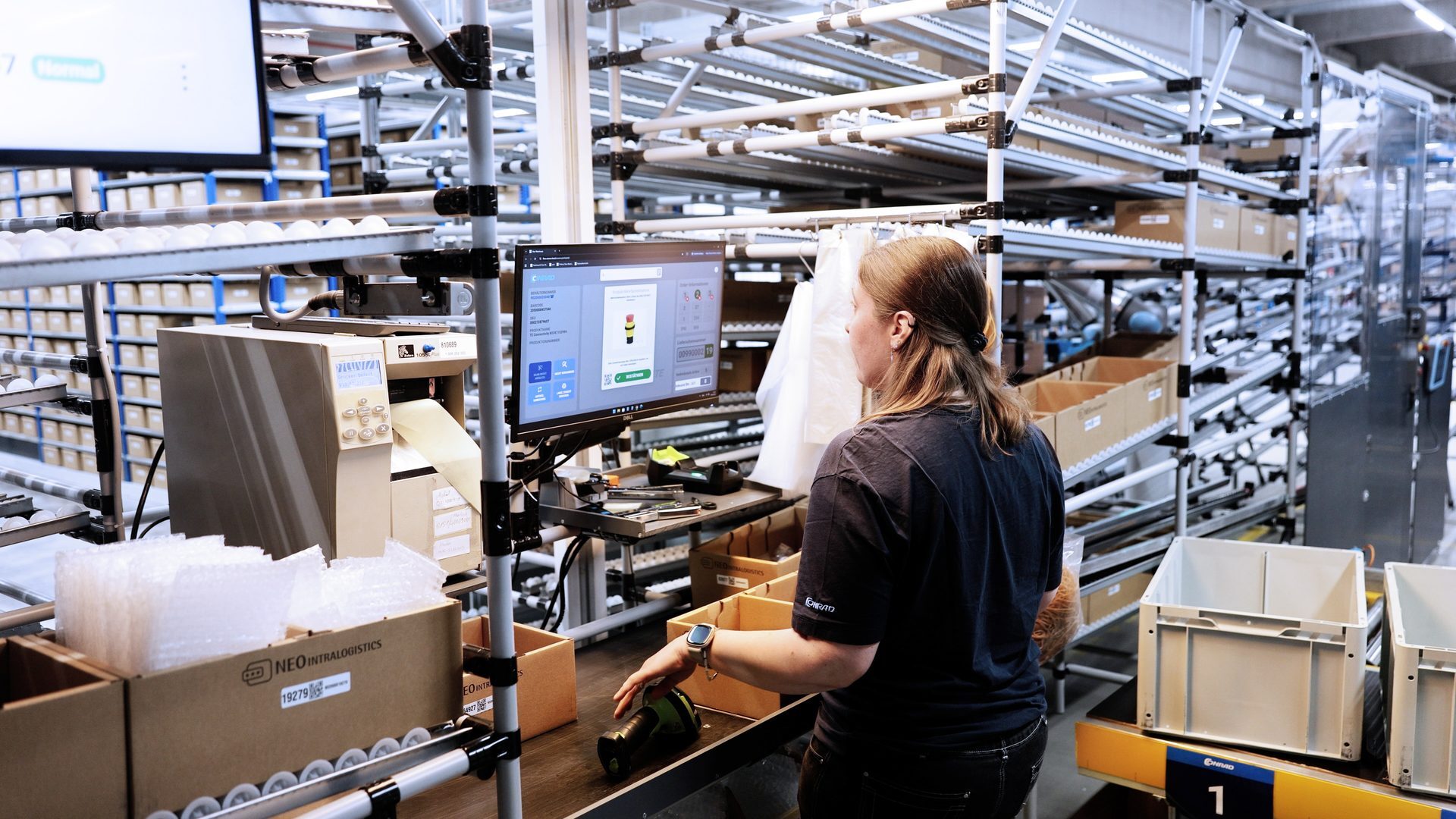
NEO is not a solution for greenfield projects with million-euro budgets either. NEO is built for operations that work with what they have: existing shelf racking, ongoing operations, and limited time until the next peak.
Pay-per-pick instead of CapEx: You pay per pick – not per robot, not per month. During peak season, your automation costs rise proportionally with volume. During off-season, they fall just as quickly. No fixed cost block, no depreciation risk. Learn more about pay-per-pick
Go-live before your next peak: From decision to first automated pick: 6-8 weeks. That is decisive for e-commerce operations with a concrete peak date ahead – not 18 months for a traditional automation project.
Retrofit Instead of Rebuild
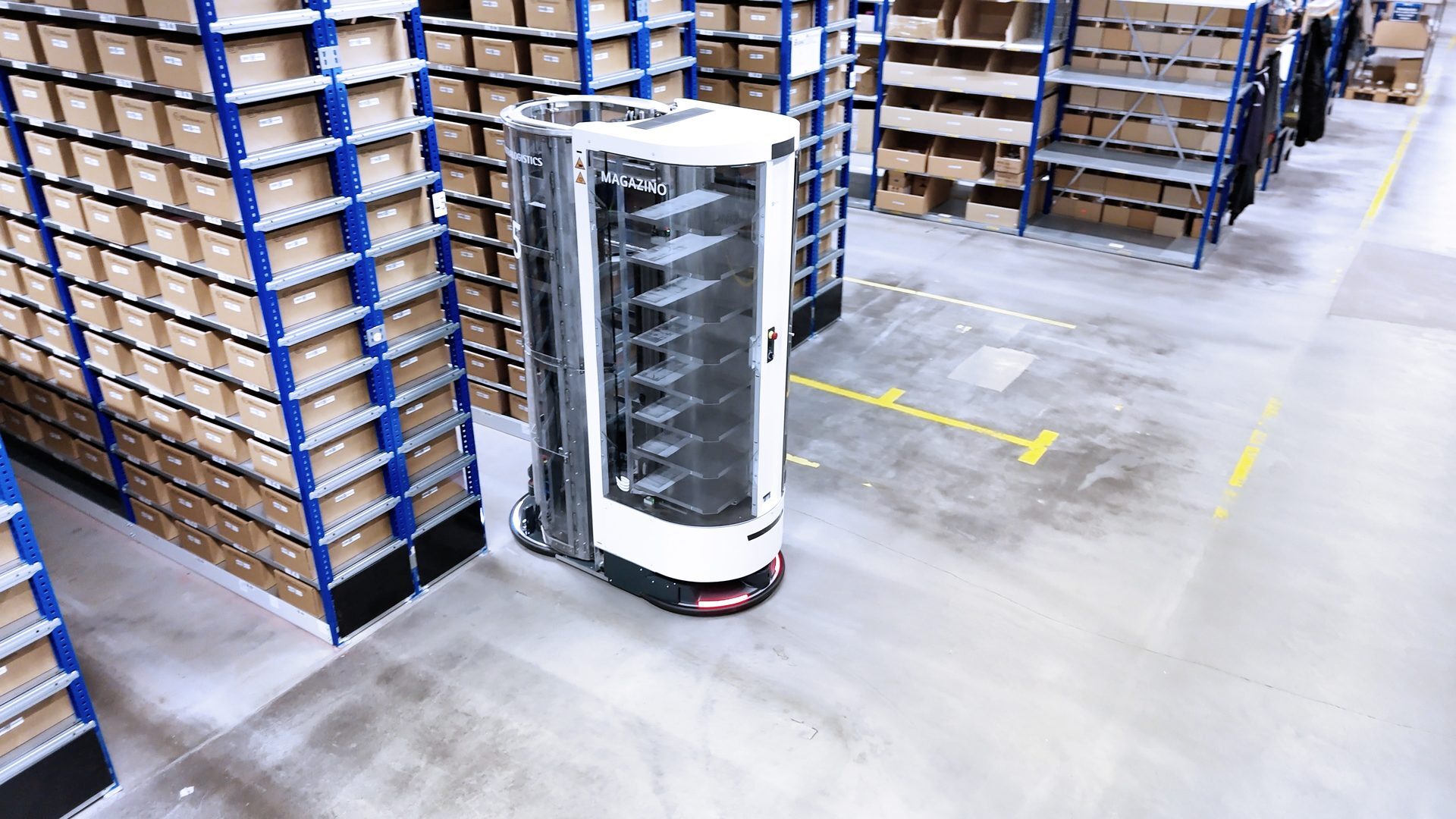
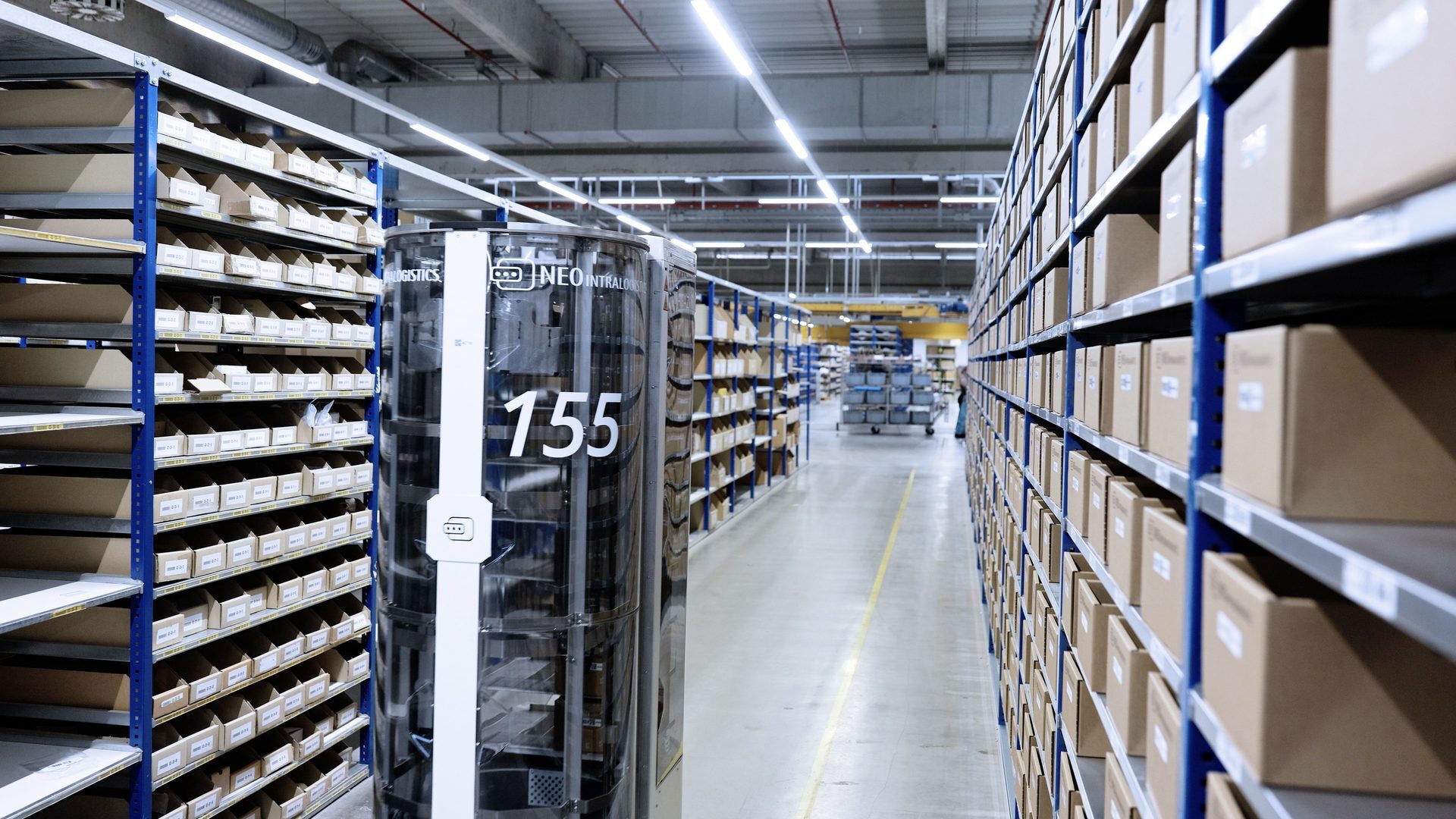
The NEO:runner robots navigate your existing aisles (minimum 85 cm width). No construction work, no shelf replacement, no operational downtime. The robots share the floor with manual pickers – parallel operation is possible from day one. How the retrofit works
70% less picking labor: In the automated zone, manual walking distance is eliminated entirely. During peak: less dependency on temp workers, less training overhead, more consistent pick quality even under volume spikes.
Collaborative Picking - Black Friday Without a Capacity Ceiling
Seasonal peaks force traditional automation into a binary choice: size for peak and pay eleven months a year for idle capacity, or size for average and break during peak season - with cancellations, negative reviews, and conversion losses to follow.
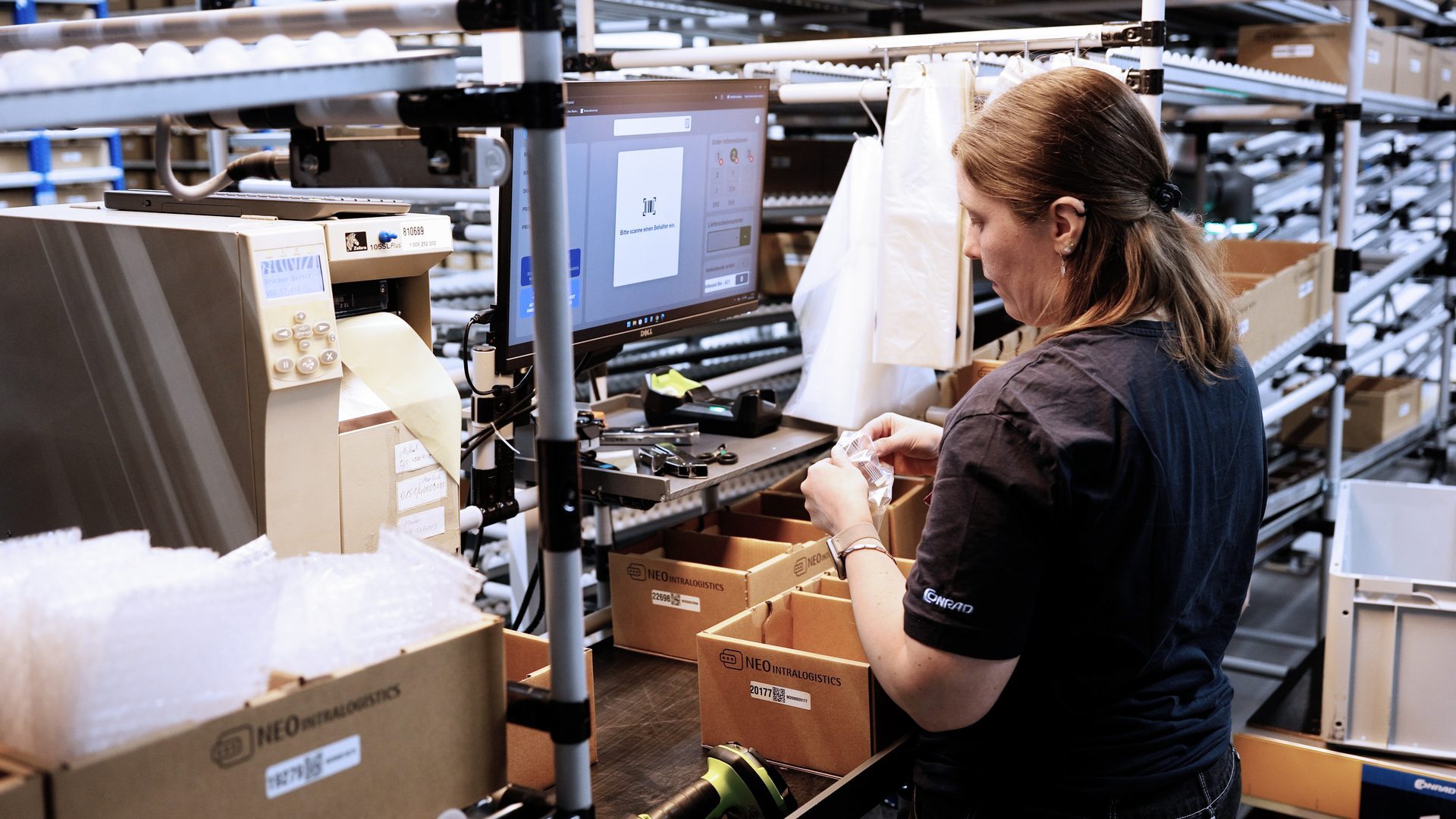
NEO breaks this trade-off through collaborative picking: robots and human pickers operate in the same warehouse, in the same picking cycle. You size the robot fleet for normal daily volume - and add human pickers alongside the robots when seasonal demand spikes.
Concretely for the e-commerce peak:
- Operational capacity scales with order intake - not with a one-time-built installation
- Seasonal staff work at the same station, in the same workflow as your permanent team - short onboarding instead of a second manual setup
- Pay-per-pick carries it commercially: more picks in peak = more robot capacity, less in February - with no hardware to buy
- Black Friday, Cyber Week, and the holiday season become predictable instead of an annual recruiting and volume-risk problem
How NEO Works in an E-Commerce Warehouse
Assessment and Pilot Planning
NEO evaluates your warehouse – aisle widths, shelf heights, SKU profile, and pick volume. Together, we define a pilot zone covering your highest-volume or most labor-intensive area.
Installation During Ongoing Operations
The NEO:runner robots and the picking station are deployed in your existing shelf racking. No reconstruction, no downtime. The rest of the warehouse continues operating undisturbed during setup.
Go-Live and Pilot Operation
After 6-8 weeks, automated operations start. Pickers work at the PickStation, robots bring bins from the shelves. Throughput is measurable from day one.
Scaling Before the Next Peak
Once the pilot proves out, scale by adding stations and robots – no construction, no downtime, and ideally in time ahead of your next high season.
What e-commerce fulfillment delivers with NEO
NEO:os automatically places fast movers closer to the PickStation and long-tail items farther away. This shortens the average robot travel time per pick and keeps throughput high even with a wide assortment.

Currently, there is no other provider besides NEO that offers goods-to-person automation specifically for shelf-racking environments.
NEO runs in parallel with manual picking: robots and PickStations cover the automated portion, while staff continue to pick by order or by SKU range manually. You control the share of automated picks.
Conrad Electronic is the first enterprise reference for goods-to-person automation in conventional shelf-based warehouses – and demonstrates that even large, complex e-commerce warehouse operations can adopt this technology during live operations.
Technical Requirements
| Shelving system | Standard shelf-based racking | No special shelving required |
| Aisle width | Minimum 85 cm | |
| Shelf height | Up to 250 cm | |
| Item dimensions | Max 380 × 270 × 140 mm | L × W × H |
| Item weight | Max 5 kg | |
| Pick volume | 5,000+ picks/day | recommended |
| Floor | Level, load-bearing warehouse floor | |
| WiFi | Full WiFi coverage | in the warehouse area |
NEO is ideal for e-commerce operations that:
- Run fulfillment in existing shelf-based warehouses and want to automate
- Want to handle seasonal peaks without massive staffing increases
- Need to go live before a concrete peak date (6-8 weeks)
- Want to avoid upfront investment risk and keep costs variable
Not the best fit for:
- Pure pallet warehouses without shelf-based racking
- Items that exceed the size or weight limits
- Warehouses with fewer than 5,000 picks per day
- Operations planning a complete new-build with a shuttle system
Frequently Asked Questions
Can NEO handle seasonal peaks like Black Friday?
Yes - this is exactly the use case NEO was built for, through collaborative picking. Traditional automation forces a choice between peak-sized capacity (idle eleven months a year) and average-sized capacity (broken during peak). With NEO, robots and human pickers operate in the same picking cycle: you size the fleet for normal volume and add human pickers alongside the robots ahead of peak season. Pay-per-pick carries it commercially - costs scale with volume, no fixed cost block. Learn more about pay-per-pick
How quickly can NEO be live before a specific peak date?
From order confirmation to go-live takes 6-8 weeks. This includes WMS integration, AMR fleet installation, and goods-to-person station commissioning. If your next peak (e.g. Black Friday, Christmas season) falls within this lead time, get in touch as early as possible so we can review the schedule together.
Is NEO suitable for warehouses with a wide SKU range – both fast movers and long tail?
Yes. NEO:os manages items at bin location level – regardless of pick frequency. Fast movers and long-tail items can share the same racking zone. The system optimizes mission assignment based on current order intake and robot availability.
Does NEO support multi-line picks – orders with several different items?
Yes. NEO:os supports multi-order picking at the picking station. Multiple orders are processed in parallel, bins are presented sequentially. The picker retrieves items and assigns them directly to the correct order containers.
Request a Fit-Check
Find out in a 30-minute conversation how NEO fits your e-commerce warehouse – with a concrete assessment of your peaks, SKU profile, and achievable results.
Or read how Conrad Electronic deployed NEO during live operations: Case study: Conrad Electronic →
Request a Fit-Check