Robotic or Manual Picking - Which Fits Your Warehouse?
Robotic picking does not beat manual order picking everywhere. It pays off where travel time becomes the main cost driver and volume stays stable. This page shows where that line runs - and how NEO automates your existing shelving in mixed operation, so you never have to choose one world over the other.
Robotic picking pays off once travel time becomes the main cost driver and order volume stays stable above roughly 5,000 picks per day. At low or highly volatile volume, manual picking often remains the more economical choice. NEO automates your existing shelving in mixed operation - no upfront investment, live in 6-8 weeks.
Robotic or Manual Picking - The Real Question
The question is rarely framed this way. Most discussions start with a technology: a vendor shows robots, and the warehouse wonders whether it needs them. The more useful order is the reverse. First decide whether the switch from manual picking pays off at all, then talk architecture. This page separates the two. It shows where manual picking stays the right choice, what “robotic” actually means - the term hides three very different approaches - and when the switch becomes economical.
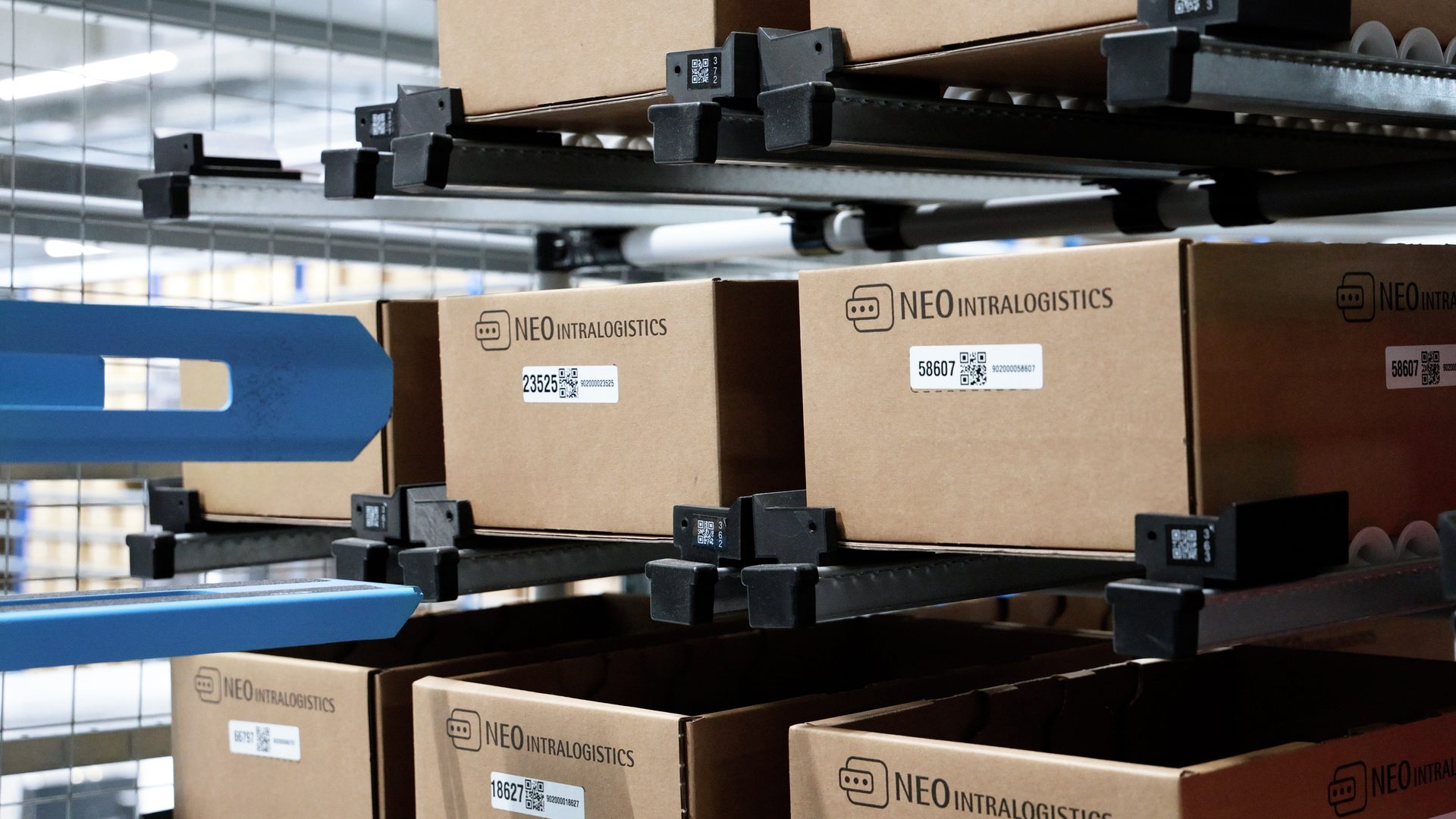
Manual Picking - When It Stays the Right Choice
Manual picking is the baseline every automation has to beat. It works in any building, with any assortment and any order mix. Replace it too early and you lose the exact flexibility that keeps many warehouses competitive.
Under the person-to-goods principle, the picker walks to the goods. A WMS instruction or pick list structures the route, but the work itself happens on foot - with a cart, handheld scanner or voice headset. Aids like pick-by-voice or pick-by-light cut the error rate, but they do not change the core: a large share of the shift is spent walking. In manual shelf-based warehouses, roughly half of working time goes to travel between pick positions, at 10-16 km per shift in larger facilities.
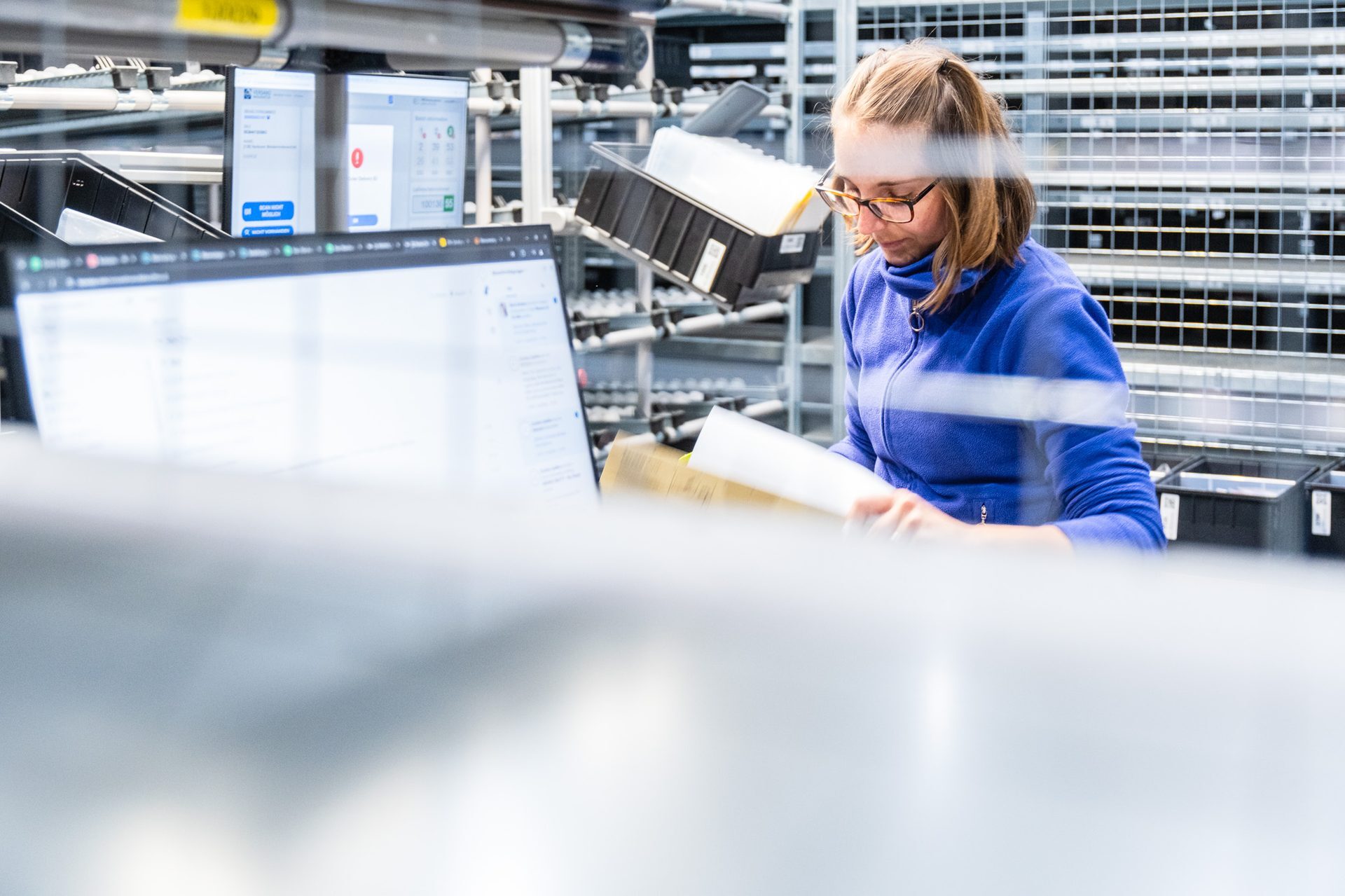
Where Manual Picking Is Strong - and Where It Breaks
Manual picking carries the lowest upfront investment of any picking strategy and the highest flexibility. A new SKU needs a storage slot, not a system change. Volume spikes are absorbed with extra staff, assortment changes cost no re-engineering. Wherever volatility is high and predictability is low, that stays a real advantage - and no automation buys it back cheaply.
The limit is structural: manual picking only scales through headcount. More orders mean more people or longer shifts, and in a tight labor market both get expensive and uncertain. As the warehouse grows, the travel share rises too, because the distance between pick positions widens. Beyond roughly 5,000 picks per day the strategy turns inefficient, long before it becomes operationally impossible. So the real question is: how high is my travel share, and how reliably can I get the staff that linear scaling assumes?
Robotic Picking Is a Spectrum
Collaborative in-aisle picking - the robot carries, the picker walks
An autonomous robot drives itself to the pick position and waits for the picker, who takes the item from the shelf and places it in the carried tote. The shelving stays unchanged and rollout is fast. But the picker stays mobile. What disappears is cart-pushing, searching and part of the walking distance - vendors report reductions of 50 percent or more. Strictly speaking this is person-to-goods with robot assistance, not true goods-to-person. If reduced travel is enough for you, it is the fastest option to deploy.
True goods-to-person - the picker stands, the robot brings the goods
The robot takes individual bins from the shelf and brings them to a stationary station. The picker stays at one spot for the whole shift; travel disappears entirely. This is the approach with the largest productivity and ergonomics lever. NEO delivers it as bin-to-person from the existing shelving - true goods-to-person, without any structural change to the warehouse.
Fully automated bin picking - the human out of the pick loop
A gripper robot takes items straight from the bin; the human is no longer part of the picking loop. This delivers the highest throughput per square meter and the lowest labor need - at the cost of the highest investment, long lead times (12-36 months are typical) and strong vendor lock-in. It suits very broad assortments at very high volume, usually in new builds. For the typical mid-sized existing warehouse, it is oversized.
The Direct Comparison
| Robotic with NEO (true goods-to-person) | Manual picking (person-to-goods) | |
|---|---|---|
| Travel | Eliminated - the picker works stationary | Roughly half of working time, rising with warehouse size |
| Upfront investment | €0 upfront (pay-per-pick, pure OpEx) | Very low, no engineering |
| Time-to-value | 6-8 weeks to go-live | Ready immediately |
| Scaling | Additional robots during live operation, no rebuild | Only through additional staff |
| Peak flexibility | Base-load fleet plus flexible picker top-up in the same process | Via temporary labor, hard to plan short-term |
| Ergonomics / physical strain | Low - fixed standing spot, defined reach height | High - walking, carrying, changing reach heights |
| Staff dependency | Reduced, base load runs robotically | High, every volume increase needs headcount |
Two points clearly go to the manual side: total economics at very low volumes, where no automation model pays for itself, and immediate readiness with zero lead time. If you need more capacity next week and change sites in six months, extra staff serves you better than any automation.
Robotic pays off for:
- Travel as the main cost driver
- Scarce, expensive or high-turnover staff
- Medium to high volume
- Recurring seasonal peaks
- The goal of cutting physical strain and staff dependency
Manual stays the right choice for:
- Very low volume (below roughly 5,000 picks per day)
- Highly volatile or unpredictable assortments
- A short remaining site lifetime
- Very broad assortments with low pick frequency per SKU
Suitability by Starting Point
| Robotic (NEO) | Manual | |
|---|---|---|
| Very low volume (below 5,000 picks/day) | ● conditionally suitable | ●●● clear advantage |
| Highly volatile, unpredictable assortment | ●● advantage | ●●● clear advantage |
| Short remaining site lifetime (under 2 years) | ● conditionally suitable | ●●● clear advantage |
| Ready immediately, no lead time | ●● advantage | ●●● clear advantage |
| Travel as the main cost driver | ●●● clear advantage | ● conditionally suitable |
| Staff scarce, expensive, high-turnover | ●●● clear advantage | ● conditionally suitable |
| Medium to high volume (from ~5,000 picks/day) | ●●● clear advantage | ● conditionally suitable |
| Recurring seasonal peak | ●●● clear advantage | ●● advantage |
| Ergonomics and physical relief as a goal | ●●● clear advantage | ● conditionally suitable |
Most existing warehouses do not sit cleanly on one side. That is exactly what the hybrid path is for.
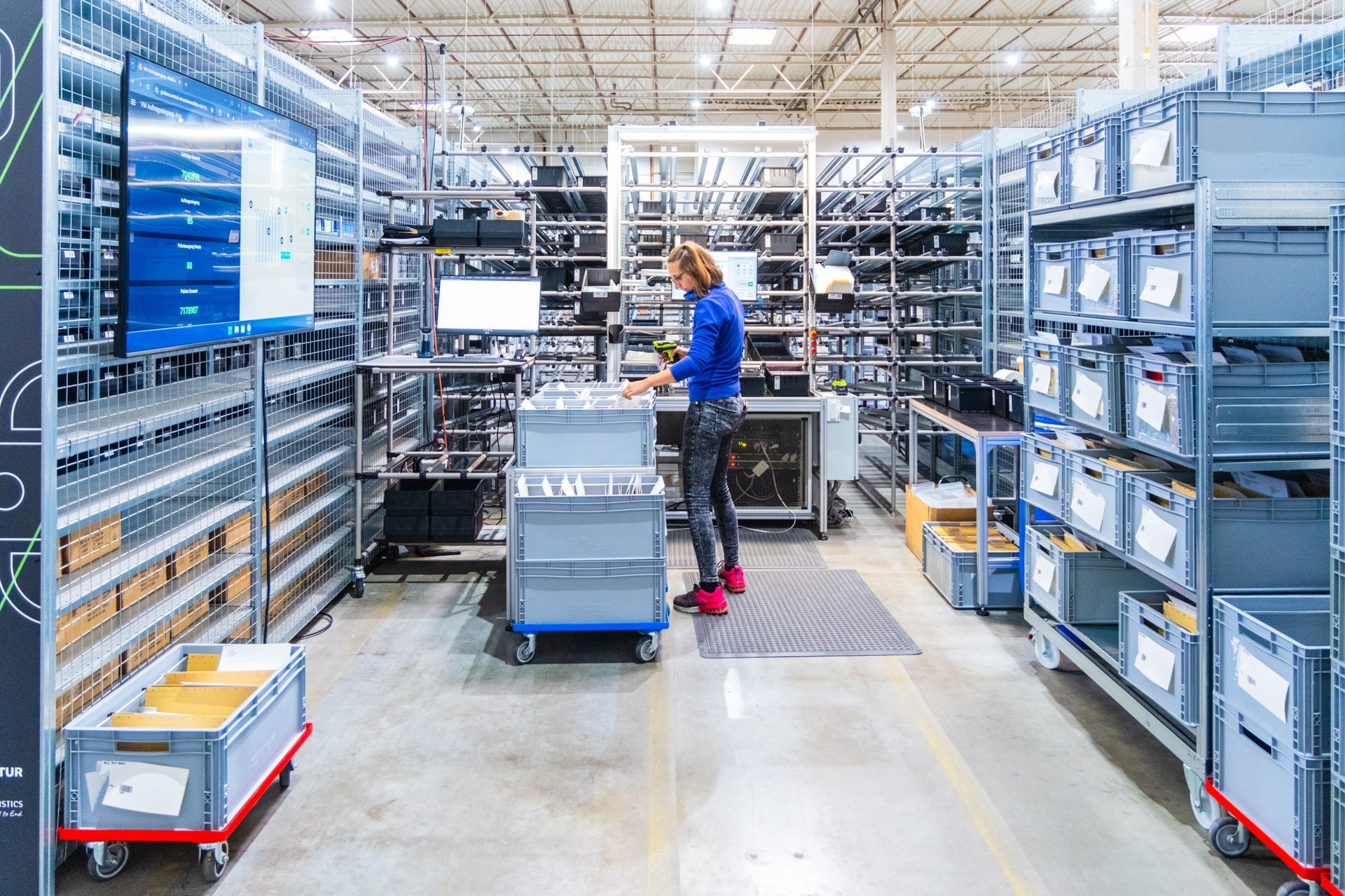
Productivity and Ergonomics in Practice
Collaborative-picking deployments show the order of magnitude of the productivity jump: GEODIS reports an increase from 100 to 175-200 units per hour, Kenco an increase from 30-40 to 120-150 units per hour. These numbers come from live distribution centers, and they already apply to the variant where the picker keeps walking. True goods-to-person raises the lever again, because the remaining travel disappears too.
Ergonomics matter just as much. A stationary workstation with a fixed reach height noticeably reduces physical strain and opens the pick area to staff who can no longer manage a walking shift for health or age reasons. In a labor market where every available worker counts, that is a value in its own right. Relieving the picking process robotically also lowers dependence on a resource that keeps getting scarcer.
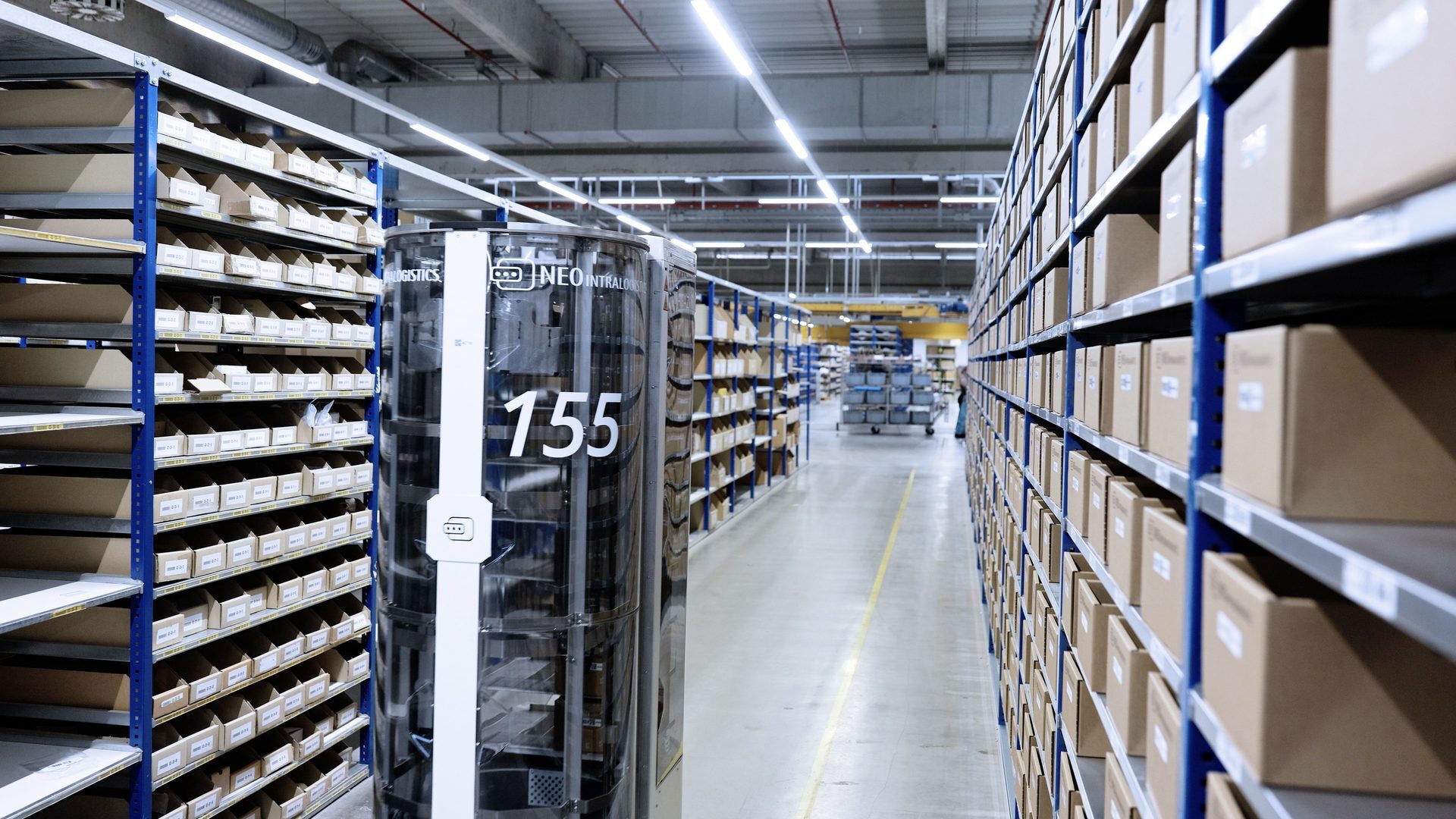
The Hybrid Path - Mixed Operation Instead of Big Bang
Robotic picking is not all-or-nothing. The most expensive mistake in a switch is assuming you have to convert the whole warehouse at once. NEO starts as mixed operation from day one: some shelving rows are served by the robot, the rest keeps running manually. The line between the two is configurable in software and can move as the project progresses, without stopping operations.
This also breaks the peak dilemma. In collaborative picking, robots and pickers work in the same picking process. The fleet covers the base load; in high season, additional pickers top it up flexibly - no fixed capacity that sits idle eleven months a year. And because NEO bills on a pay-per-pick basis, operation delivers hard data for the next expansion stage: real picks instead of projections. Start small, and you build the business case for expansion out of live operation.
More on the pay-per-pick model
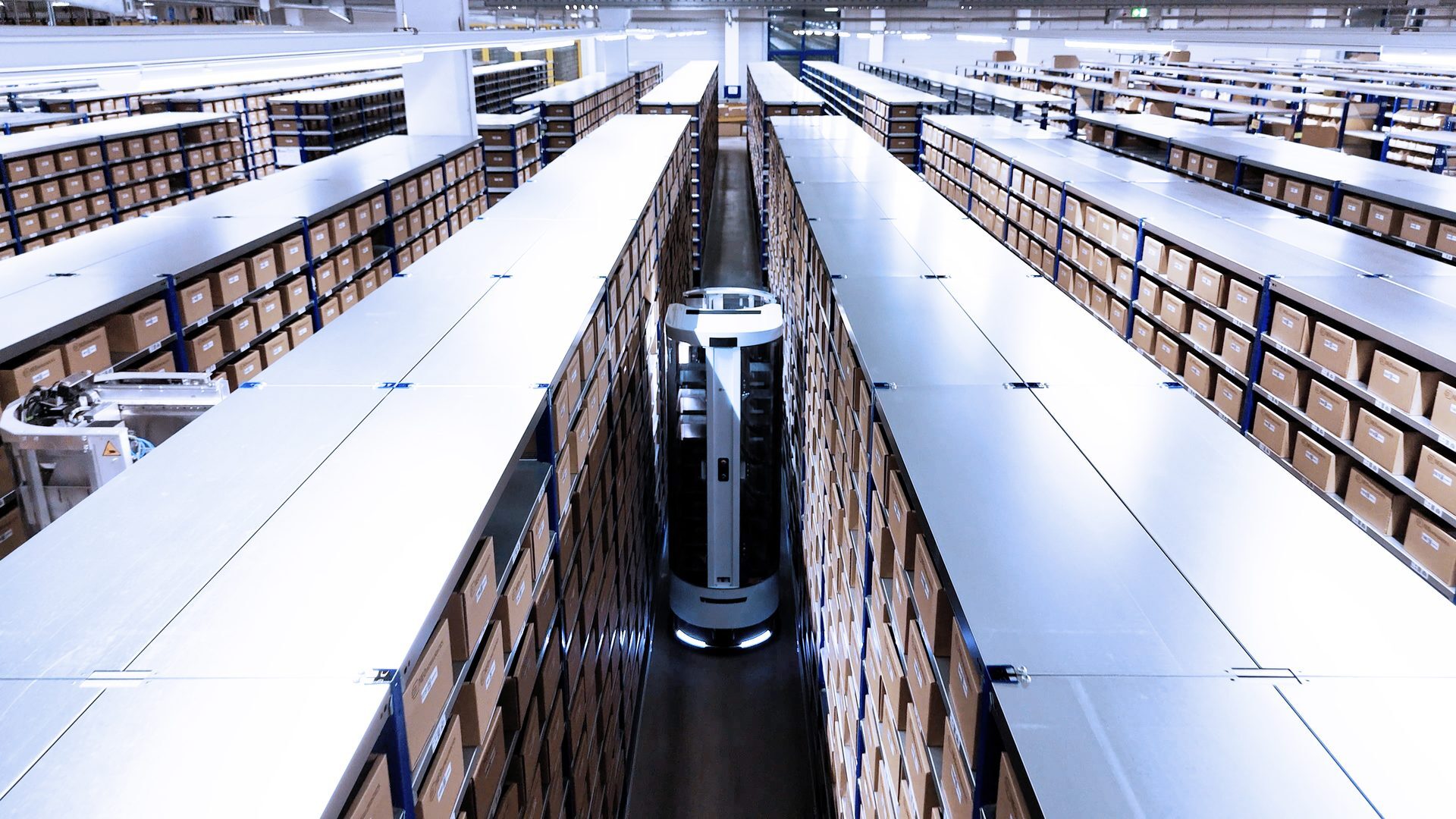
NEO in Your Existing Shelving
NEO is true goods-to-person from existing shelving. The robot takes individual bins from your current shelving and brings them to a stationary picking station. The racking stays where it is, no new storage infrastructure is built, and the only structural work is the station itself, with power and data connections.
For existing warehouses with medium volume - up to the system ceiling of 100,000 picks per day - this retrofit in mixed operation is usually the most economical way out of manual picking: no capex, no rebuild, live in 6-8 weeks. NEO handles items up to 380 × 270 × 140 mm and 5 kg, in aisles from 85 cm wide. See how the retrofit works, how NEO picks and how pay-per-pick bills.
Frequently Asked Questions
At what volume does robotic picking pay off?
There is no hard threshold, but a reliable rule of thumb: once travel becomes the main cost driver and volume stays stable above roughly 5,000 picks per day, the switch usually pays. Below that, or with highly volatile volume, manual picking often stays more economical. What matters is less the absolute number than the share of unproductive travel and the stability of the volume.
What is the difference between collaborative picking and goods-to-person?
In collaborative picking, the robot carries the tote but the picker keeps walking - travel is reduced, not eliminated. In true goods-to-person, the robot brings the goods to a stationary station and the picker stays in one place - travel disappears entirely. Both are sold as “robotic picking,” but they are strategically different.
Do I have to rebuild my shelving for robotic picking?
Not with NEO. The robot works in your existing shelving, with no teardown and no new storage infrastructure. Other robotic approaches - mobile special racks or cube systems, for example - do require a rebuild or a new build. This is one of the biggest differences between the concepts.
Can I run manual and robotic picking side by side?
Yes. NEO runs as mixed operation from day one: part of the warehouse is served robotically, the rest manually. The boundary is configurable in software and can shift gradually without stopping operations. This hybrid path is usually the lowest-risk entry into automation.
How quickly is robotic picking up and running?
With the NEO retrofit, 6-8 weeks pass from decision to the first automated pick. Fully automated systems with their own infrastructure typically take 12-36 months. Manual picking is of course ready immediately - the advantage that robotic systems have to earn back through higher productivity.
Do robots fully replace pickers?
In collaborative picking, no. The robot fleet covers the base load; in high season, additional pickers top it up in the same process. The goal is not to replace staff but to lower dependence on hard-to-find labor and to physically relieve the workers you have. Fully automated systems take the human out of the pick loop - a different approach for a different warehouse profile.
How does robotic picking improve ergonomics?
True goods-to-person turns a walking shift into a stationary workstation with a fixed reach height and defined lighting. No kilometers on foot, no cart-pushing, no reaching from changing shelf heights. That relieves the workforce you have and opens the pick area to people who can no longer manage a classic picking shift - relevant anywhere staff is scarce.
Results at a Glance
Automate or keep picking manually? Find out before you invest.
In a Fit-Check we use your numbers - volume, travel, assortment - to assess whether and when robotic picking pays off in your warehouse. No commitment, with a clear recommendation.
See NEO in actionRelated Content
Warehouse retrofit: how the automation works
How NEO automates existing shelf racking - no teardown, no construction phase.
Pay-per-pick: automation as operating cost
How the pay-per-pick model prices automation per picked order instead of per system.
Robotic picking in the 3PL warehouse
How mixed operation and pay-per-pick fit fluctuating client volumes.
AMR vs. fixed automation
The architecture comparison one level down - mobile robots in an existing warehouse or a fixed installation.