Picking is the most expensive activity in the warehouse - typically 40-55% of total operating cost - and it sits on the critical path of every single order. Robotic picking systems accelerate fulfillment not because robots grab items faster than people, but because they remove the work that never added value: walking, searching, and processing orders one at a time. This article explains how the main approaches to warehouse picking automation differ, where the speed gains actually come from, and what operators of existing warehouses can realistically expect.
Why picking is the cost center of fulfillment
Order picking accounts for 40-55% of total warehouse operating cost, according to industry data. No other warehouse process comes close. Whoever improves picking improves the unit economics of the entire operation - and whoever leaves it unchanged accepts a cost block that is structurally avoidable.
The reason is walking. Research going back to Tompkins et al. shows that in manual person-to-goods warehouses, approximately 50% of order pickers' working time is spent traveling between pick locations. The rest splits across searching, extracting, and paperwork. In a typical shelf-based warehouse, that adds up to 10-16 km of walking per picker per shift. The picker's hands are productive for only a fraction of the hour they are paid for.
This is why manual picking tops out at 60-120 picks per hour per person. The ceiling is not human dexterity. It is distance.
Picking speed also determines what your fulfillment promise can be. Every order waits for its picks to be completed before it can be packed and shipped. When order volume grows, a manual operation has exactly one lever: more people walking more kilometers. That lever is getting more expensive and harder to pull every year - more on the warehouse labor shortage below.
Three ways to organize picking - and what each one fixes
Before comparing robots, it helps to understand the operating models they support. Warehouses have three main options for organizing pick work beyond the one-order-one-walk baseline.
Batch picking keeps the picker walking but bundles several orders into one tour. At each location, the picker places items into the correct order bin on the cart. Walking distance per order drops substantially because one tour now serves five or ten orders. The limits show up when order structures are mixed - small single-item e-commerce orders next to large B2B orders make bundling awkward - and when a downstream sortation step is needed, which adds a second error point.
Zone picking divides the warehouse into zones with dedicated pickers. Order cartons travel through the zones on conveyors, and each zone adds its items. Pickers stop crossing the whole building, and multiple orders progress in parallel. The catch is balance: if one zone becomes the bottleneck, every order waits, and assortment changes force zone re-layouts.
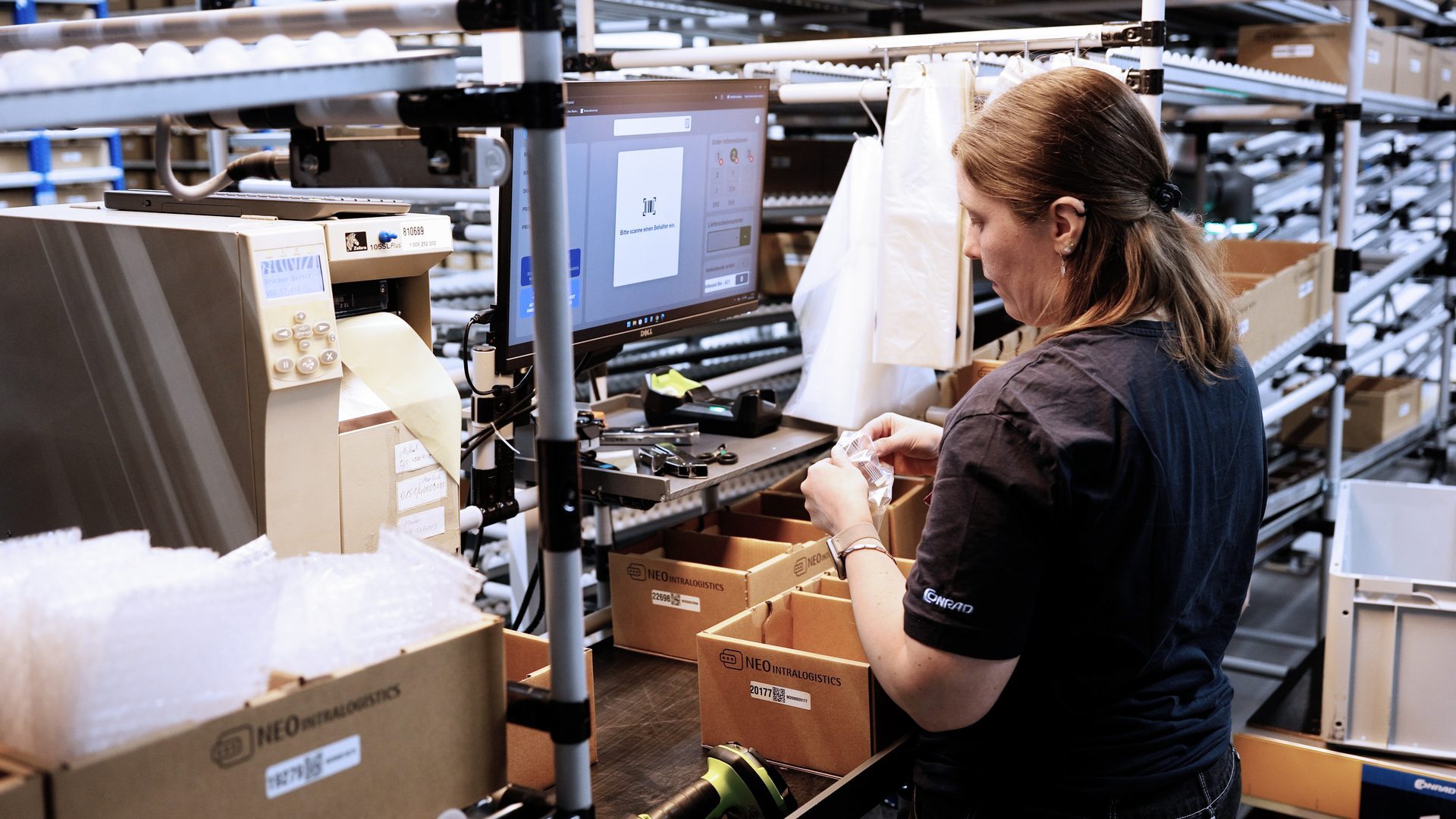
Goods-to-person picking inverts the model entirely. The picker stands at a stationary workstation, and the system delivers bins or shelves to them. Walking is not reduced - it is eliminated. This is the operating model behind most of the throughput figures quoted for robotic order picking: goods-to-person stations reach 200-400+ picks per hour in industry practice, compared to 60-120 picks per hour for manual person-to-goods work.
Robotic picking systems are the technology layer that makes these models practical. Mobile robots can bundle and sequence orders dynamically (batch logic), transport order bins between areas (zone logic), or retrieve goods and bring them to a station (goods-to-person logic). One distinction matters when evaluating vendors: some AMR systems keep the picker walking and merely meet them at the shelf, while others make the picker fully stationary. Both are marketed as picking automation, but only the second eliminates travel time. The differences between AMR concepts are covered in detail in our article on AMR in the warehouse.
| Approach | Walking time | Orders in parallel | Infrastructure change | Typical constraint |
|---|---|---|---|---|
| Manual (one order per tour) | Full | No | None | Does not scale beyond added headcount |
| Batch picking | Reduced | Yes, per tour | None | Mixed order structures, sortation errors |
| Zone picking | Reduced per picker | Yes, across zones | Conveyors between zones | Zone balancing, re-layouts |
| Robot-assisted picking (in-aisle) | Reduced | Yes | Minimal | Picker still walks; headcount stays high |
| Goods-to-person (robotic) | Eliminated | Yes | Depends on system | Needs sufficient daily pick volume |
What actually accelerates fulfillment
Eliminating travel time
The largest single gain is the removal of the ~50% of working time spent walking. At a goods-to-person station, the picker works in a fixed, ergonomic grab zone while robots handle every meter of transport. The same person completes a multiple of their previous pick count per hour - which is why goods-to-person conversions change staffing plans, not just process charts. Across NEO deployments, the aggregate result is 70% less picking labor for the automated area.
Parallelization
A manual picker performs every step of an order sequentially: walk, search, grab, walk again. A robotic picking system decouples these steps. While the picker handles one bin at the station, the robot fleet is already retrieving the next ones, and buffering at the station keeps the picker supplied without waiting. Retrieval, transport, and picking happen simultaneously instead of one after another. Order cutoff times move later because total order cycle time shrinks - the practical currency of e-commerce fulfillment.
Fewer errors, less rework
Manual picking produces error rates of 0.1-0.3% in industry practice. That sounds small until it is multiplied by daily order volume: every mispick triggers a return, a re-pick, a customer contact - at EUR 10-30 processing cost per return. System-guided picking at a station, with the correct bin presented and the pick confirmed on screen, changes the error profile. NEO's stations operate at 99.99% picking accuracy with an error rate below 0.01%. Errors are a hidden speed tax; removing them accelerates fulfillment twice, once in the outbound flow and once in the avoided rework.
The labor context: speed you can actually staff
The case for warehouse picking automation is not only about throughput per hour. It is about whether the hours exist at all. Warehouse operators across Europe report the same pattern: unfilled shifts, expensive temporary labor, long training ramps, and rising warehouse labor costs that outpace productivity. The full picture is in our analysis of the warehouse labor shortage.
Robotic order picking changes the equation in two directions. Steady-state, the automated area runs with substantially fewer picking staff. During peak season, a collaborative setup lets operators add human pickers alongside the robots in the same workflow - the fleet is sized for average demand rather than for the two months of peak, and people absorb the spike. That avoids the classic automation trap of paying for peak capacity that idles for most of the year.
What brownfield warehouses can realistically expect
Most published robotic picking showcases are greenfield sites: new buildings designed around the system. The majority of real warehouses are not. They have existing shelving, live inventory, running shifts, and no tolerance for a months-long shutdown. For these operations, three questions filter the market quickly.
First: does the system require rebuilding the warehouse? Some robotic picking concepts replace existing shelving with vendor-specific mobile racking on a prepared floor grid - effective at scale, but the transition is a construction project, and mixed operation with manual picking in the same area is not possible. Second: does the picker actually become stationary, or does the robot just accompany them through the aisles? Third: can the system run alongside manual picking during ramp-up, so daily shipping never stops?
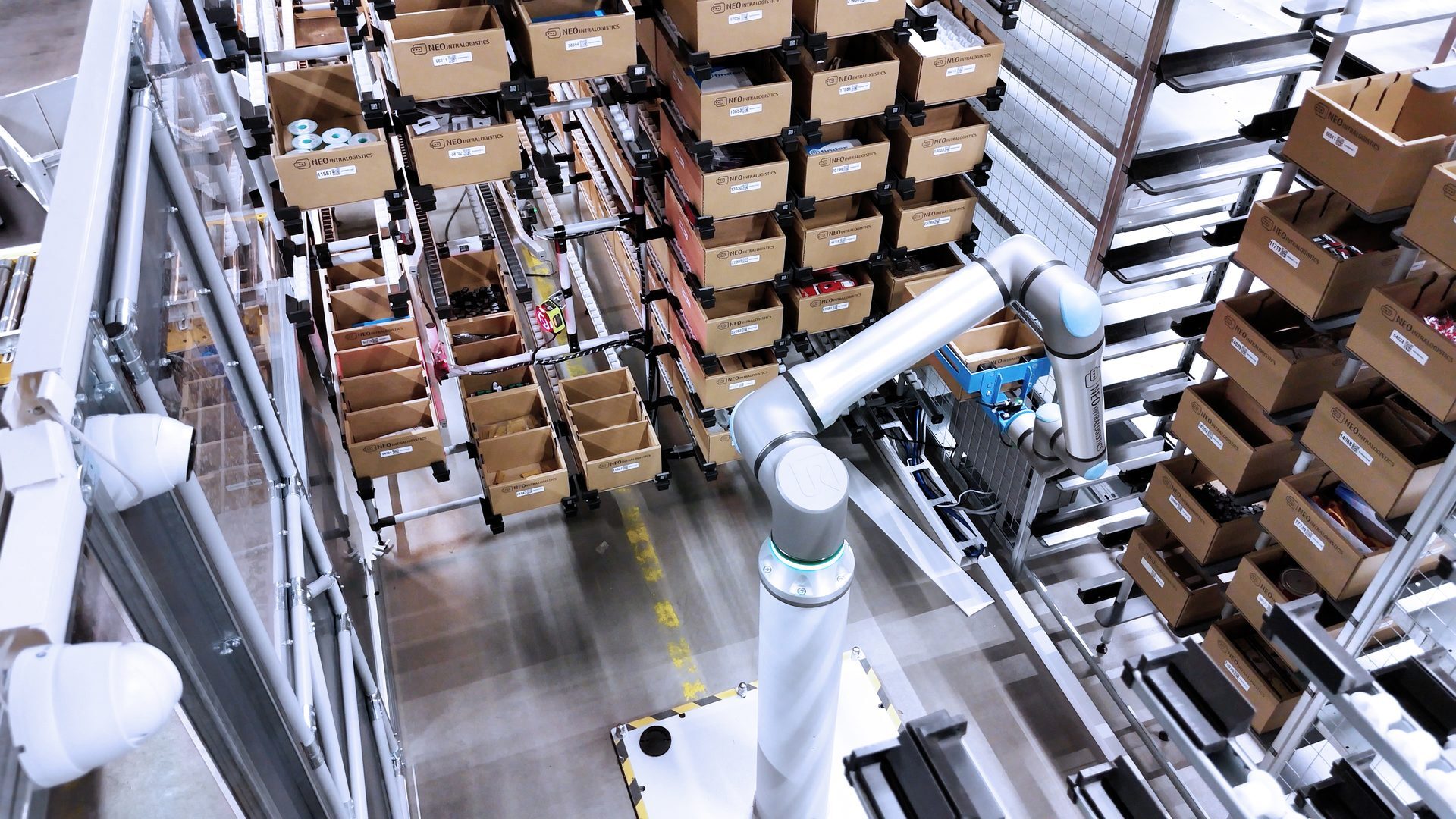
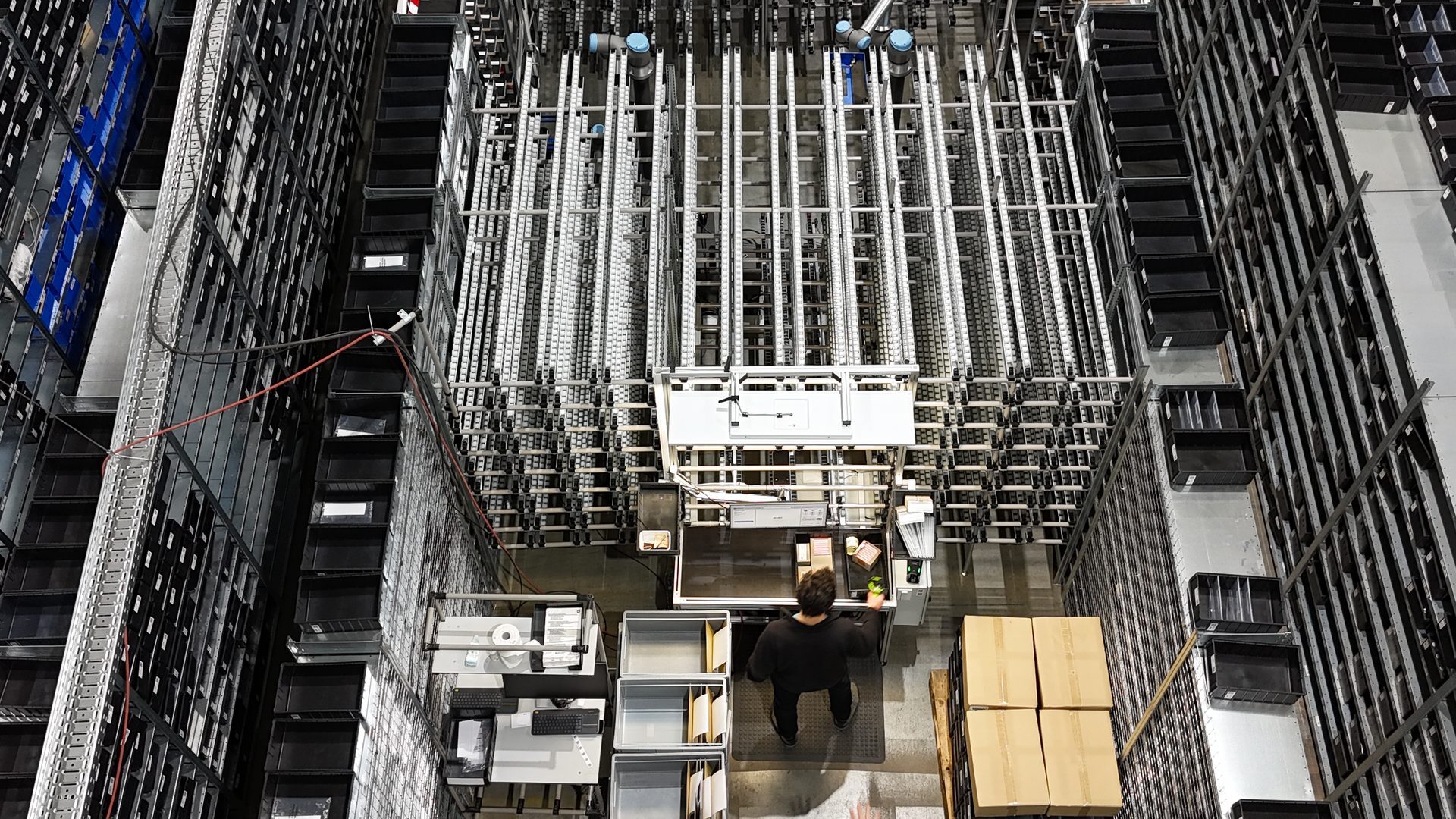
Systems that retrieve individual bins directly from existing shelf racking answer all three differently than the rest: the shelving stays, the picker is fully stationary at a goods-to-person station, and automated and manual zones operate side by side from day one. This is the approach behind the NEO picking robot platform, which retrofits into existing shelf-based warehouses with go-live in 6-8 weeks - against 12-36 months for classical automation projects - and runs on a pay-per-pick model with €0 upfront investment. As a working threshold, the model is recommended from around 5,000 picks per day in the area to be automated.
Realistic expectations also mean acknowledging limits. Robotic picking systems for shelf warehouses are built for bin-sized goods, not pallets or bulky items, and the economics depend on pick volume. An honest feasibility check beats an impressive demo video.
If you are comparing approaches in depth, our whitepaper on the three AMR concepts (in German) provides the structured deep-dive comparison - including which concept fits which warehouse profile.
Next step: check the fit for your warehouse
Whether robotic picking accelerates your fulfillment depends on your pick volume, article structure, and existing shelving - all checkable in a short conversation.