The warehouse labor shortage in Europe is no longer a cyclical staffing issue that solves itself after peak season. It is a structural demographic shift: fewer workers entering logistics, more experienced workers leaving, and rising expectations from those who remain. For the majority of warehouses still relying on manual picking, the question is no longer whether to automate - it is how fast.
Every warehouse operator in Germany knows the feeling: the season is ramping up, orders are climbing, and HR cannot fill the shifts. Temporary staffing agencies charge a premium - when they have candidates at all. The workers who do show up need days or weeks of training before they reach acceptable productivity. Sick leave spikes. Error rates climb. Customer complaints follow.
This used to be a peak-season problem. Now it is the baseline.
Why the warehouse labor shortage is structural
Demographics are working against logistics
Europe's working-age population is shrinking. In Germany alone, the labor force is projected to lose 7 million workers by 2035 as the baby boomer generation retires. Logistics and warehousing compete for these shrinking labor pools against construction, manufacturing, healthcare, and services - all of which face similar shortages.
The pipeline of new workers entering warehouse roles is not filling the gap. Younger workers increasingly avoid physically demanding, repetitive jobs with limited career progression. Warehouse picking - walking 15-20 kilometers per shift, handling thousands of items - ranks among the least attractive job profiles.
Wages are rising but workers are not coming
The obvious response to labor scarcity is higher wages. And warehouse wages have indeed increased 15-25% across Europe since 2022. But the increase has not solved the problem because competing industries are raising wages too. The relative attractiveness of warehouse work has not improved.
Higher wages also create a cost squeeze: operators pay more per hour while getting fewer hours filled. The combination of rising warehouse labor costs and declining labor availability is compressing margins from both sides.
Temporary staffing is expensive and unreliable
Many operators rely on temporary workers to cover gaps. But temporary staffing comes with its own problems:
- Higher cost: Temporary workers typically cost 30-50% more per hour than permanent staff when agency fees are included.
- Lower productivity: New temporary workers need 1-3 weeks of training before reaching baseline efficiency. During peak season, the training period often consumes a significant portion of their contract duration.
- Quality issues: Higher error rates from less experienced workers lead to returns, re-picks, and customer complaints.
- Availability gaps: During peak periods - when demand for temporary workers is highest - staffing agencies face shortages too.
The operational impact of chronic understaffing
The warehouse labor shortage does not just mean unfilled shifts. It cascades through operations:
Throughput bottlenecks
When picking stations are understaffed, order processing slows. During peak periods, the gap between incoming orders and outbound capacity widens - leading to backlogs, delayed shipments, and SLA violations.
Rising error rates
Overworked and undertrained pickers make more mistakes. Mis-picks, quantity errors, and shipping mistakes increase when the workforce is stretched thin. Each error generates return logistics costs, customer service interactions, and potential lost customers.
Employee burnout and turnover
When the existing workforce consistently covers for unfilled positions, burnout follows. Annual turnover rates in warehouse operations commonly exceed 40-60% in Germany. Each departing worker takes their experience with them and triggers another hiring and training cycle.
Inability to scale
The most strategically damaging consequence: operators cannot accept new business because they cannot staff the operations to fulfill it. Growth opportunities are declined not because of space or capital constraints, but because of labor constraints. This often coincides with warehouse space shortages, creating a compound problem.
Why incremental process improvements are not enough
Faced with labor shortages, many operators turn to process optimization: better pick paths, voice picking, pick-to-light systems, or lean warehouse management. These measures help - but they have a ceiling.
Process optimization makes each worker more productive. But it does not change the fundamental dependency on having workers available. A 15% productivity improvement does not help when 30% of shifts are unfilled.
The same applies to wage increases and improved working conditions. These are necessary steps - but they are competitive responses, not structural solutions. Every operator is raising wages simultaneously, which means the relative position does not change.
The only way to fundamentally reduce labor dependency is to reduce the number of manual picking steps required per order. That means automation.
How AMR-based automation addresses the labor shortage
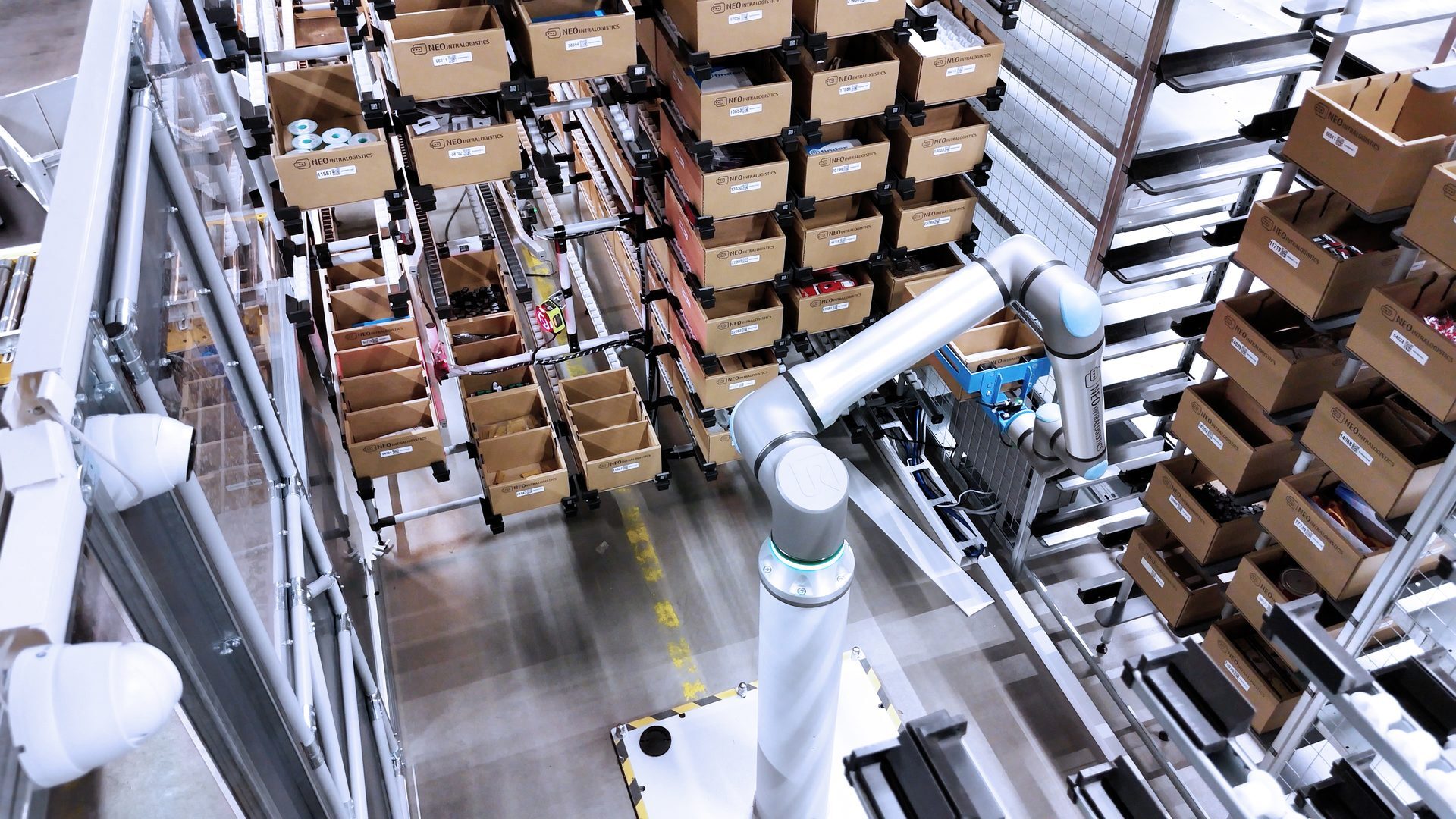
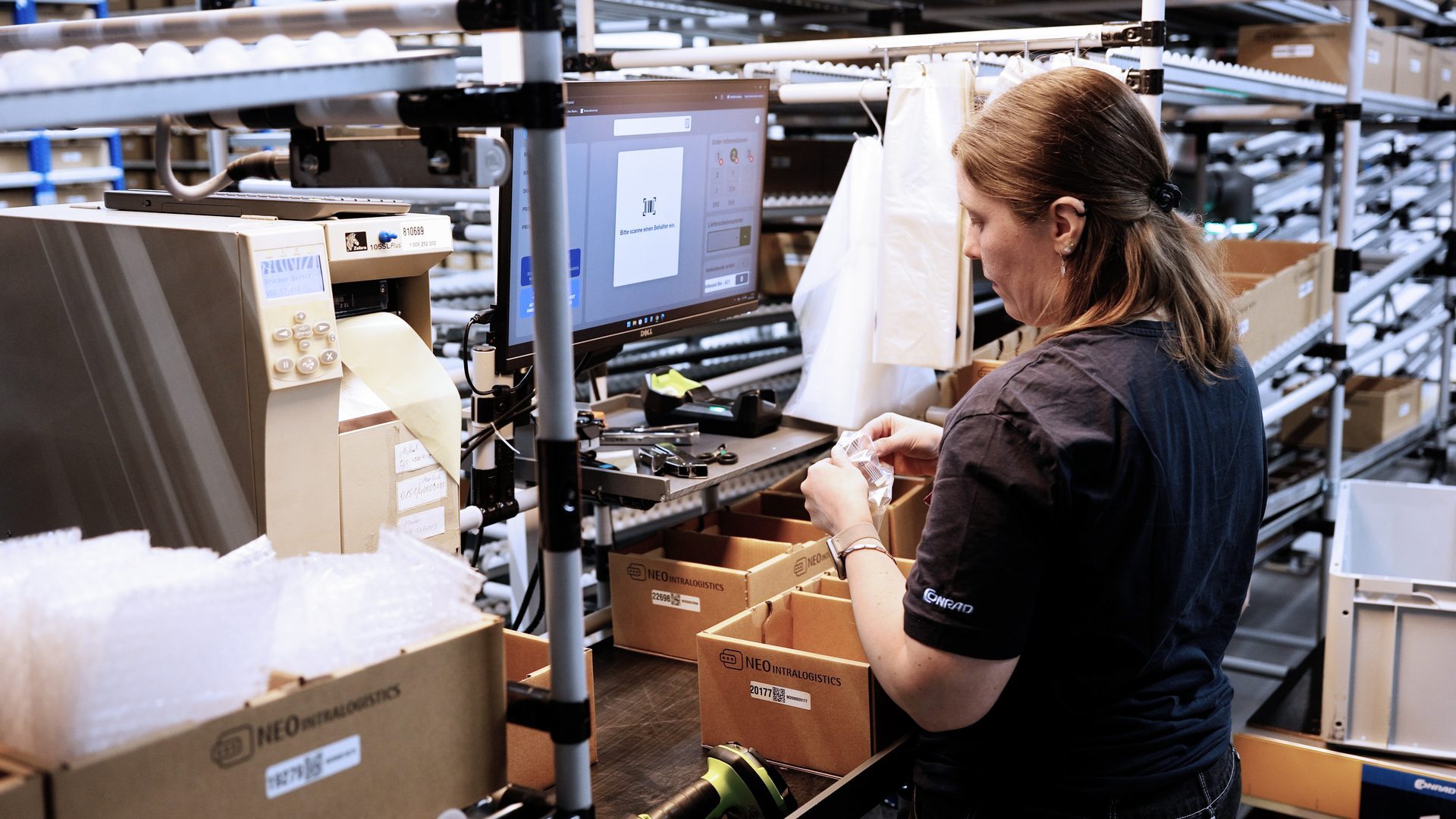
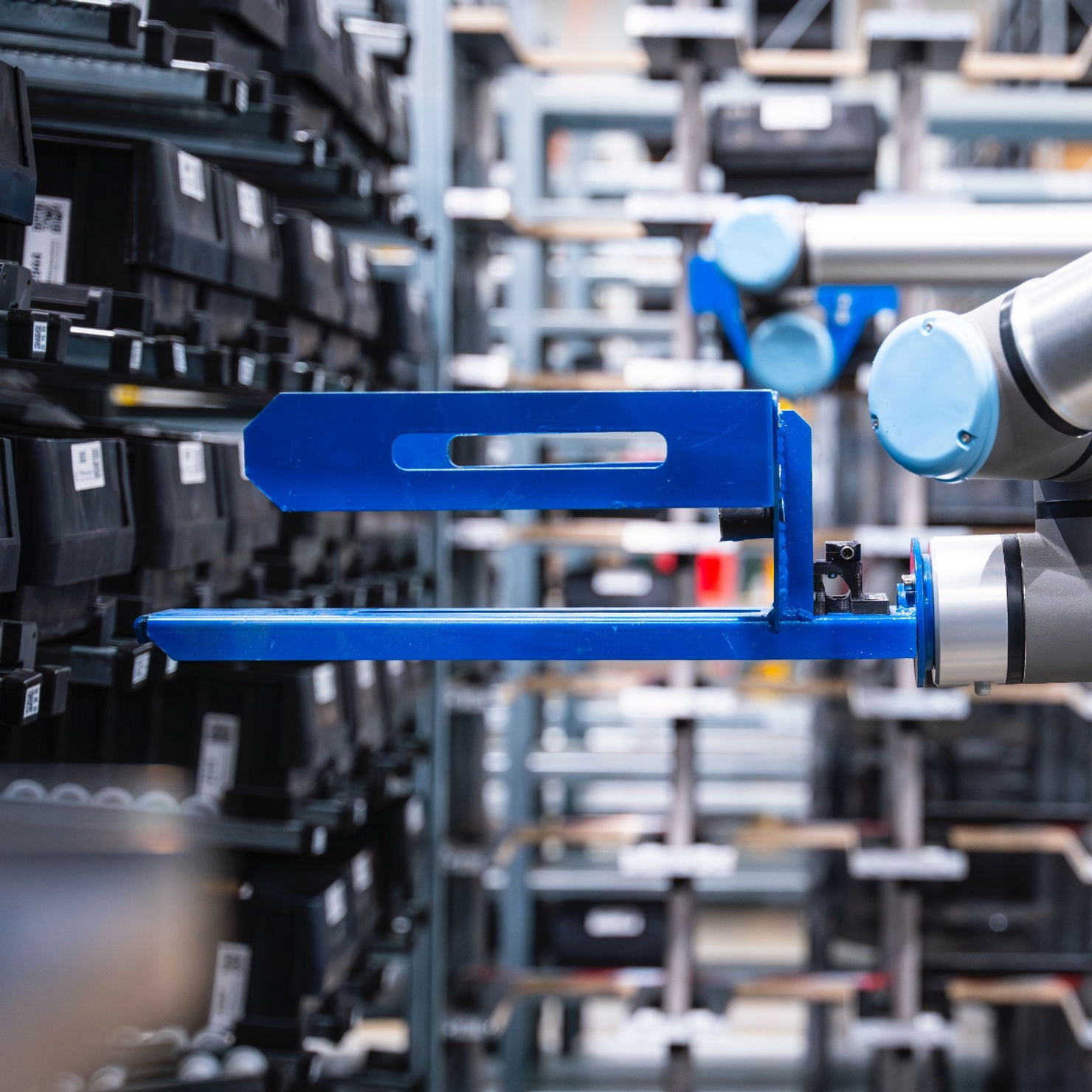
NEO's goods-to-person platform does not replace warehouse workers - it changes what they do. Instead of walking aisles, scanning shelves, and carrying items (the physically demanding, repetitive, and error-prone parts of picking), workers stand at ergonomic picking stations while robots bring the bins from the shelf to them.
The measurable impact:
70% reduction in picking labor
NEO's deployments consistently show a 70% reduction in the number of workers required for picking operations. A warehouse that previously needed 30 pickers to process daily orders can achieve the same throughput with 9-10 workers at stationary pick stations.
This is not a theoretical projection. NEO customers have achieved these results in existing Fachbodenregal warehouses within weeks of go-live.
Faster onboarding for remaining roles
Stationary picking at a goods-to-person workstation is fundamentally simpler than manual warehouse picking. New workers need hours of training, not weeks. This dramatically reduces the impact of turnover - when a worker leaves, their replacement is productive on day one, not day fifteen.
Reduced physical strain and improved retention
Eliminating the 15-20 km of daily walking, heavy lifting, and repetitive bending changes the job profile entirely. Workers report higher satisfaction and lower physical strain. Operators see reduced sick leave and improved retention rates.
Peak season scalability without hiring
AMR fleets scale to meet demand surges. Adding robots to handle higher order volumes during peak season takes days, not the weeks required to hire, screen, and train temporary workers. When the peak passes, fleet size adjusts back down.
NEO customers have demonstrated this flexibility, scaling their deployments to handle seasonal volume spikes without proportional increases in headcount.
The math: manual picking versus automated picking
Consider a mid-sized e-commerce fulfillment warehouse processing 10,000 picks per day:
| Factor | Manual picking | AMR-automated picking |
|---|---|---|
| Pickers required | 25-30 | 8-10 |
| Annual labor cost (Germany) | EUR 900K-1.2M | EUR 300K-400K |
| Training time per new worker | 2-3 weeks | 2-4 hours |
| Error rate | 1-3% | <0.5% |
| Peak season scaling | Hire 10-15 temp workers (if available) | Add 5-8 robots (available immediately) |
| Sick leave impact | Direct throughput reduction | Minimal - robots maintain baseline |
The annual labor cost savings alone typically exceed EUR 500K for a warehouse of this size. With NEO's pay-per-pick model, there is no multi-million CapEx to offset against these savings. The payback period is measured in months, not years.
Why traditional automation does not solve the labor problem fast enough
The urgency of the warehouse labor shortage demands solutions that can be deployed quickly. Traditional automation technologies cannot meet this requirement:
- AS/RS: 12-36 months implementation, multi-million, often in the tens of millions CapEx
- Shuttle systems: 12-36 months implementation, multi-million, often in the tens of millions CapEx
- Cube-based storage: 12-36 months implementation, multi-million CapEx
By the time a traditional system goes live, the operator has endured another full year (or more) of understaffed operations, peak-season crises, and rising labor costs.
AMR-based systems go live in 6-8 weeks. For an operator hemorrhaging money and service quality due to warehouse automation challenges caused by labor gaps, the implementation speed alone can justify the technology choice.
A roadmap for reducing labor dependency
For warehouse operators dealing with chronic staffing challenges, here is a practical path forward:
-
Quantify the real cost of labor dependency: Go beyond hourly wages. Include overtime, temporary staffing premiums, training costs, error-related costs, and missed business opportunities. The true cost is almost always higher than operators assume.
-
Identify the highest-impact automation target: In most warehouses, piece-picking is the most labor-intensive process. If picking accounts for 50-60% of labor hours (which is typical), automating picking delivers the largest reduction in headcount requirements.
-
Run a pilot: Deploy automation in a single zone to validate labor savings against the manual baseline. NEO's pilot-first approach is designed for exactly this - proving the business case with real data before committing to full-scale rollout.
-
Scale based on results: Expand automation to additional zones based on pilot data. AMR fleets scale linearly - adding capacity is a logistics exercise, not a construction project.
-
Redeploy, do not terminate: The 70% labor reduction does not mean laying off 70% of the workforce. It means redeploying workers to higher-value tasks - quality control, inventory management, customer service - while reducing dependency on hard-to-fill picking roles.
Frequently Asked Questions
How severe is the warehouse labor shortage in Europe?
The shortage is structural and worsening. Germany alone expects to lose 7 million working-age people by 2035. Warehouse operations face particularly acute challenges because the work is physically demanding, wages are competitive with less strenuous alternatives, and annual turnover rates commonly exceed 40-60%.
Can warehouse automation replace manual pickers entirely?
Not entirely - and that is not the goal. AMR-based goods-to-person systems reduce picking labor by approximately 70% by automating the transport task (walking aisles, retrieving items) while keeping humans for the pick-and-confirm step. The remaining roles are less physically demanding and easier to fill.
How quickly can automation reduce labor dependency?
AMR-based systems like NEO can go live in 6-8 weeks, with measurable labor savings from day one of operation. Traditional automation technologies require 12-36 months of implementation before delivering any benefit.
What does warehouse automation cost compared to hiring more workers?
NEO operates on a pay-per-pick model with near-zero upfront investment. For a mid-sized warehouse, annual labor savings of EUR 500K+ are typical. The cost comparison becomes even more favorable when factoring in training costs, temporary staffing premiums, error-related costs, and missed business opportunities from understaffing.
What happens to existing warehouse staff when automation is deployed?
Workers shift from walking aisles and carrying items to working at ergonomic picking stations - receiving goods brought by robots and confirming picks. The work is less physically demanding, easier to learn, and more satisfying. Many operators redeploy freed-up workers to quality control, inventory management, and other value-adding roles.
Ready to see it in action?
Stop competing for workers who are not there. See NEO in action and find out how NEO reduces picking labor by 70% in existing shelf-racking warehouses - with no CapEx, no construction, and go-live in 6-8 weeks.