The Starting Point
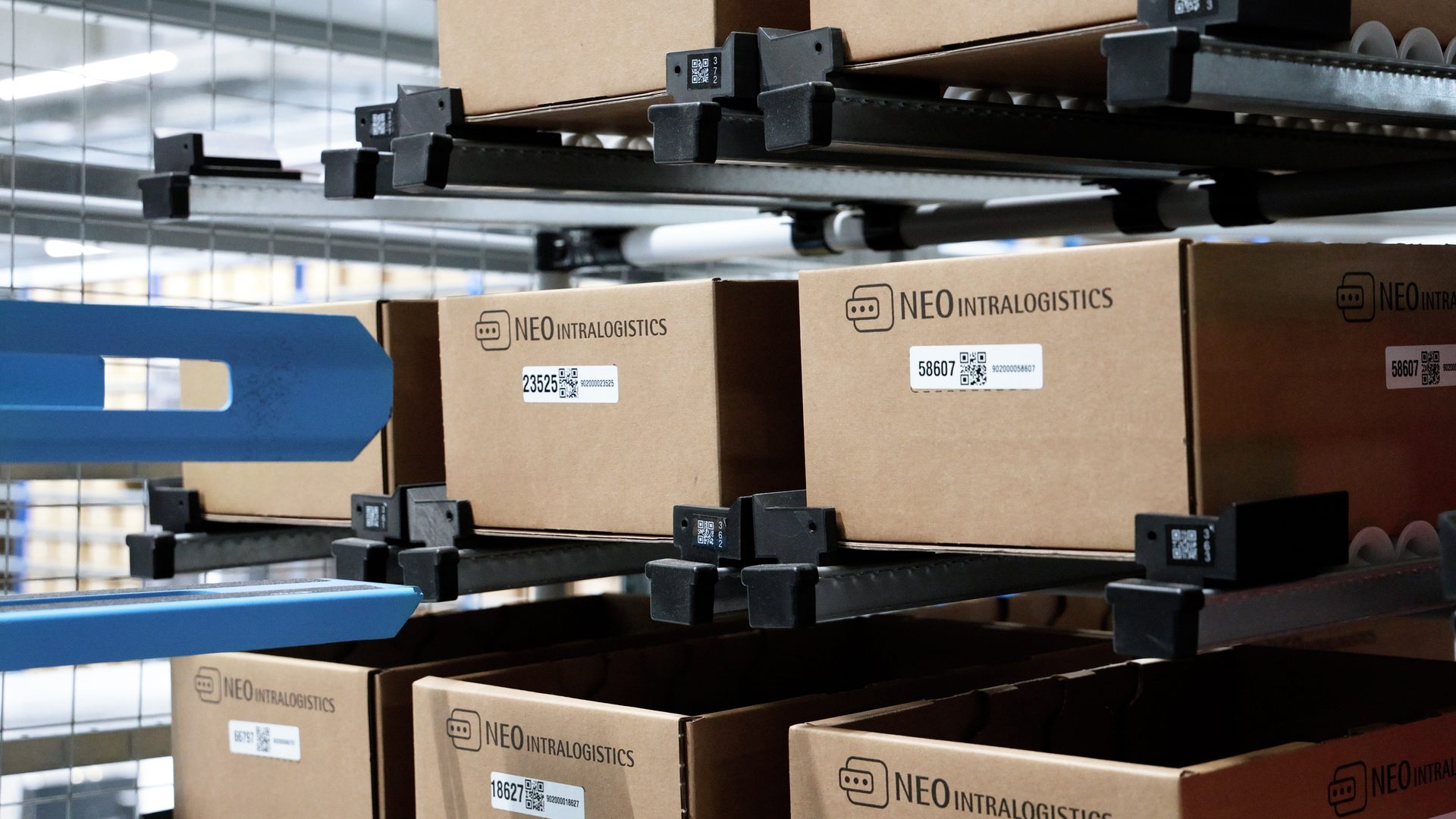
At its Wernberg site, Conrad Electronic picks from classic shelf racking. A shuttle system covers the fast movers, the bulk of the assortment sits in the shelf warehouse, and there the person goes to the goods. Three things spoke against leaving it that way.
Why Conrad Electronic Chose NEO
The warehouse automation market offers numerous systems - from shuttle installations and cube-based AS/RS systems to traditional mini-load systems. But all of these solutions require the existing racking infrastructure to be removed. For a company with functioning shelf-racking warehouses, that means demolition, new construction, and relocation.
NEO was the only solution capable of enabling goods-to-person automation directly within the existing shelf racking. Autonomous mobile robots (AMR) navigate through the existing aisles, retrieve bins, and transport them to the picking station - without a single shelf being moved.
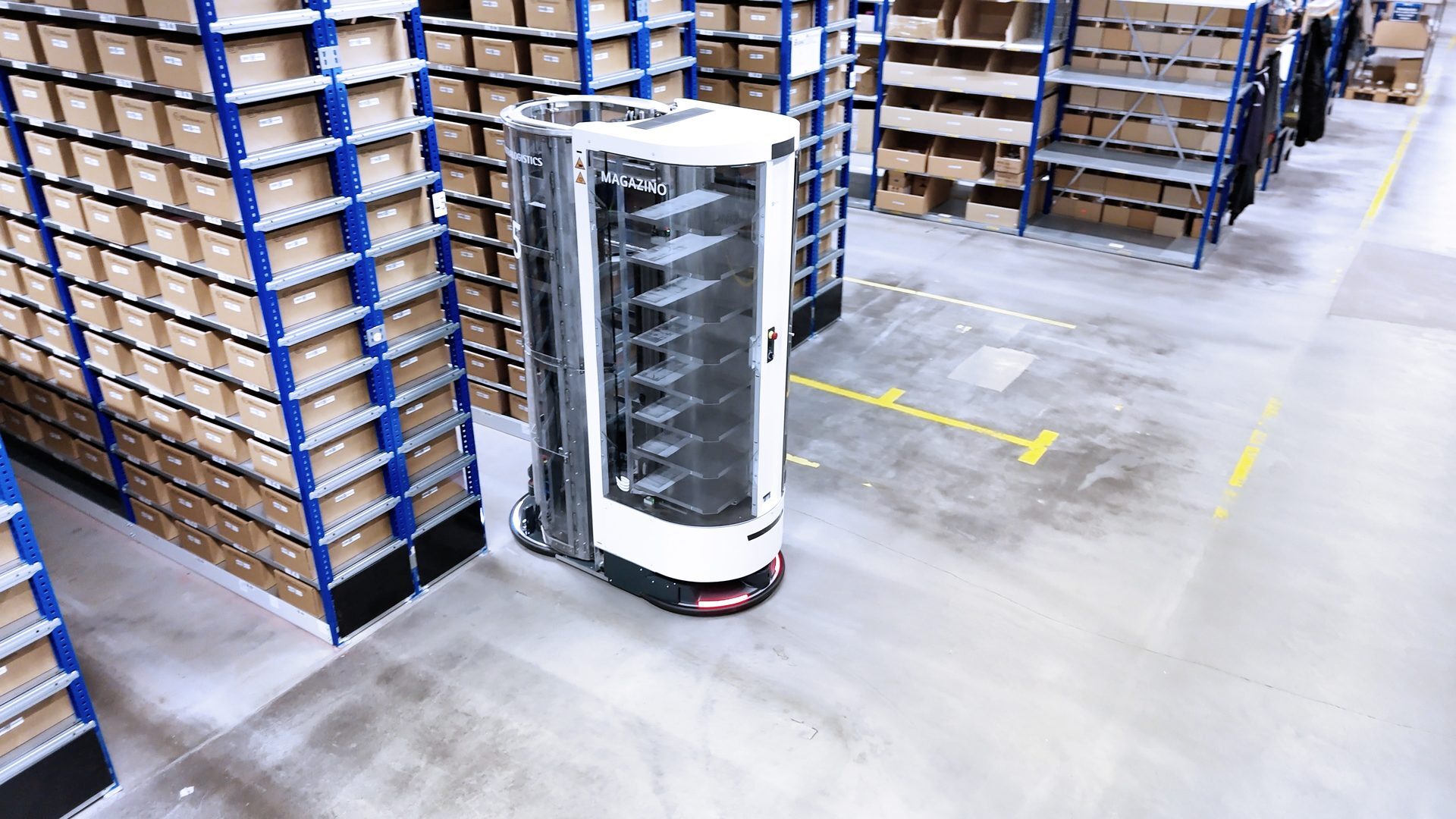

“Currently, there is no other provider besides NEO that offers goods-to-person automation specifically for shelf-racking environments.”
The Implementation
Rolling NEO out inside an existing warehouse follows a standardised process built for minimal disruption.
Operations since go-live
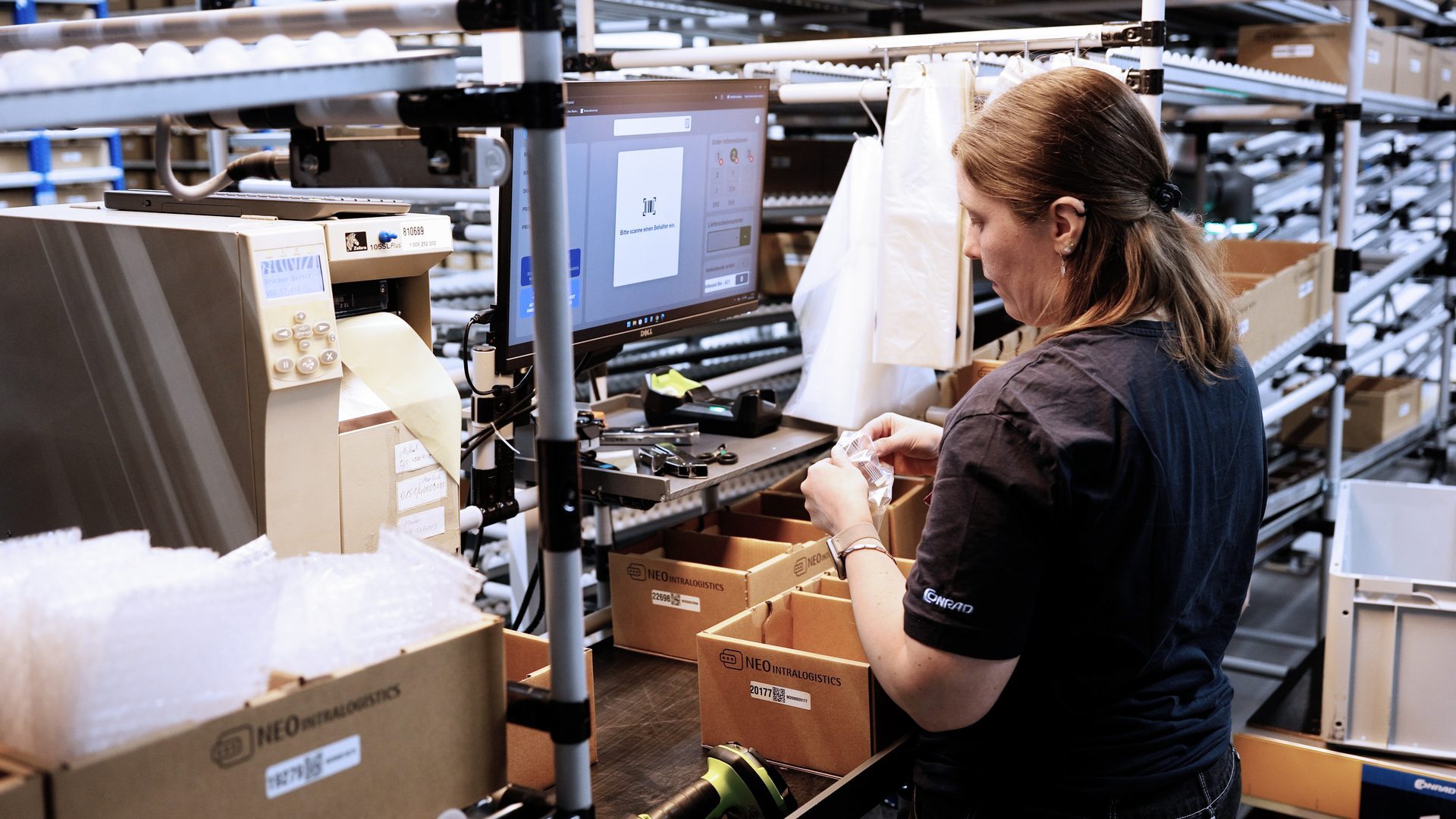
Between January and August 2026, the first NEO system at Conrad handled around 4.5 million picks across roughly 180 working days, at a single picking station, staffed by one person taking the items from the bins as they arrive.
The full range of articles was tested along the way, from the smallest to the heaviest, while logistics kept running without restriction. The performance test was passed, and Conrad ordered a second NEO station before the trial period was over.
The new layout also freed up space: 25 to 30 percent of the shelf-warehouse floor is now available for other projects, in the same building and without a single extra square metre.
The customer interview
Thomas Kellner, Senior Business Expert Supply Chain at Conrad Electronic, explains why Conrad took this route, how the rollout ran during live operations and what changed for the team on the warehouse floor. The interview is in German, with English subtitles.
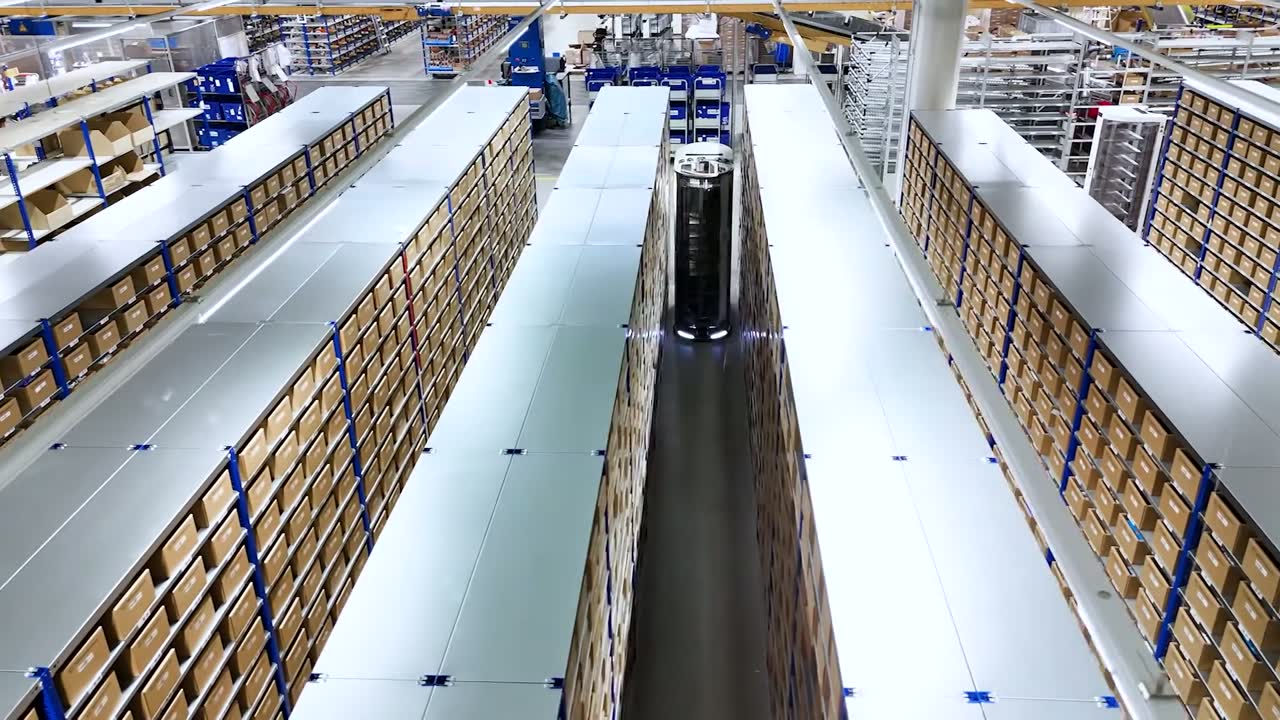
More films on NEO in existing warehouses are on our Videos page.
What changed for the team
NEO takes over the walking and the bin transport in both directions, the reach into the bin stays with the person. That line is what carried acceptance on the floor.
The bin arrives at grab height instead of the employee bending into the lower shelves and reaching into the upper ones. Staff reacted positively to the rollout.
Six to eight weeks passed from project start to production. A new warehouse or an automated small-parts store would have cost 12 to 36 months and a multi-million investment.
Conclusion
Conrad Electronic shows that goods-to-person automation works inside existing shelf racking, in large warehouse operations and during live business. The second station was ordered before the trial period was over.
What would this mean for your warehouse?