Request a Fit-Check

Versandmanufaktur and GLS - From 1 to 3 Systems

Versandmanufaktur is a 3PL fulfillment operator and a subsidiary of GLS. The company made the transition from manual picking to goods-to-person automation with NEO - and has since scaled from one to three picking station systems. This expansion is the strongest proof of what matters most in the automation market: a repeat purchase decision based on live operational experience.

400
picks/h
Picking throughput per station
70%
less
Picking labor required
2-3×
higher
Warehouse capacity
1 → 3
systems
NEO:pickstations scaled
€0
CapEx
Pay-per-pick model

NEO automates picking in existing shelf-racking warehouses on a pay-per-pick basis. Autonomous mobile robots (NEO:runner) bring bins from the existing shelving to the PickStation. Throughput reaches 400 picks per hour. Picking labor drops by 70%. Implementation runs alongside live operations, with no CapEx.

The Starting Point

As a 3PL operator, Versandmanufaktur faces a specific set of challenges that differ significantly from manufacturers or owner-operated warehouses.
Multi-client operations

The warehouse serves multiple clients simultaneously. Each customer brings its own product range, its own packaging and shipping requirements, and its own volume fluctuations. The operational complexity is correspondingly high.

Variable volume

Fulfillment operators work with highly variable daily volumes. Peak seasons such as Black Friday, the holiday period, or seasonal campaigns can multiply daily order volume several times over - followed by phases with significantly lower order intake.

Labor pressure

In an environment with fluctuating demand, workforce planning is particularly challenging. Temporary staff must be onboarded quickly, turnover is high, and availability is limited precisely during peak periods.

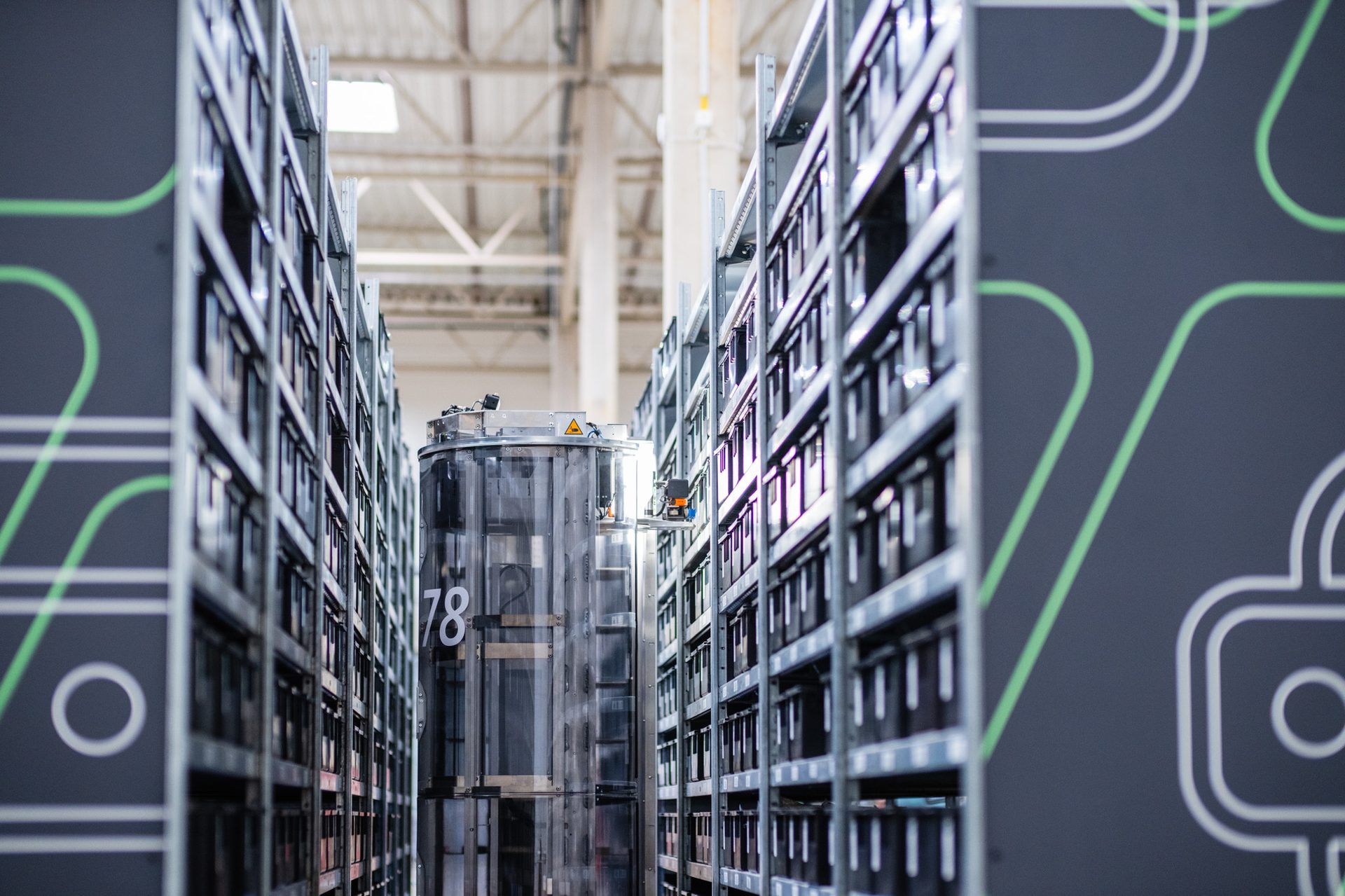
Symmetrical top-down view of NEO:runner in the Versandmanufaktur racking aisle

Existing Infrastructure

Versandmanufaktur operates conventional shelf racking. A new warehouse build or switching to an entirely new warehouse technology was not an option - too expensive, too time-consuming, and too risky for a business model built on flexibility.

The Path to NEO

The decision for NEO came down to three factors:

First: automation without CapEx. As a 3PL operator, Versandmanufaktur is particularly cost-driven. NEO’s pay-per-pick model eliminates investment risk entirely. There are no acquisition costs, no leasing, and no long-term capital commitment. Costs scale directly with actual volume - exactly what a fulfillment business needs.

Second: integration into the existing facility. NEO works within existing shelf racking. No construction, no new build, no downtime. For a live warehouse operation with active client contracts, this is critical - a months-long construction phase is simply not feasible.

Third: fast results. NEO implementations reach productive operations in 6 to 8 weeks. For Versandmanufaktur, that meant results within a quarter, not within a year.

Learn more about pay-per-pick →

The Implementation: From Pilot to Production

The rollout of NEO at Versandmanufaktur followed a structured path designed to minimize risk to ongoing operations.

1

Pilot Project

The start involved a single picking station and a limited AMR fleet. During this phase, the system was integrated into the existing warehouse operation: WMS connection, setup of the picking station, and deployment of the robots into the existing racking aisles.
The pilot had a clear objective: demonstrate that the automation works in day-to-day operations - with real orders, real products, and under real conditions.

2

Proof of Concept

After a successful pilot launch, the system was tested under full load. The critical questions were: Does picking throughput hold up in continuous operation? Is the WMS integration reliable? How does the system handle volume fluctuations?
The results were convincing. Picking throughput reached a stable level, the error rate dropped, and employees at the picking station reported significantly reduced physical strain.

3

Production

The first picking station transitioned into regular daily operations. From this point, NEO was no longer a test project but a permanent part of Versandmanufaktur’s operational infrastructure.

The Results

400picks/h
Picking throughput per station
70%
Less picking labor required
2-3×
Higher warehouse capacity
6-8weeks
From decision to go-live
0
Upfront investment
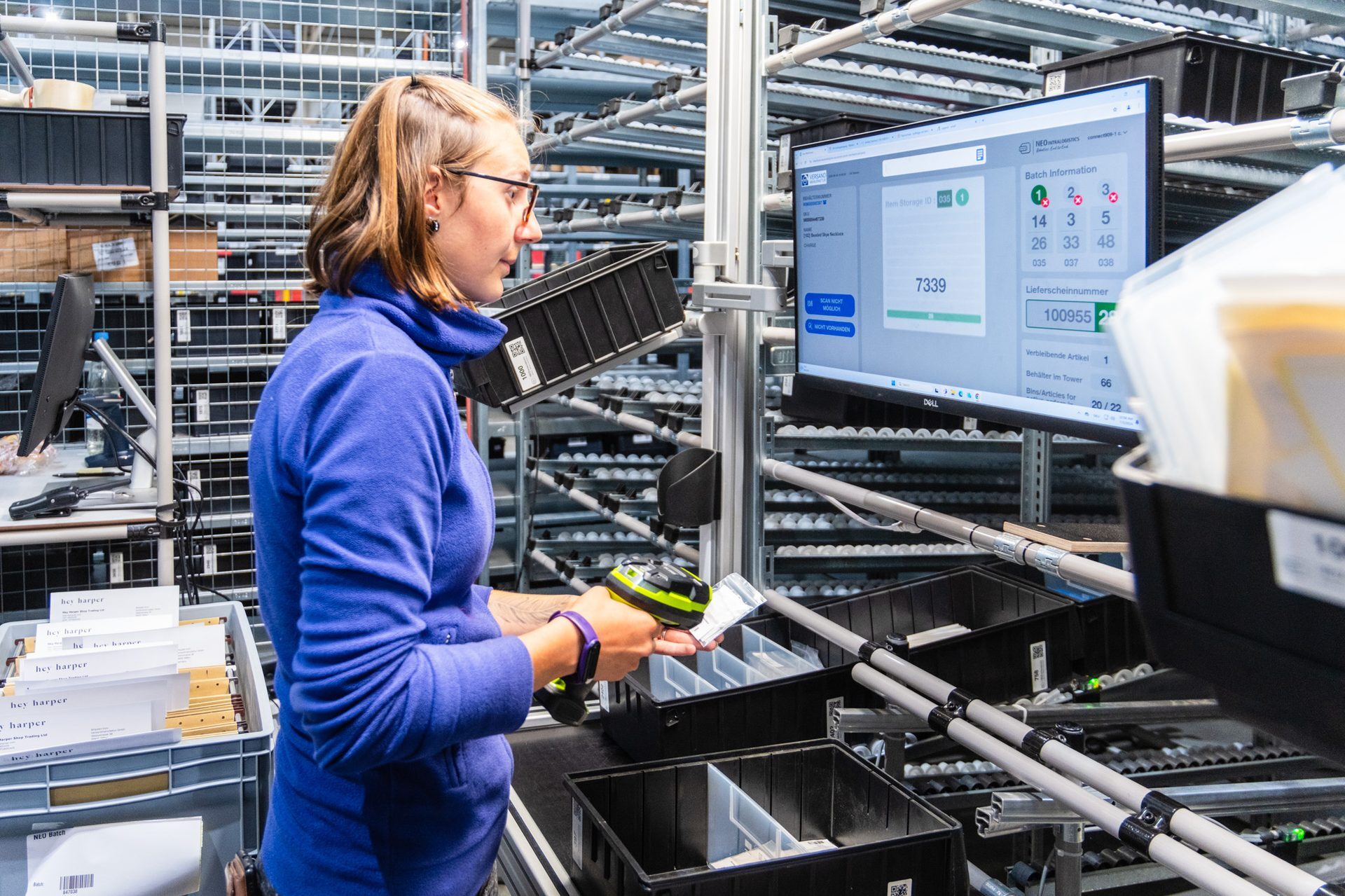
Versandmanufaktur NEO PickStation in motion - front view of the automated picking workstation

400 picks/h

Picking throughput per PickStation

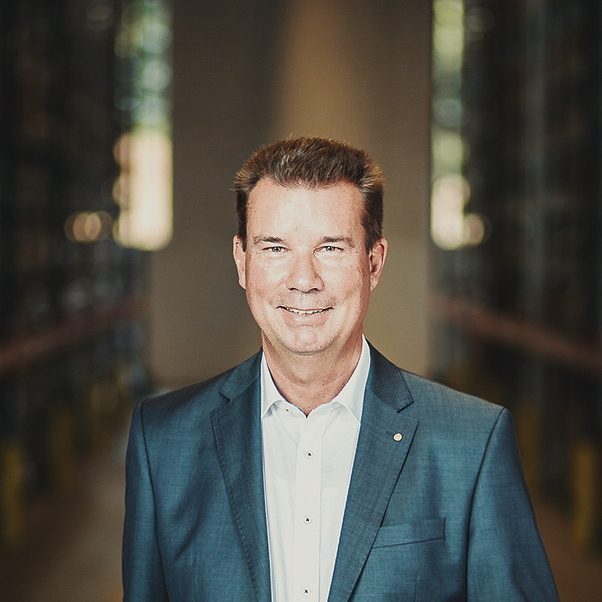
“No other provider combines such a simple automation solution with higher storage density like NEO. We see great potential to significantly support our fulfillment strategy with NEO.”

Frank Hammermeister
CEO, Versandmanufaktur GmbH (GLS Group)

The 400 picks per hour are particularly relevant in the 3PL context: in an environment where labor availability is the limiting factor, this level of picking throughput per station represents a fundamental shift in operational capability.

Scaling: From 1 to 3 NEO:pickstations

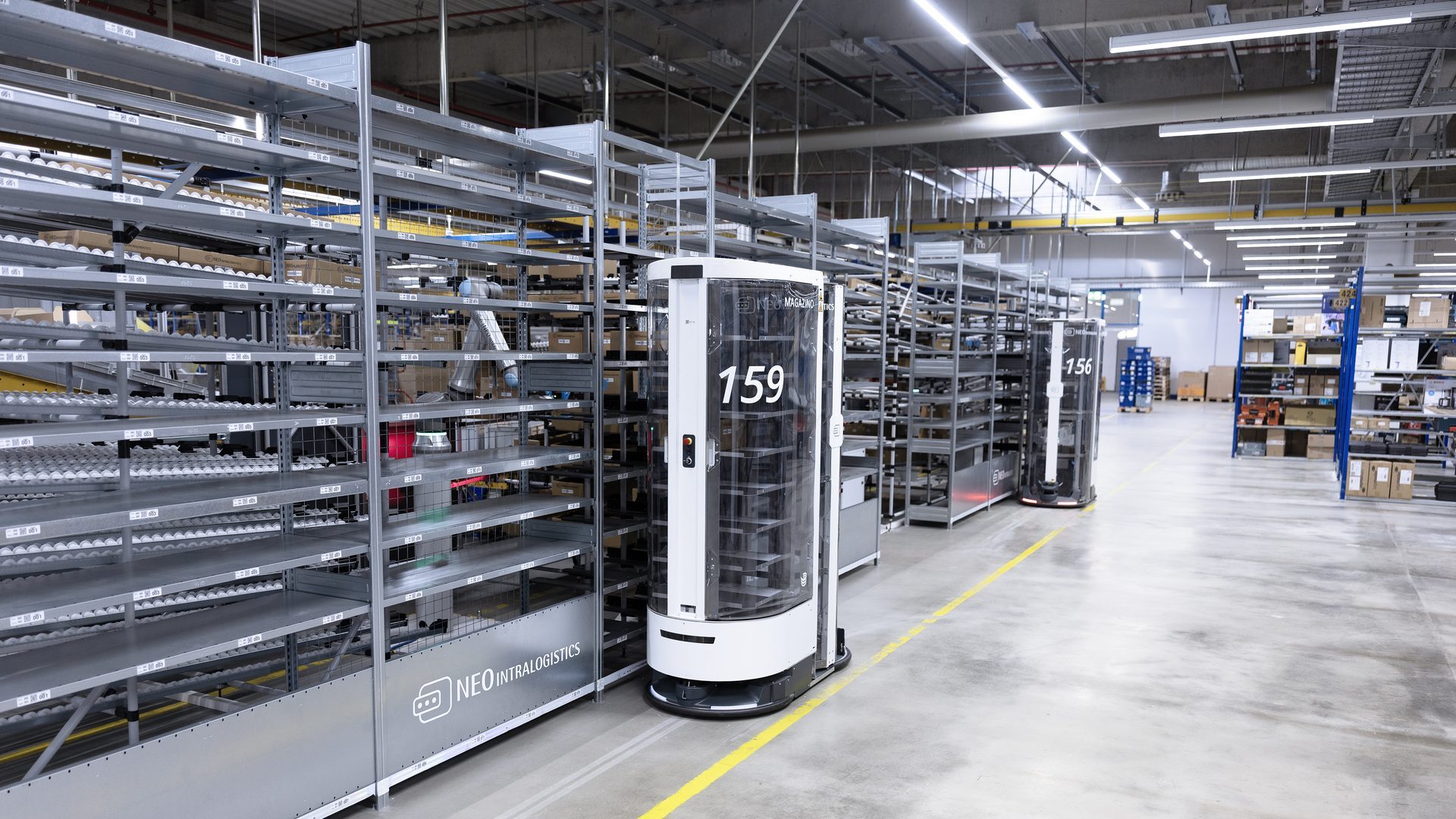
NEO:runner fleet in the Versandmanufaktur warehouse - wide-angle view of the scaled solution

The strongest indicator of an automation solution’s success is not the first installation - it is the decision to add more systems.

After the successful production run of the first station, Versandmanufaktur commissioned two additional picking stations. This scaling from one to three systems demonstrates:
Operational reliability

The system proved itself in continuous operation - with real orders, under real conditions, and over an extended period.

Economic viability

The results justified the expansion. Under the pay-per-pick model, each additional station means additional capacity without additional investment risk.

Scalable architecture

NEO is designed so that additional stations and robots can be added without construction. The expansion is an operational event, not a building project.

For the 3PL market, this scaling story is particularly significant: a fulfillment operator that invests its own resources into additional capacity has validated the solution through the hardest test there is - daily business operations.

See how NEO works for 3PL warehouses →

Conclusion

Versandmanufaktur demonstrates how goods-to-person automation works in a demanding 3PL environment: multi-client operations, variable volume, existing shelf racking, and intense cost pressure.

The journey from pilot project through production to scaling across three systems confirms that NEO is not merely a technical feasibility study, but a productive automation solution for operational warehouse environments.

Facing a Similar Challenge? Talk to Us.

Do you operate a 3PL warehouse with shelf racking and need an automation solution that scales with your volume - without investment risk and without rebuilding? We will show you in a demo how NEO would work in your operation. Learn more about warehouse retrofit → | NEO for 3PL warehouses →

Request a Fit-Check