What Is Warehouse Automation as a Service?
Definition
Warehouse automation as a service is a commercial model, not a technology. The robots, stations and software are the same equipment a company could buy outright; what changes is who owns the asset and how it is paid for. The provider carries the capital cost and the operating risk, and the warehouse operator pays per period, per unit of throughput, or per available station.
The model is often labelled RaaS (robotics as a service) when the equipment in question is robots. The two terms are used interchangeably in warehouse contexts.
Not the same as warehouse-as-a-service
The two terms sit one word apart and mean different things.
- Warehouse-as-a-service rents space and labour in someone else's building. The provider stores the goods at their own site, the typical provider is a third-party logistics operator, and what you give up is control of the operation.
- Warehouse automation as a service puts automation equipment in your own building. You still store the goods at your own site, the typical provider is an automation vendor, and what you give up is ownership of the equipment.
Searching for one and reading about the other is a common way to lose a week of evaluation. If goods leave your building, it is warehouse-as-a-service. If only the balance sheet treatment changes, it is automation as a service.
Pricing forms
A fixed subscription charges a monthly fee per robot, per station, or per installation. It is predictable, and it decouples cost from performance in both directions: a quiet month costs the same as a peak month.
Pay-per-use billing follows actual throughput, usually per bin presented or per pick. Cost tracks volume, which matters in operations with pronounced seasonality.
Availability-based pricing charges for a guaranteed level of system availability, with service credits when it is missed. It is common where automation sits on a critical path.
Most contracts combine forms - a base fee that covers the installation plus a variable component tied to volume. What separates the model from a lease is the service scope: maintenance, spare parts, software updates and fleet monitoring sit with the provider, so a failed robot is the provider's problem, not a work order in your maintenance system.
What the model changes
It removes the capital hurdle. A conventional automation project asks for a seven- or eight-figure investment decision before any throughput exists, which is why automation concentrated in large distribution centres. A recurring fee moves that decision from the capital budget into operating cost.
It shifts the risk of being wrong. If throughput assumptions do not hold, the exposure is a contract term rather than a written-down asset.
It does not remove the operational work. Integration with the warehouse management system, process redesign around the new picking flow, and staff training happen either way. Nor does it make automation cheaper in total: over a long enough horizon, ownership is usually the lower-cost route. The model buys optionality and speed, and that is what it charges for.
Where it fits
The model earns its premium when volumes are uncertain, when capital is constrained, or when the alternative is a construction project. It fits poorly where volumes are stable and predictable over ten years and capital is available - there, buying the equipment is the cheaper answer.
One constraint is structural rather than commercial. Automation that requires new racking, a grid, or a new building cannot be delivered as a lightweight service, because the construction stays a capital project whoever owns the robots. Service models work best on retrofit architectures that install into the existing building: free-navigating AMR need no rails and no grid, so there is no structure to finance.
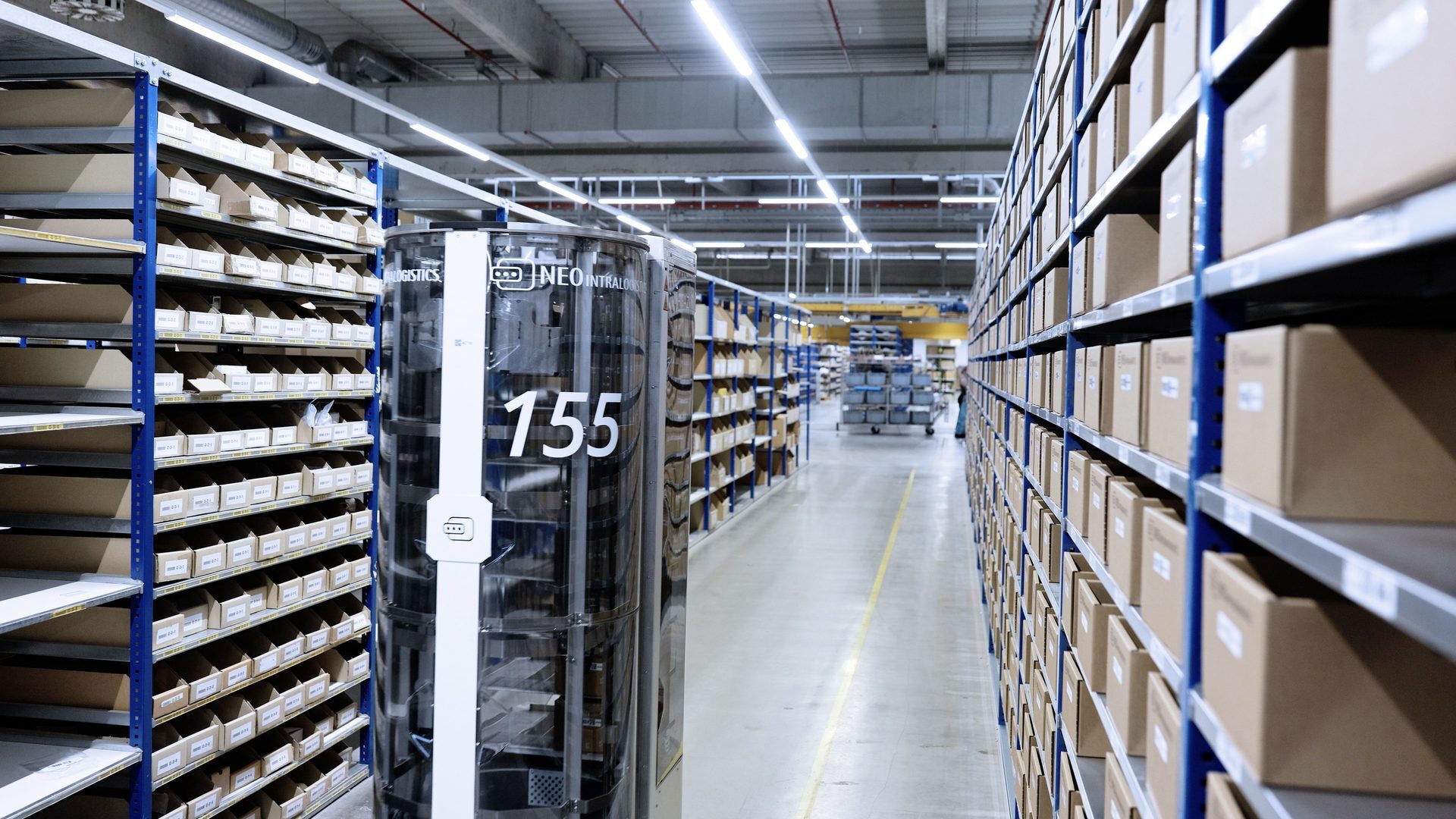
NEO automates picking in existing shelf-based warehouses and bills through pay-per-pick: a price per completed pick, with no upfront investment. NEO owns and maintains the fleet; the warehouse keeps its building, its racking and its aisles. Go-live takes 6-8 weeks against 12-36 months for a conventional build, and the recommended entry point is 5,000 picks per day.
Frequently Asked Questions
What does warehouse automation as a service mean?
It means paying a recurring fee for automation the provider owns, installs and maintains, instead of buying the equipment. Billing is tied to time, throughput or availability, and maintenance and software updates stay with the provider.
How is it different from warehouse-as-a-service?
Warehouse-as-a-service rents space and labour in a provider's building, so the goods leave your site. Warehouse automation as a service installs equipment in your own warehouse and changes only how it is paid for.
Is automation as a service cheaper than buying?
Not over a long horizon. Ownership is usually cheaper in total cost once the equipment is paid off. The service model removes the upfront investment and the risk of a wrong volume assumption, and prices that flexibility.
What is RaaS in a warehouse context?
RaaS - robotics as a service - is the same model applied to robots specifically: the provider owns the fleet and charges for its use. In warehouse automation the two terms are used interchangeably.
Does the model work for every automation type?
No. Systems that need new racking, a storage grid, or a new building remain capital projects regardless of the contract, because the construction has to be financed. Retrofit systems that install into existing shelving are the natural fit.
Related glossary entries
Warehouse Automation
Technology families, benefits, and the difference between building new and retrofitting an existing warehouse.
AMR - Autonomous Mobile Robots
Self-navigating transport robots that move freely through the warehouse to handle tasks such as order picking and goods transport.
Intralogistics
The umbrella term for all internal logistics processes - from receiving to storage, picking, packing, and shipping.
Ready for the future of your warehouse?
In the call we assess whether NEO fits your warehouse - and set the date for your visit to our Bochum showroom or a remote demo.
See NEO in action