AMR - Autonomous Mobile Robots
Definition
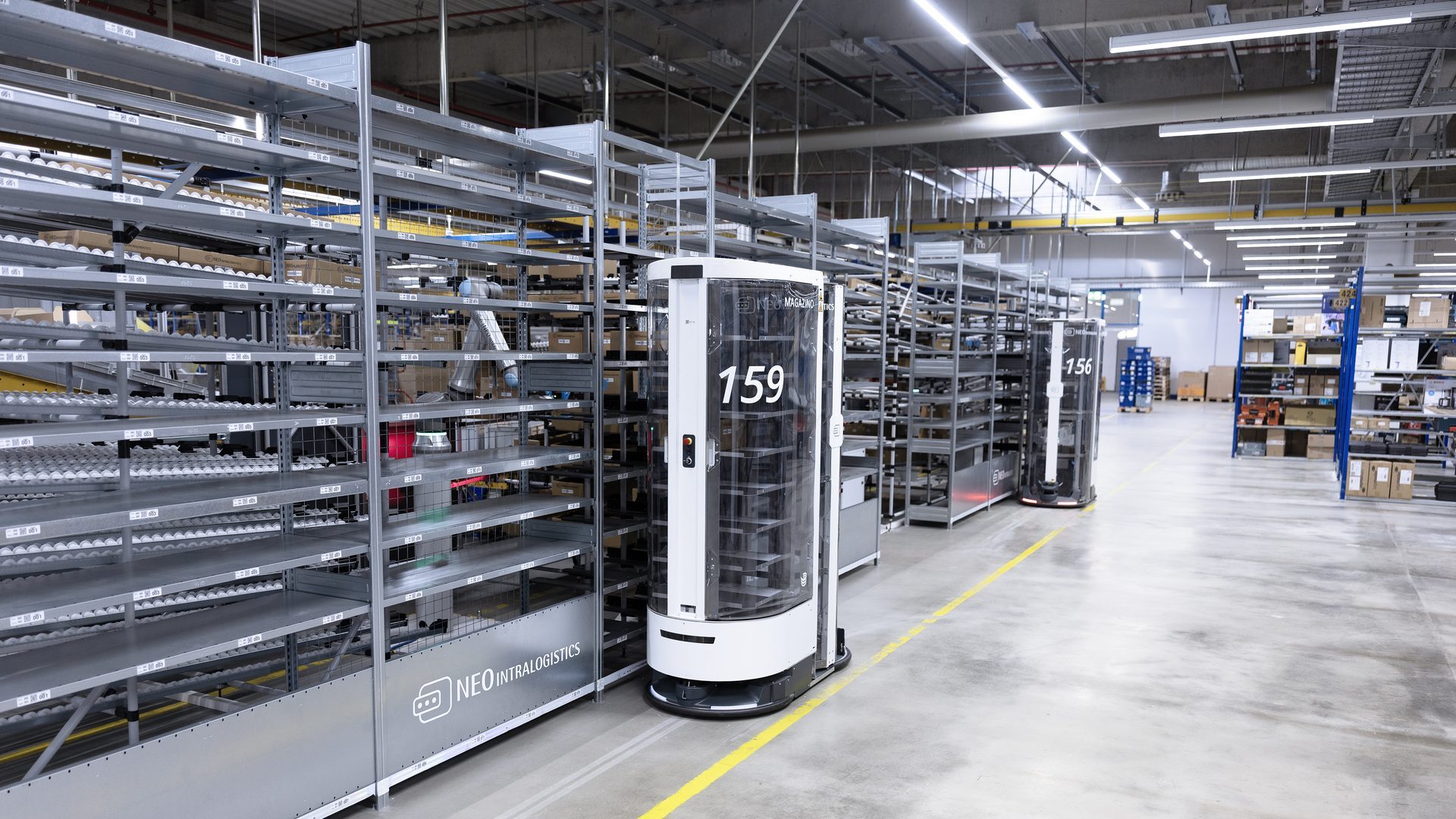
An autonomous mobile robot (AMR) is a transport robot that plans its own route. Using laser scanners (LiDAR) and SLAM (simultaneous localization and mapping), it builds a map of its surroundings, locates itself in real time, and navigates freely between destinations. It needs no fixed guidance infrastructure - the building stays as it is.
In warehouses, AMR typically carry bins or shelves between storage zones and workstations. A fleet-management layer takes orders from the warehouse management system (WMS) and assigns them to individual robots.
AMR vs. AGV - the key difference
AGV (Automated Guided Vehicles) are the older technology generation. The core difference is navigation:
- AGV (Automated Guided Vehicle): Follows fixed guidance - guide wires, magnetic tape, or floor markings. It stops in front of obstacles, layout changes require reworking the guidance, and retrofitting into an existing warehouse is costly.
- AMR (Autonomous Mobile Robot): Navigates freely using sensors, LiDAR, and SLAM (simultaneous localization and mapping). It steers around obstacles on its own, adapts to layout changes with a software update, and needs no structural infrastructure.
This is what makes AMR the basis of retrofit warehouse automation: they operate in existing aisles without structural changes. AGV remain a fit where the same route is driven over and over - pallet transport between two fixed points, for example.
How AMRs work in a warehouse
The workflow is similar across systems: the WMS hands a picking order to the fleet software, which dispatches a robot. The robot retrieves the required bin from the shelf and brings it to a goods-to-person station, where a picker takes the item; the robot returns the bin afterwards. Walking disappears from the process - in manual shelf warehouses that is 10-16 km per shift and picker.
Common use cases:
- Goods-to-person picking - the robot brings items to the operator
- Internal goods transport - bins or load carriers between warehouse zones
- Replenishment - restocking shelf locations between zones
NEO and AMR technology
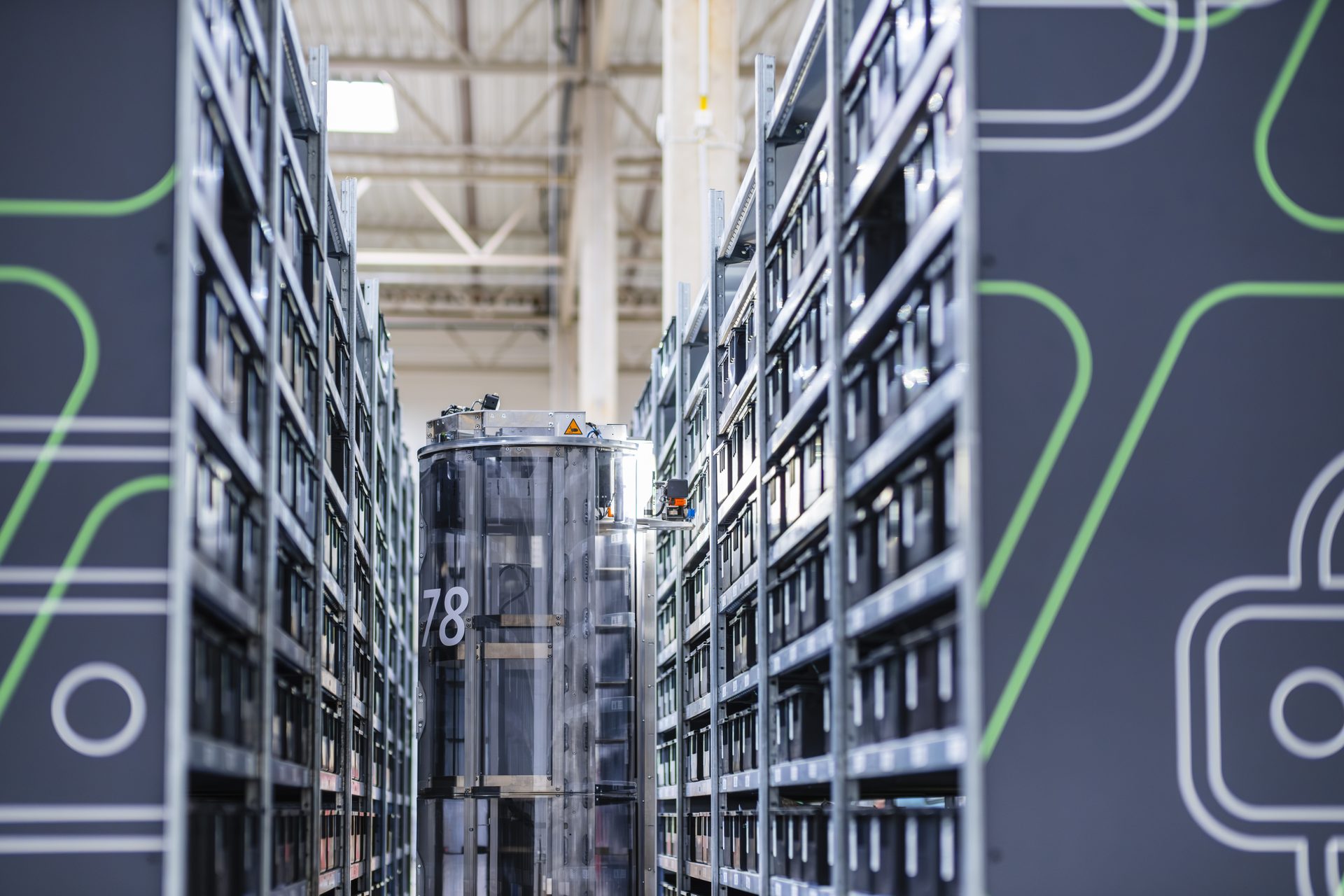
NEOintralogistics uses autonomous mobile robots as the core of its platform. The NEO:runner is an AMR built for retrofitting existing shelf-based warehouses: it operates in aisles from 85 cm width and serves shelf levels up to 250 cm - in the existing racking, with no rebuild. NEO:os orchestrates the fleet as a layer alongside the existing WMS. Go-live takes 6-8 weeks, and billing follows the pay-per-pick model instead of an upfront investment.
Frequently Asked Questions
What is the difference between AMR and AGV?
AGVs (Automated Guided Vehicles) travel on fixed paths and require physical infrastructure such as magnetic strips or rails. AMRs (Autonomous Mobile Robots) navigate freely using sensors and software, adapt dynamically to changing environments, and can be deployed in existing warehouses without structural modifications.
Ready for the future of your warehouse?
See live how NEO automates your shelving warehouse - in our showroom in Bochum or via remote demo.
Request a Fit-Check