The most expensive line item in a warehouse automation project rarely appears in the vendor's quote: the months in which your warehouse ships less because it is being rebuilt. This article breaks down where implementation downtime actually comes from, why traditional projects take 12-36 months, and how a retrofit approach goes live in 6-8 weeks while daily picking continues.
The cost block that never appears in the quote
Ask three automation vendors for a proposal and you will get three detailed price lists: hardware, software licences, integration services, maintenance. What none of them price is the disruption between contract signature and stable operation.
That disruption is real money. A construction phase means blocked aisles, relocated stock, and pickers working around scaffolding. A system cutover means running two operations in parallel - the old manual process for orders that must ship today, the new automated process for orders you can afford to risk. A delayed ramp-up means paying temp agencies through a peak season the new system was supposed to handle.
For warehouse automation built the conventional way - AKL installations, shuttle systems, cube-based AS/RS - this phase lasts 12-36 months. During most of that time the warehouse is a construction site that also has to ship orders.
If your operation runs close to capacity, the question is not only "what does the system cost?" but "what does my warehouse fail to ship while it is being installed?" Vendors do not answer that question unprompted. You have to ask it.
Where traditional projects disrupt operations
The disruption in conventional automation projects is not an execution failure. It is built into the architecture. Three mechanisms account for most of it.
The construction phase
AKL and shuttle systems are steel structures. Installing one inside an operating warehouse means tearing out existing racking, pouring or reinforcing floors, erecting the rack structure, and routing conveyors through space your pickers currently use. Cube-based AS/RS systems need a grid assembled on a prepared footprint. None of this happens around live picking - the affected zone goes offline, and its stock has to live somewhere else in the meantime.
There is a second, quieter version of this problem. Many vendors plan from the greenfield: their reference designs assume a new hall with the right ceiling height, a clean floor plan, and no legacy racking. If your reality is an existing hall with shelf racking and a lease that runs another six years, a system designed for a building you do not have will force the building to change - which is exactly the disruption you were trying to avoid.
The big-bang cutover
Monolithic systems tend to have monolithic go-lives. When the automated zone replaces the manual process rather than joining it, there is a date on which orders stop flowing through the old workflow and start flowing through the new one. Every unresolved defect that survives until that date becomes an operational incident with customers waiting on the other end.
Experienced operators hedge this with parallel operation - running manual and automated processes side by side for weeks. That works, but it doubles process cost during the transition and stretches the timeline further.
IT integration treated as an afterthought
In vendor presentations, WMS integration usually occupies one slide. In practice it is the critical path of nearly every automation project. The pattern is familiar: the contract is signed, the project starts, and then IT discovers the WMS has no real-time API, the data formats do not match, or a sub-WMS is needed that nobody budgeted. The schedule slips by months while the hardware sits idle.
The mistake is not underestimating the integration - most project leads know it is hard. The mistake is clarifying it after the technology decision instead of before. We cover the integration questions IT should ask during evaluation in a separate article on warehouse automation and IT integration.
How retrofit automation deploys during live operations
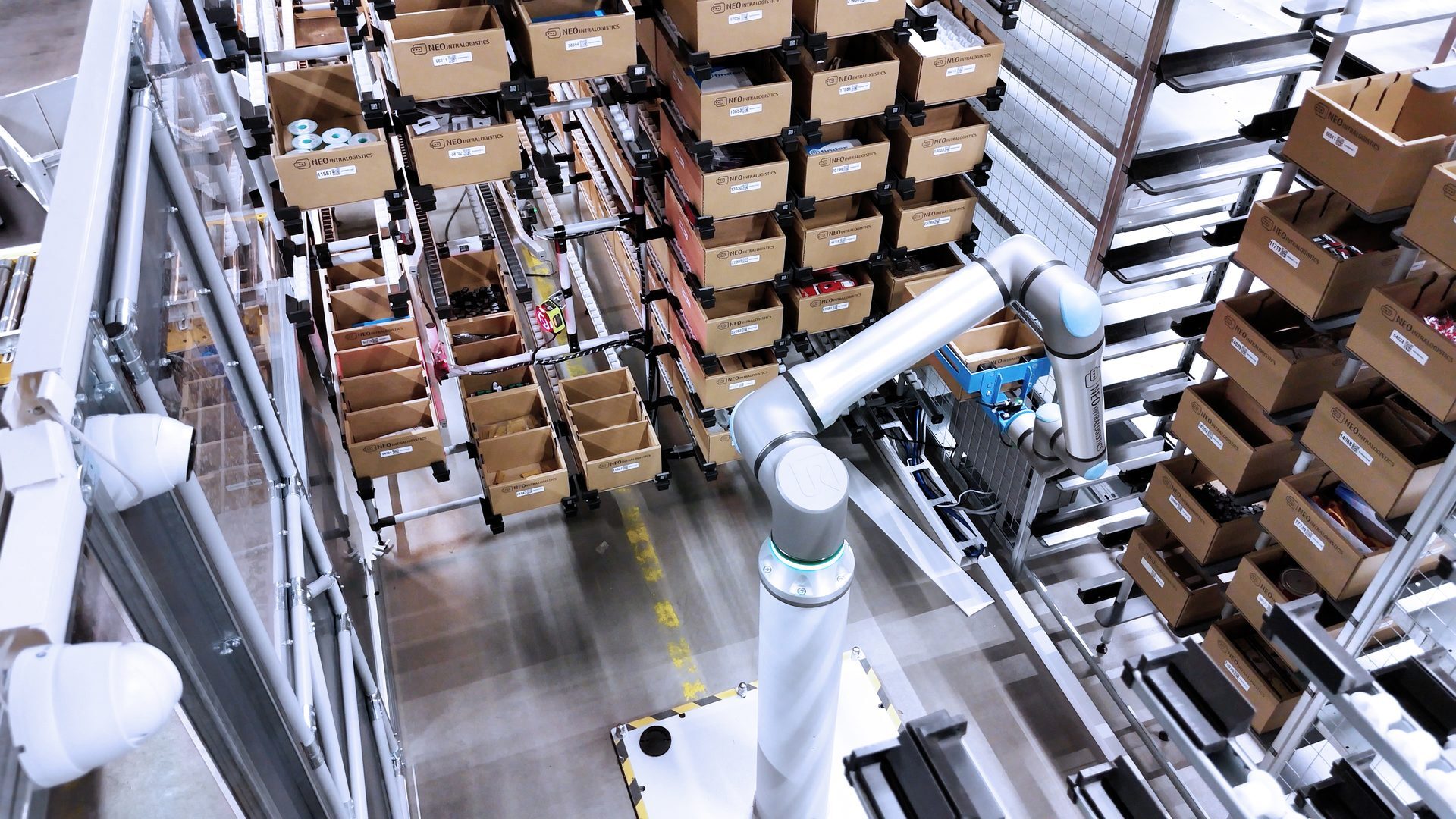
A retrofit approach avoids these three mechanisms by design rather than by heroic project management. NEO automates existing shelf-racking warehouses with AMR and goods-to-person stations - the warehouse retrofit works inside the infrastructure you already have.
The shelving stays
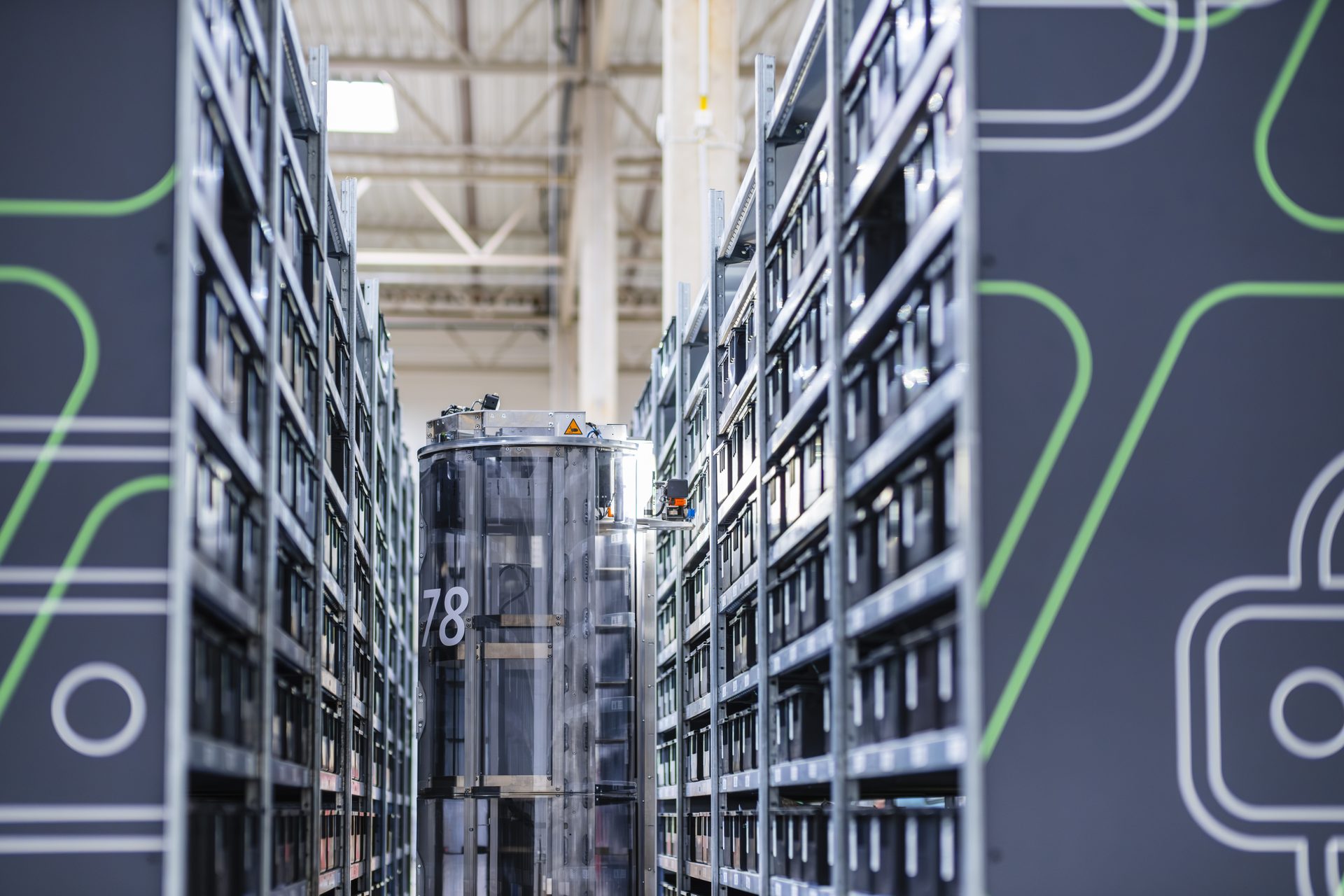
There is no construction phase because nothing is torn out. The AMR navigate the existing aisles, and the goods-to-person station is placed in available floor space. No new building, no racking teardown, no floor works. The zone being automated keeps picking manually until the moment the automated workflow takes over - and because the physical infrastructure does not change, that handover is a process switch, not a construction milestone.
Pilot area first, not the whole warehouse
Implementation starts with a single goods-to-person station and a defined pilot area, not a full-facility transformation. The rest of the warehouse is untouched and unaware. The pilot carries real orders at a scale where any teething problem affects a fraction of daily volume, and the manual process remains available as a fallback throughout.
The pilot also does quiet work on the organisational side. Your pickers, shift leads, and works council see the system running in a corner of their own warehouse before any large-scale commitment. In the DACH region, where systems that record picking performance are subject to works-council codetermination, that lived experience is worth more than any slide deck - it turns an abstract negotiation into a conversation about a workflow people have already watched.
Expansion in steps, on evidence
Scaling means adding robots and stations to a running system, not launching a second project. Each expansion step uses the same WMS integration, the same processes, and the same operating model that the pilot validated. There is no second cutover, because there was never a first one in the big-bang sense.
WMS integration in ~4 weeks, alongside daily business
The integration follows the same logic. NEO:os connects to the existing WMS through standard APIs - the WMS stays the leading system and is not replaced or restructured. The connection is typically built and tested in ~4 weeks, in parallel with normal operations, and validated against live orders before the automated workflow takes over. Total time from project start to go-live: 6-8 weeks.
Traditional vs. retrofit: the implementation compared
| Criterion | Traditional automation (AKL / shuttle / cube AS/RS) | Retrofit (AMR + goods-to-person) |
|---|---|---|
| Implementation time | 12-36 months | 6-8 weeks |
| Construction phase | Yes - racking teardown, floor works, steel structure | None - existing shelving stays |
| Operations during installation | Affected zone offline, stock relocated | Live picking continues, pilot area only |
| Go-live model | Big-bang cutover, often with parallel operation | Stepwise, manual process as fallback |
| WMS impact | Deep changes, sometimes replacement | Existing WMS stays leading, API connection in ~4 weeks |
| Expansion | New project with new construction | Add robots and stations to the running system |
| Upfront investment | Multi-million, often tens of millions | €0 (pay-per-pick) |
The two right-hand columns describe different risk profiles, not just different speeds. In the traditional model, most of the risk concentrates around a single cutover date. In the retrofit model, risk is spread across small, reversible steps - and the manual process stays available at each of them.
What this looks like in live deployments
Conrad Electronic: automation without rebuilding
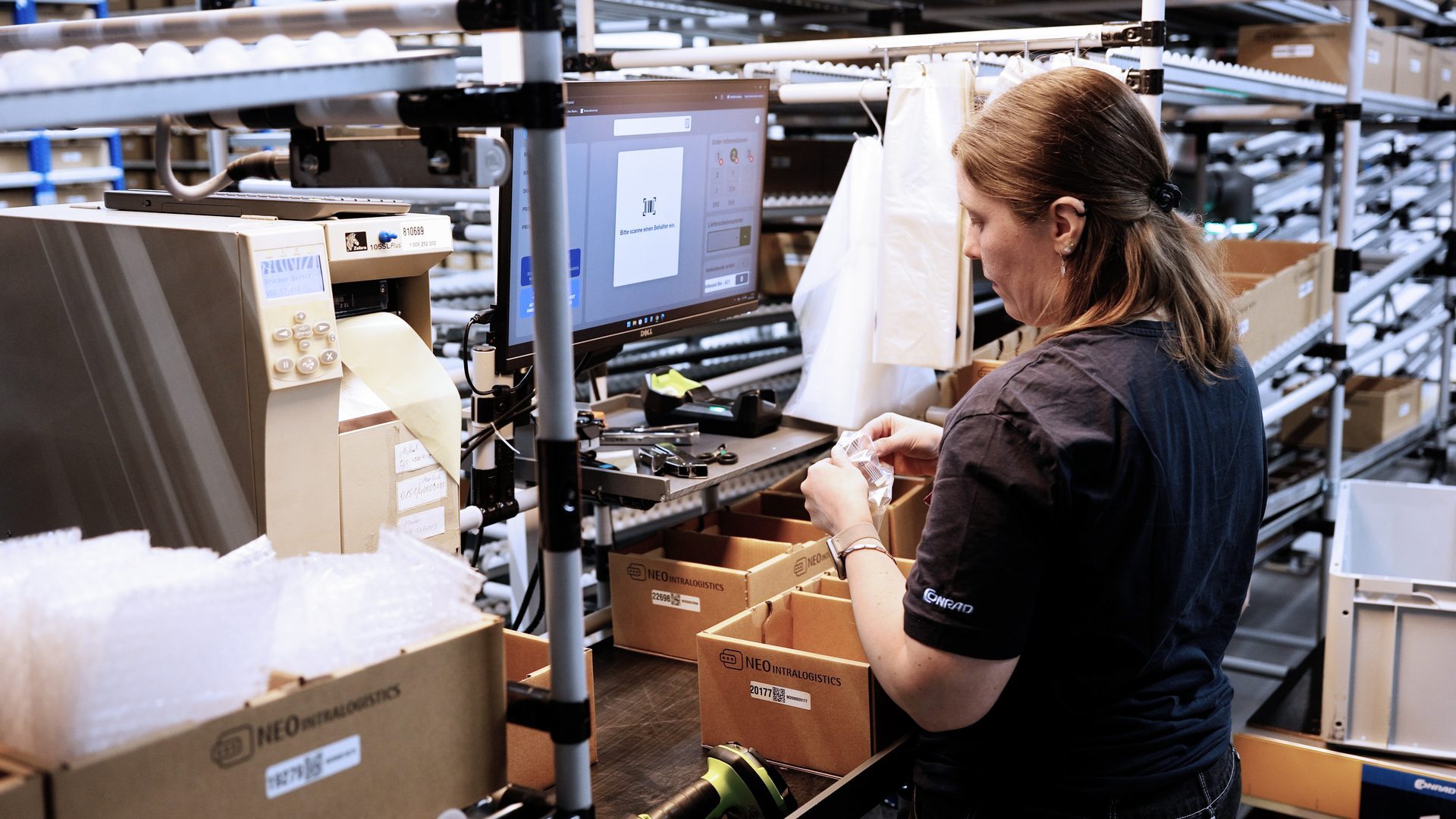
Conrad Electronic, one of Europe's leading electronics retailers, automated an existing shelf-racking warehouse with NEO - without a new building and without tearing out the racking that was already in place. The existing WMS stayed in charge; picking in the affected area continued while the system was deployed. The full implementation narrative is in the Conrad Electronic case study.
Ralf Bühler, CEO of Conrad Electronic SE: "Currently, there is no other provider besides NEO that offers goods-to-person automation specifically for shelf-racking environments."
Versandmanufaktur (GLS Group): scaling from 1 to 3 systems
Versandmanufaktur, a 3PL fulfillment operator in the GLS Group, started with a single goods-to-person system and expanded to three - while fulfilling client orders throughout. Each expansion reused the WMS integration and the operating processes established with the first system; no additional integration project, no repeated cutover. For a 3PL, where downtime is a contractual problem and not just an internal one, that expansion path was the point. The details are in the Versandmanufaktur case study.
Frank Hammermeister, CEO of Versandmanufaktur GmbH: "No other provider combines such a simple automation solution with higher storage density like NEO. We see great potential to significantly support our fulfillment strategy with NEO."
Across deployments, the aggregate results are 70% less picking labor and 2-3× storage capacity in the automated areas - reached without a construction phase and without an interruption of daily shipping.
What to check before you commit
Whichever architecture you evaluate, four checks separate a low-disruption project from an expensive surprise. All four belong in the evaluation phase, before any contract is signed.
Start with an honest inventory of your building: ceiling height, floor plan, floor load capacity, existing racking, remaining lease term. Give that data to every vendor and ask the question directly - can your system be installed in this hall, with this racking, without a rebuild? A vendor who answers "no" early has done you a favour.
Bring IT in during evaluation, not implementation. Request a documented API specification and let your IT team verify that your WMS can meet it. If middleware or a sub-WMS would be needed, you want that on the cost sheet before the technology decision, not after.
Talk to your works council before you sign, not after. Any system that assigns orders or records picking rates falls under codetermination in Germany. Councils that are informed during evaluation negotiate agreements; councils that learn about a signed contract block projects.
Finally, ask every vendor what the smallest deployable unit is. A system that can only go live as a whole facility concentrates all implementation risk in one date. A system that starts with one station and scales on evidence lets you buy certainty in small increments - and lets your operation keep shipping while you do.
Next step: check your warehouse
Whether a retrofit fits your building is a question of measurable facts: racking type, aisle width, order profile, daily pick volume. A free call gives you the answer before you commit to anything - see NEO in action.
If you are still comparing architectures, our resources include a structured overview of the main automation approaches and their trade-offs.