Request a Fit-Check

NEO vs. Shuttle Systems - Retrofit or Shuttle Installation?

Shuttle-based AS/RS systems deliver high throughput for standardized containers in dedicated racking structures. NEO automates your existing shelving - no new infrastructure, no capital investment, no months of construction. Both approaches have their place. The right choice depends on your building, your budget, and your timeline.

Shuttle-based AS/RS systems use rail-guided vehicles inside purpose-built racking to access standardized containers quickly - at multi-million investment (often in the tens of millions) and 12-36 months lead time. NEO from NEOintralogistics automates existing shelf-based warehouses as a retrofit with zero CapEx on a pay-per-pick model and goes live in 6-8 weeks. The decision depends on infrastructure, budget, and speed.

Comparison Table

NEO (AMR Retrofit) Shuttle-Based AS/RS
Rack compatibility Uses existing shelf-based racking - no new storage system required Proprietary racking with integrated rails and lifts - existing shelving is not reused
CapEx vs. OpEx Zero CapEx - pay-per-pick as a pure OpEx model High CapEx (often in the tens of millions), typical payback 3-5 years
Time-to-value 6-8 weeks from contract to go-live 12-36 months (planning, racking construction, rail installation, conveyor integration, commissioning)
Building modification None - operates in existing aisles (from 85 cm width, max 250 cm shelf height) Significant - floor load capacity for racking structure, ceiling height for lifts, conveyor connections
Pilot scalability From 1 station and 2-3 robots - incremental expansion at any time Minimum investment in racking structure, lifts, and conveyors - pilots require significant capital
Peak flexibility (collaborative picking) Robots and human pickers operate in the same workflow. Size the fleet for average load, then add people alongside the robots during peak season - capacity tracks demand, not the other way around Throughput is fixed by the installed number of shuttles and lifts. Expansion requires additional hardware, integration work, and partial downtime - not a viable response to seasonal spikes
Software orchestration role NEO:os controls AMR fleet, picking station, and WMS integration. → Solution overview Proprietary material flow control from the system integrator - deep integration but vendor lock-in

Who NEO Is the Better Choice For

  • Existing warehouses with shelf-based racking - automate it, don’t replace it
  • No CapEx budget - pay-per-pick model with zero upfront costs
  • Leased warehouse or temporary site - no dedicated racking structures can be installed
  • Fast timeline - automation in weeks, not in a year
  • Pilot project - test automation before committing long-term, starting from one station
  • Fluctuating volume - seasonal business, changing 3PL clients, or growth phases

When a Shuttle System Is the Right Choice

  • New build or major refit planned - racking infrastructure can be designed for shuttle from the start
  • Stable, high throughput - multi-million investment (often tens of millions) with typical payback 3-5 years
  • Standardized containers with multi-deep storage required
  • Buffer capacity required ahead of packing or shipping stations
  • Long-term secured site - racking structure does not need to be relocated
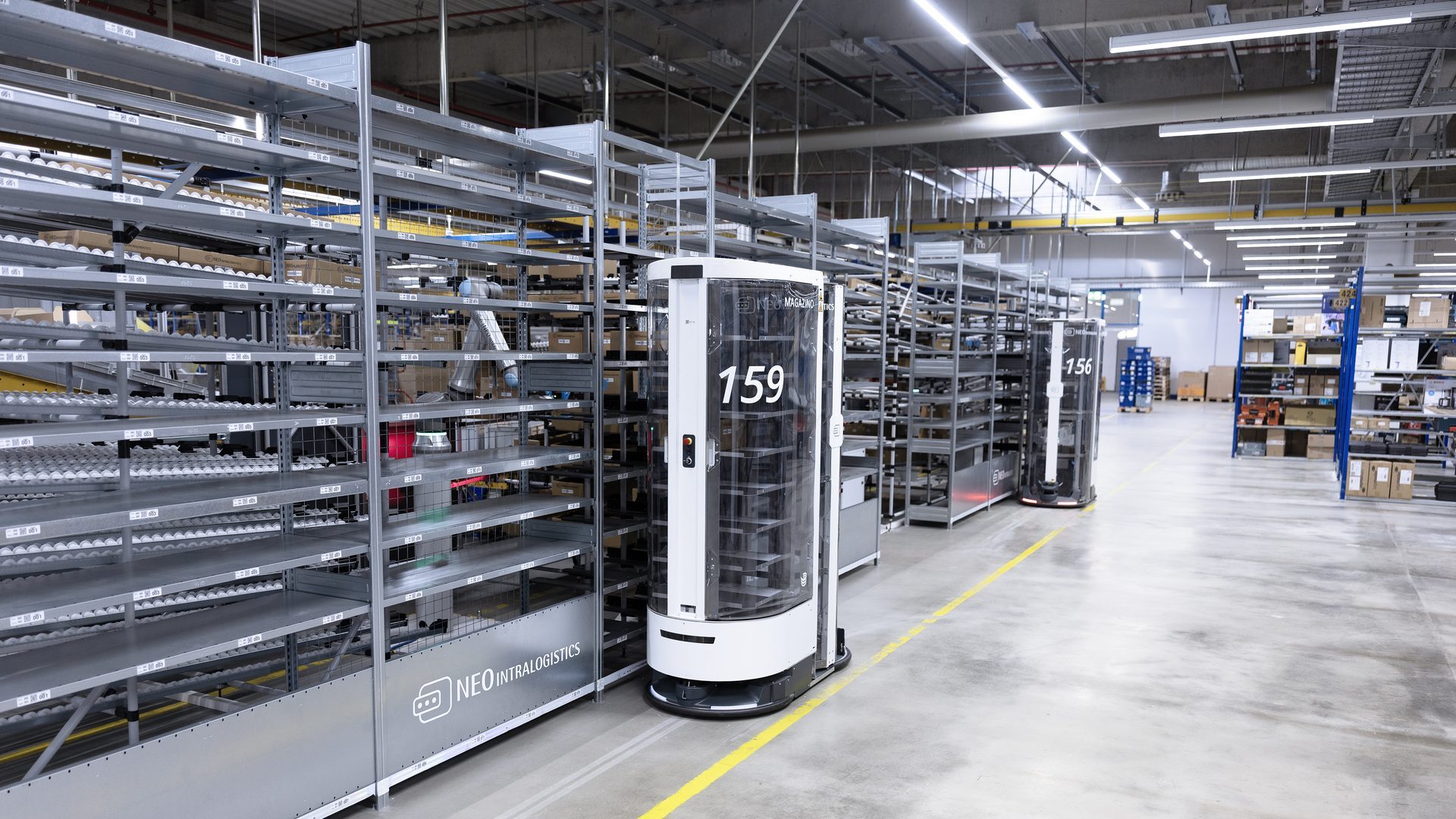
Wide warehouse view with robot fleet - scale comparison vs. shuttle systems

What Is a Shuttle System?

A shuttle system is an automated storage and retrieval system where rail-guided vehicles (shuttles) store and retrieve containers on individual racking levels. Lifts transport containers between levels. At the output, the system transfers containers via conveyor technology to picking stations.

Typical characteristics of a shuttle system:

  • Level-specific vehicles: One or more shuttles per racking level, traveling on rails within the racking structure
  • Lifts for level changes: Vertical lifts connect levels and hand off containers to shuttles
  • Moderate to high throughput: Faster than crane-based mini-load systems for multi-deep storage, as multiple shuttles operate in parallel
  • Modular expansion within the installation: Additional shuttles per level increase throughput without expanding the overall system
  • Dedicated racking structure required: Rails and guides are integrated into the racking - standard shelf-based racking is not compatible
  • Investment: multi-million (often in the tens of millions), depending on size, levels, aisles, and shuttle count
  • Implementation: 12-36 months from planning to commissioning

Established vendors: KNAPP (OSR Shuttle Evo), SSI Schäfer (Flexi Shuttle), Dematic (Multishuttle), TGW (Stingray), Gebhardt (StoreBiter).
AS/RS Context

Shuttle-based AS/RS systems are one of three AS/RS subtypes. The other two - crane-based mini-load systems (AKL) and cube-based systems like AutoStore - also require dedicated infrastructure. NEO is not an AS/RS variant - NEO automates existing shelf-based warehouses as a retrofit.

Crane-Based AS/RS (Mini-Load)

One stacker crane per aisle, optimized for deep, narrow aisles and tall warehouses. Highest throughput per aisle, but limited flexibility.

Cube-Based AS/RS Systems (e.g., AutoStore)

Robots on a grid above stacked bins. Highest storage density, but only suitable for small, lightweight items and new-build projects.

Shuttle-Based AS/RS

Independent shuttle vehicles per racking level, connected by lifts for level changes. More modular than crane-based systems and faster for multi-deep storage.

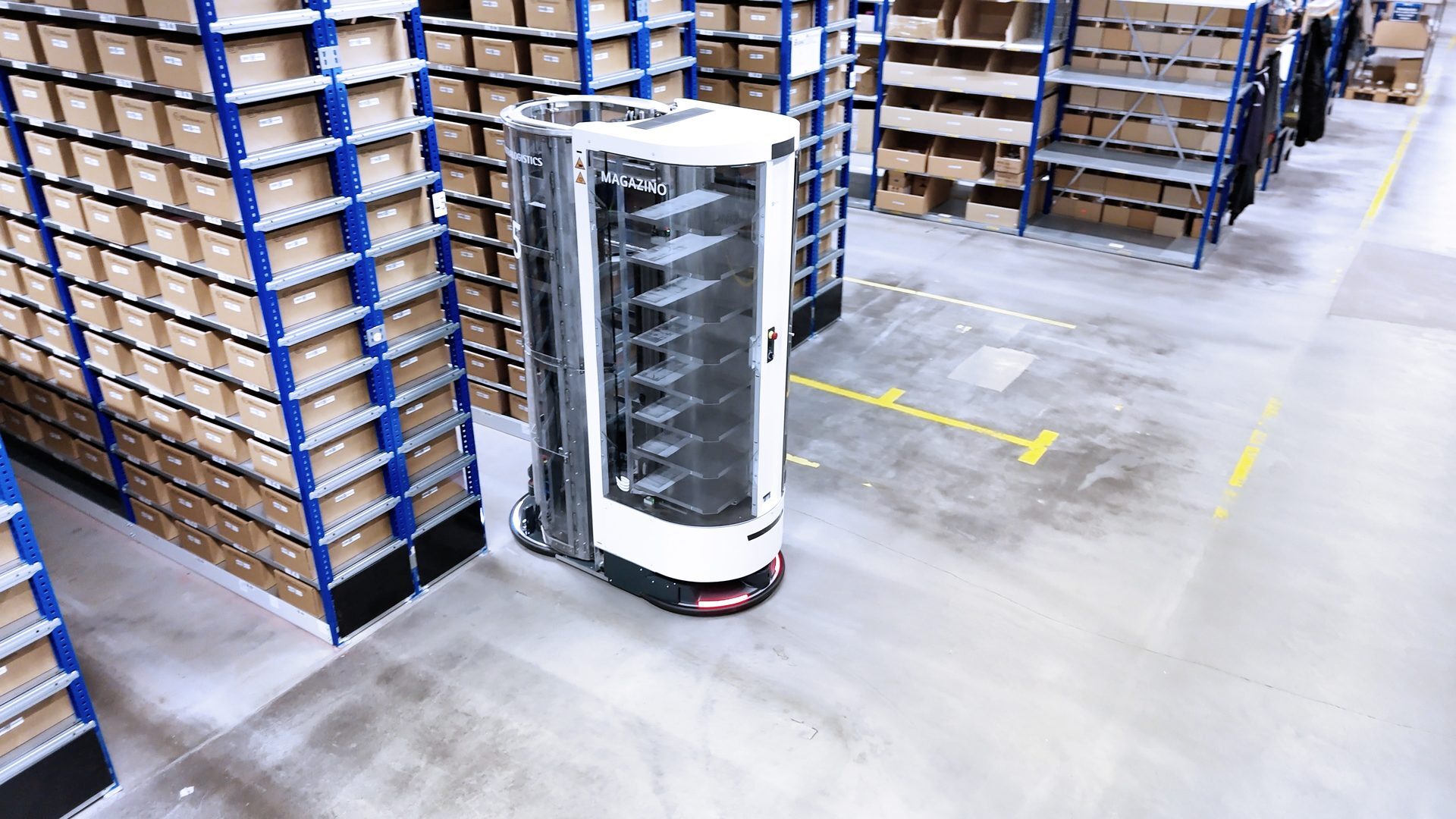
Single NEO:runner in open aisle - flexible entry point without shuttle infrastructure

Investment and Financing

A shuttle system has a lower entry point than a cube-based AS/RS system or a full mini-load system, but it still ties up significant capital - typically a multi-million investment, often in the tens of millions depending on size and throughput requirements. The investment has a typical payback of 3-5 years - assuming volume remains stable. If your business faces fluctuations or you have no CapEx budget, NEO’s pay-per-pick model shares the economic risk: less volume means lower costs. → Pay-per-pick details

NEO:runner fleet in existing shelf-based racking - no new racking infrastructure required

Racking Infrastructure and Building

Shuttle systems require a purpose-built racking structure with integrated rails, guide profiles, and lifts. This places demands on floor load capacity, ceiling height, and often building statics. In an existing warehouse with standard shelving, that means the existing racks are removed and replaced with the shuttle racking structure.

NEO works in your existing shelving - no disassembly, no new racking, no structural modifications. → Automate your warehouse
Further Decision Criteria

Modularity

Shuttle systems are modular within their racking structure: additional shuttles per level increase throughput without building new aisles. NEO is modular at a different level: the robots move freely through the entire warehouse. You can automate one aisle today and three tomorrow - and if you relocate, the robots move with you.

Implementation Speed

From decision to first automated pick, NEO takes 6-8 weeks. A shuttle system takes 12-36 months - somewhat faster than a crane-based mini-load, but still many times longer than a retrofit with NEO.

Throughput and Container Sizes

Shuttle systems are optimized for standardized containers and can achieve high throughput rates with multi-deep storage. NEO handles items up to 380 x 270 x 140 mm and 5 kg - for moderate to mid-range volumes in e-commerce, spare parts, and 3PL operations, that covers the majority of use cases.

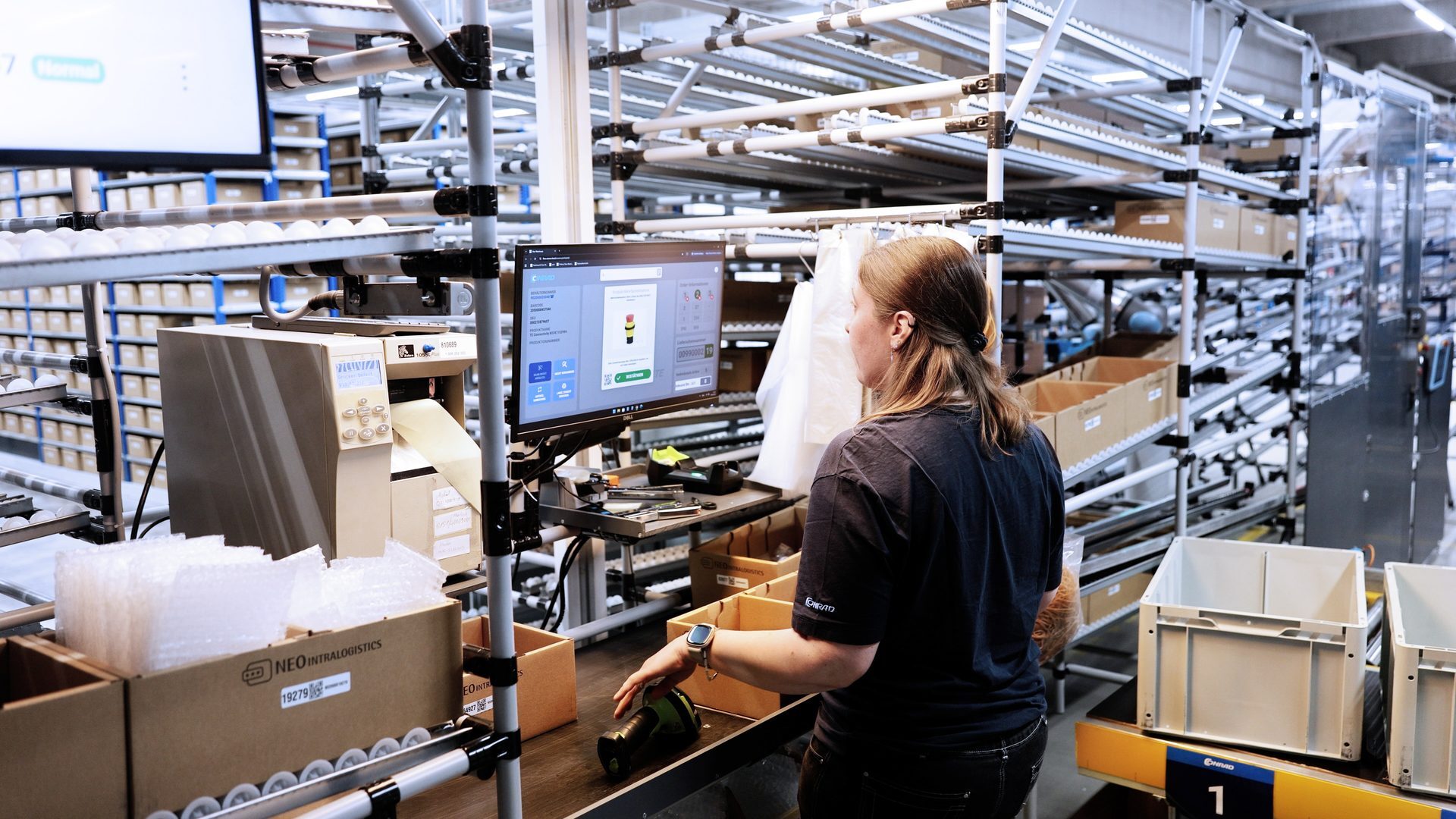
Operator at NEO:pickstation - flexible entry point into automation

The Hybrid Path

Some companies use NEO as their entry point into automation - and invest in a shuttle system later when volume and business case align. NEO ties up no capital and builds operational experience with automated picking. The pay-per-pick data from live operations simultaneously provides the reliable basis for a future shuttle investment decision.

Typical NEO Use Cases

Mid-Market Companies

Achieve automation without a multi-million investment.

3PL Operators

Serve changing clients and fluctuating volumes with flexibility.

Companies with Leased Warehouses

No structural modifications possible - NEO works within existing infrastructure without shuttle racking.

Multi-Site Operations

Robots are relocatable - no dedicated shuttle infrastructure required per site.

Pilot-First Companies

Test first, then scale - a NEO pilot ties up zero capital.

Results at a Glance

6-8weeks
Time-to-value
0EUR
CapEx investment
12-36months
Shuttle lead time
1station
Minimum start

FAQ

Is NEO a replacement for a shuttle system?

NEO and shuttle systems are different automation architectures for different starting situations. A shuttle system is a dedicated high-performance solution with proprietary racking for standardized containers. NEO automates existing shelf-based warehouses without construction and without investment. If you cannot or do not want to build a new racking system, NEO is the practical solution.

Which is cheaper - NEO or a shuttle system?

That depends on your volume and time horizon. At stable high volume over 3-5 years, a shuttle system can achieve lower cost per pick. NEO has no upfront investment and no minimum term - economic returns start from day one. For existing warehouses with moderate volume or fluctuating demand, NEO is the more cost-effective option in most cases.

Can NEO match the throughput of a shuttle system?

A shuttle system with multiple vehicles per level and multi-deep storage achieves higher peak throughput than a NEO installation. NEO scales through additional robots and stations but is optimized for moderate to mid-range throughput. For requirements above 100,000 picks per day, you should evaluate a shuttle system or another AS/RS solution.

Can I retrofit my existing shelving with shuttles?

No. Shuttle systems require purpose-built racking with integrated rails and guide profiles. Standard shelf-based racking is not compatible. Switching to a shuttle system means removing your existing shelves, installing new shuttle racking, and building out lifts and conveyors. NEO is the only automation solution that uses your existing shelving directly.

How fast is NEO ready compared to a shuttle system?

NEO goes live in 6-8 weeks - without new racking construction, without rail installation, without conveyors. A shuttle system takes 12-36 months from planning to commissioning. If you need automation on a short timeline, NEO is the only realistic option.

How does NEO handle peak season compared to a shuttle system?

This is where NEO has a structural advantage through collaborative picking. A shuttle system’s throughput is fixed by the installed number of shuttles and lifts - adding capacity for seasonal peaks means buying more hardware, integration work, and partial downtime, which is rarely viable for short-lived spikes. With NEO, robots and human pickers operate in the same picking cycle. You size the robot fleet for average load and add people alongside the robots when demand spikes. No new infrastructure to build, no separate manual operation to staff up.

What is the difference between a shuttle system and a mini-load AS/RS?

Both belong to the AS/RS family. A mini-load AS/RS (AKL) uses stacker cranes that serve an entire aisle. A shuttle system deploys independent vehicles per racking level, connected by lifts. Shuttles are more modular (more vehicles = more throughput per level) and often faster for multi-deep storage. Both require dedicated racking infrastructure and are not compatible with standard shelving.

Request a Fit-Check

Deciding between automating your existing shelving or investing in a shuttle system? In a 30-minute call, we assess your infrastructure, item spectrum, and investment framework - honestly and vendor-independently.

Request a Fit-Check