Peak season exposes every weakness in your warehouse - here is how to fix it
Black Friday 2025 broke e-commerce records again. But behind the sales numbers, warehouse teams were drowning: 3x order volumes, skeleton crews working double shifts, and returns already piling up before the last orders shipped. If your warehouse automation peak season strategy is "hire temps and hope," you are leaving money and customer loyalty on the table.
Every year, the same pattern repeats. Order volumes spike 200-400% in a compressed window. Warehouses that run smoothly at baseline volume suddenly face picking bottlenecks, shipping delays, and error rates that climb as exhausted teams push through overtime. The labor shortage that is already squeezing warehouse operations year-round becomes acute during peaks.
And the problem is getting worse, not better.
The real cost of peak season failure
Most warehouse operators know peak season is painful. What they underestimate is the compounding cost:
Picking bottlenecks multiply errors
When manual picking teams are pushed beyond capacity, error rates climb. A warehouse running at 99.5% accuracy during normal periods can drop to 97-98% during peaks - that translates to thousands of mis-picks across a Black Friday weekend. Each error generates a return, a re-ship, and a disappointed customer.
Temporary labor is expensive and slow
The standard response - hiring temporary workers - sounds logical but delivers diminishing returns. Temp workers need training (which eats into the very window they are hired for), make more errors, and often leave before the returns processing phase begins. Temporary warehouse workers typically need several weeks to reach the productivity levels of permanent staff, often operating well below full capacity during the initial onboarding period.
Returns create a second peak
The post-peak returns wave hits just as teams are recovering. In Germany, nearly one in four e-commerce parcels is returned, according to University of Bamberg research. In fashion, return rates are higher still. Average transport and handling cost is EUR 2.85 per returned item. For a mid-size e-commerce operation shipping 50,000 orders during Black Friday week, that is 12,000+ returns generating roughly EUR 34,000 in direct transport and handling cost before reinspection and restocking.
Source: University of Bamberg, "Deutschland ist Retouren-Europameister" (2022)
Service level failures have long-term consequences
Late deliveries during peak season do not just cost one sale - they cost the customer. An Ipsos 2022 e-commerce study found that 85% of online shoppers would stop ordering from a retailer after a poor delivery experience. During high-stakes shopping events like Black Friday and Christmas, that risk is amplified.
Why traditional automation does not solve the peak season problem
Some warehouse operators look at traditional automation - shuttle systems, AS/RS, or cube-based storage - as the answer to peak season variability. But these systems have a fundamental limitation: they are designed for steady-state throughput, not demand spikes.
A shuttle system costing EUR 3-10M with a 3-5 year payback is sized for average volume. It cannot elastically scale for a 3x surge. Adding capacity means adding physical infrastructure - more shuttles, more racking, more conveyors - which requires construction, capital, and 12-18 months of implementation time. By the time the expansion is operational, the next peak has already passed.
The same applies to AS/RS (EUR 2-8M, 4-7 year payback) and cube-based systems (EUR 1.5-6M, 2-4 year payback). These architectures are powerful for high-volume, steady-state operations, but they are the wrong tool for the variability problem that peak season represents.
How NEO solves the peak season warehouse challenge
NEO's approach to warehouse automation peak season readiness is fundamentally different because the system is designed for flexibility, not just throughput.
Elastic capacity without construction
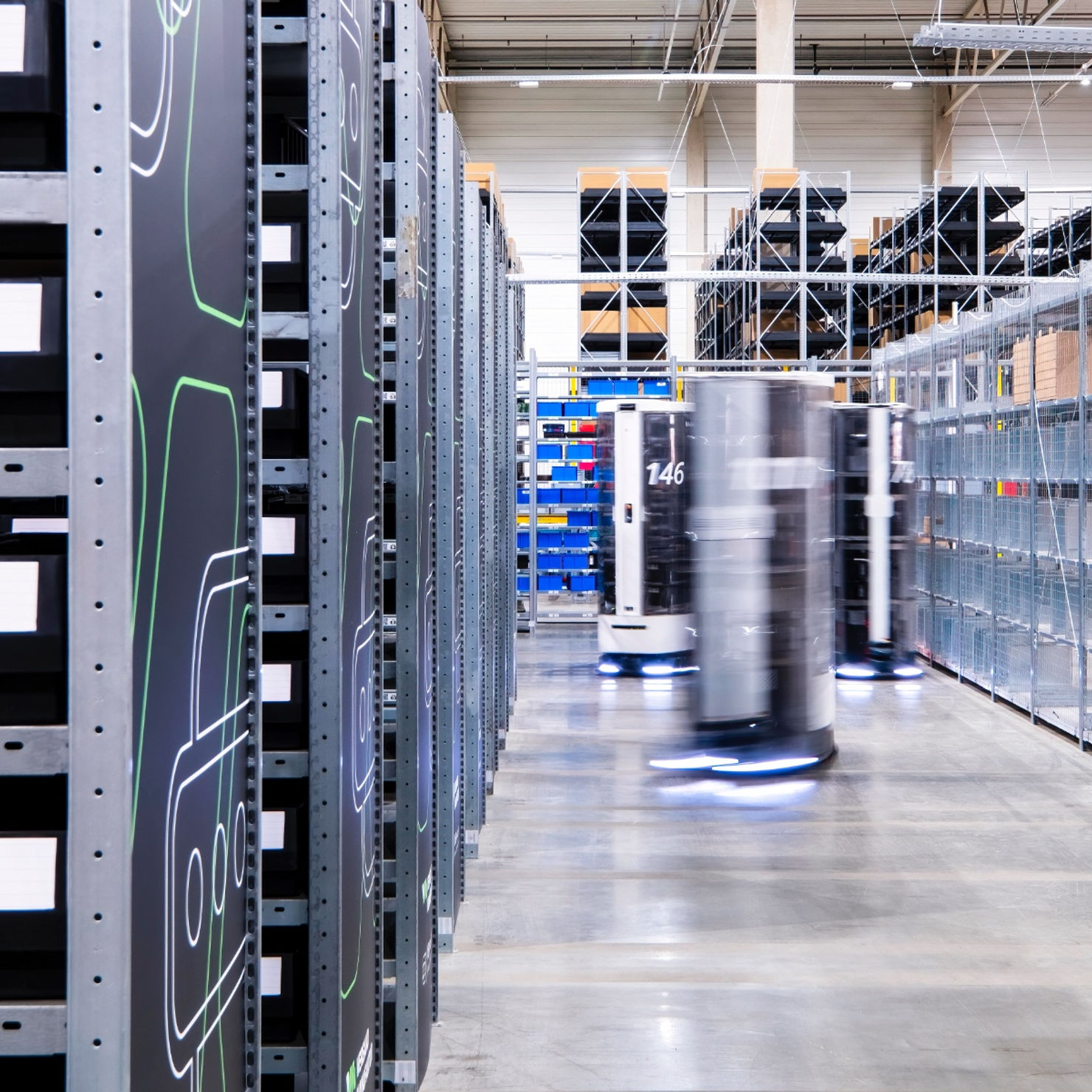
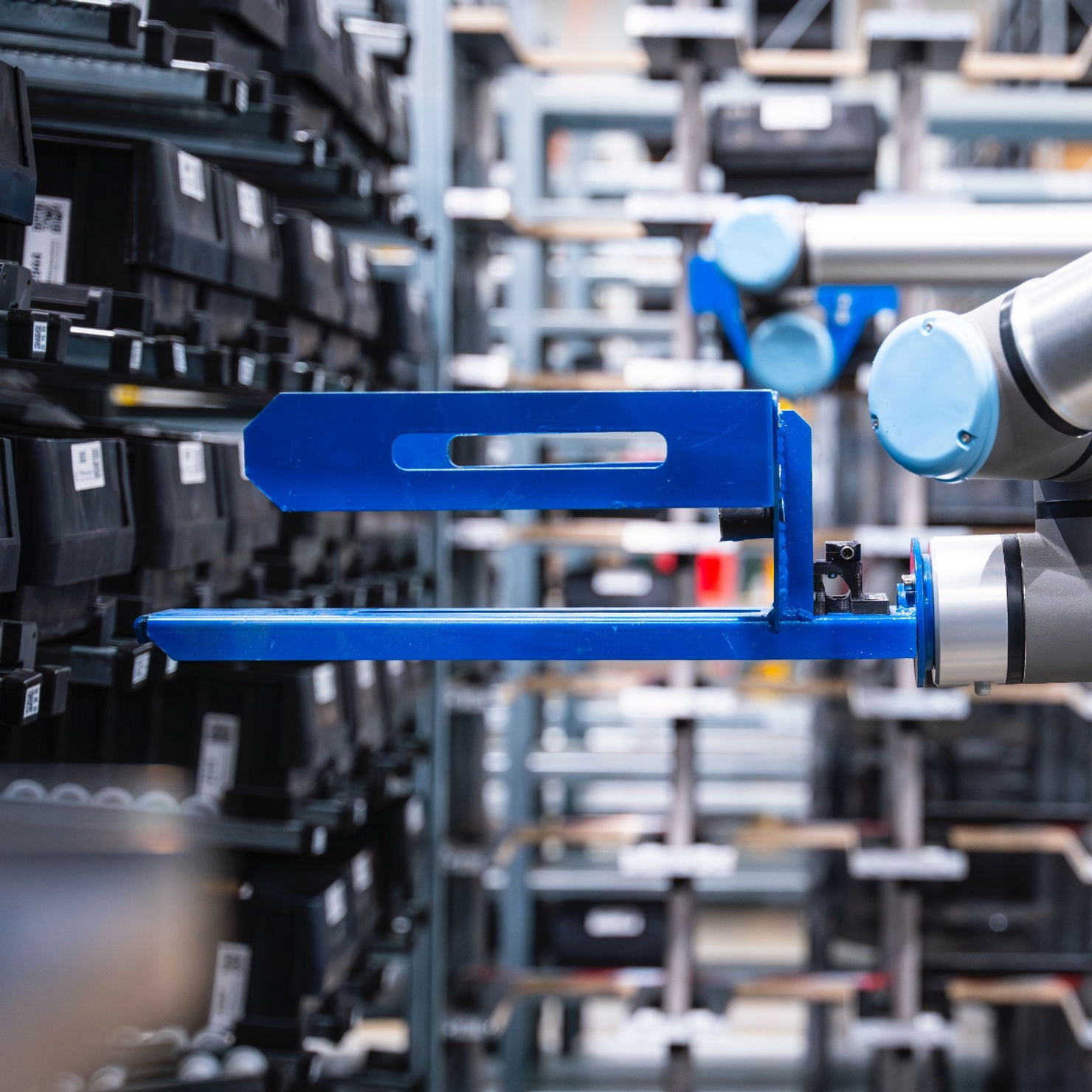
NEO's AMR robots operate within existing shelf-based (Fachbodenregal) warehouses - no racking modifications, no conveyor installation, no construction. The NEO:os platform coordinates the robot fleet dynamically, which means capacity can be adjusted by adding or relocating robots rather than building new infrastructure.
This is the only automation architecture that scales for peak season without requiring months of planning and capital investment.
Scale up in weeks, not months
Because NEO deploys into existing facilities in 6-8 weeks, companies can add automation capacity ahead of peak season on a realistic timeline. Compare that to 12-18 months for traditional systems - you would need to start planning your 2027 Black Friday automation in early 2026.
Pay-per-pick eliminates peak season CapEx risk
NEO's pay-per-pick model means you pay for actual picks completed, not for installed hardware. During peak season, costs scale with volume. During quieter periods, costs scale down. There is no EUR 5M capital commitment sitting idle during off-peak months.
This is especially relevant for e-commerce fulfillment operations where demand variability is the core business challenge, not an edge case.
70% less picking labor dependency
NEO reduces manual picking labor by up to 70%. During peak season, that means the gap between your available workforce and your required workforce shrinks dramatically. Instead of scrambling to hire 50 temporary workers, you might need 15 - and the robots handle the rest at consistent speed and accuracy regardless of the clock or the calendar.
Faster returns processing
Returns processing is where peak season costs compound. NEO automates both storage and retrieval of returned items, making them available for resale up to 2.5x faster than manual processes. That means returned inventory generates revenue again sooner, reducing the financial impact of the post-peak returns wave. Learn more about automating returns.
What NEO looks like during peak season
A major 3PL fulfillment operator partnered with NEO to address exactly this challenge - scaling fulfillment capacity to handle demand variability without proportional increases in labor or infrastructure. The ability to flex capacity up during peaks and down during normal periods was a key factor in their decision, enabled by NEO's pay-per-pick commercial model.
Building your peak season automation strategy
The best time to prepare for peak season is not October - it is now. Here is a practical timeline:
- Assessment (2-3 weeks): Evaluate your current warehouse layout, WMS, and peak season performance data. Contact NEO for a demo to discuss your specific operation.
- Pilot planning (2-3 weeks): Define pilot scope - which zones, which SKU categories, which picking processes to automate first.
- Deployment (6-8 weeks): NEO deploys into your existing shelving infrastructure with minimal disruption to ongoing operations.
- Optimization (ongoing): Tune the system based on real performance data, then scale ahead of the next peak.
With a 6-8 week deployment timeline, companies that start planning in August can be automated before Black Friday.
Frequently asked questions
Can NEO be deployed in time for the next peak season?
Yes. NEO deploys into existing shelf-based warehouses in 6-8 weeks. If you begin the planning process 3-4 months before your peak season, you can have the system operational and optimized before the first surge.
How does pay-per-pick work during peak season?
You pay for each pick the robots complete. During peak season, your pick volume increases and so does the cost - but proportionally. There is no upfront capital investment, and costs scale back down during quieter periods. This aligns your automation cost directly with your revenue.
What happens if we need more capacity than planned?
NEO's architecture allows additional robots to be deployed without infrastructure changes. Because the system runs on existing shelving, scaling is a matter of adding robots to the fleet - not building new racking or installing conveyors.
Does NEO handle both picking and returns during peak season?
Yes. NEO automates storage, retrieval, and returns processing. The same robot fleet that handles outbound picking during the peak also processes inbound returns during the post-peak phase, improving storage density by up to 2.5x and reducing returns processing labor by up to 70%.
How does NEO compare to hiring temporary workers for peak season?
Temporary workers typically operate at 50-60% productivity during their first two weeks and require training time that cuts into the peak window. NEO's robots operate at consistent speed and accuracy from day one. The combination of reduced temp labor needs, lower error rates, and faster returns processing typically delivers a stronger peak season ROI than a temporary staffing strategy alone.
Do not let next peak season catch your warehouse off guard. Book a demo to see how NEO can scale your picking capacity without scaling your headcount.