Why IT integration is the hardest part of warehouse automation - and how to fix it
You have budget approval. The business case is clear. But then your IT team reviews the integration requirements - and the project stalls. Legacy WMS platforms, proprietary data formats, and security reviews turn a 3-month automation timeline into a 12-month IT project. Sound familiar?
For most warehouse operators, the physical side of automation gets all the attention: robots, conveyors, racking. But the reality is that warehouse automation IT integration is where projects fail, stall, or blow past budget. According to industry integrators, installation and integration processes account for 20-40% of total implementation cost in traditional automation projects - and an even larger share of delays.
This is especially painful for companies running legacy warehouse management systems that were never designed to communicate with modern robotics platforms.
The four IT integration challenges that kill automation projects
1. Legacy system compatibility
Most warehouses run WMS platforms that are 10-20 years old. These systems use proprietary APIs, batch-processing logic, and rigid data schemas that do not support real-time communication with autonomous mobile robots (AMRs). Traditional automation vendors often require a full WMS upgrade or expensive middleware layer before a single robot can move.
For context, traditional automated storage and retrieval systems (AS/RS) or shuttle systems typically require 12-18 months of implementation time, with a significant portion devoted to IT integration and system customization.
2. Data format and synchronization failures
Warehouse automation IT integration demands real-time data exchange between the WMS, the robot fleet, inventory databases, and order management systems. When these systems use different data formats, field mappings, or communication protocols, synchronization breaks down. The result: phantom inventory, missed picks, and order errors that erode the business case.
3. Scalability dead ends
Many legacy IT architectures are monolithic - they work at current volume but cannot scale. When you add automation, you also add data throughput requirements that the existing infrastructure cannot handle. Companies that deploy traditional automation (CapEx range: shuttle systems at EUR 3-10M, AS/RS at EUR 2-8M) often discover scaling limitations only after the hardware is installed.
4. Security and compliance barriers
Connecting an automation platform to your WMS means opening network pathways, granting API access, and potentially routing data through cloud services. For companies in regulated industries or those with strict IT governance, the security review alone can add 2-3 months to the timeline.
Why traditional automation makes IT integration harder
The reason WMS integration is so painful with conventional systems is architectural. Traditional automation - whether AS/RS, shuttle, or cube-based storage - requires deep, custom integration with the existing WMS. Every warehouse is different, every WMS version has quirks, and every integration becomes a bespoke software project.
This is compounded by the commercial model. When you are spending EUR 2-8M on an AS/RS with a 4-7 year payback period, or EUR 3-10M on a shuttle system with a 3-5 year payback, you cannot afford integration failures. The stakes are so high that IT teams become (rightly) conservative, adding review cycles and testing phases that extend the timeline further.
How NEO simplifies warehouse automation IT integration
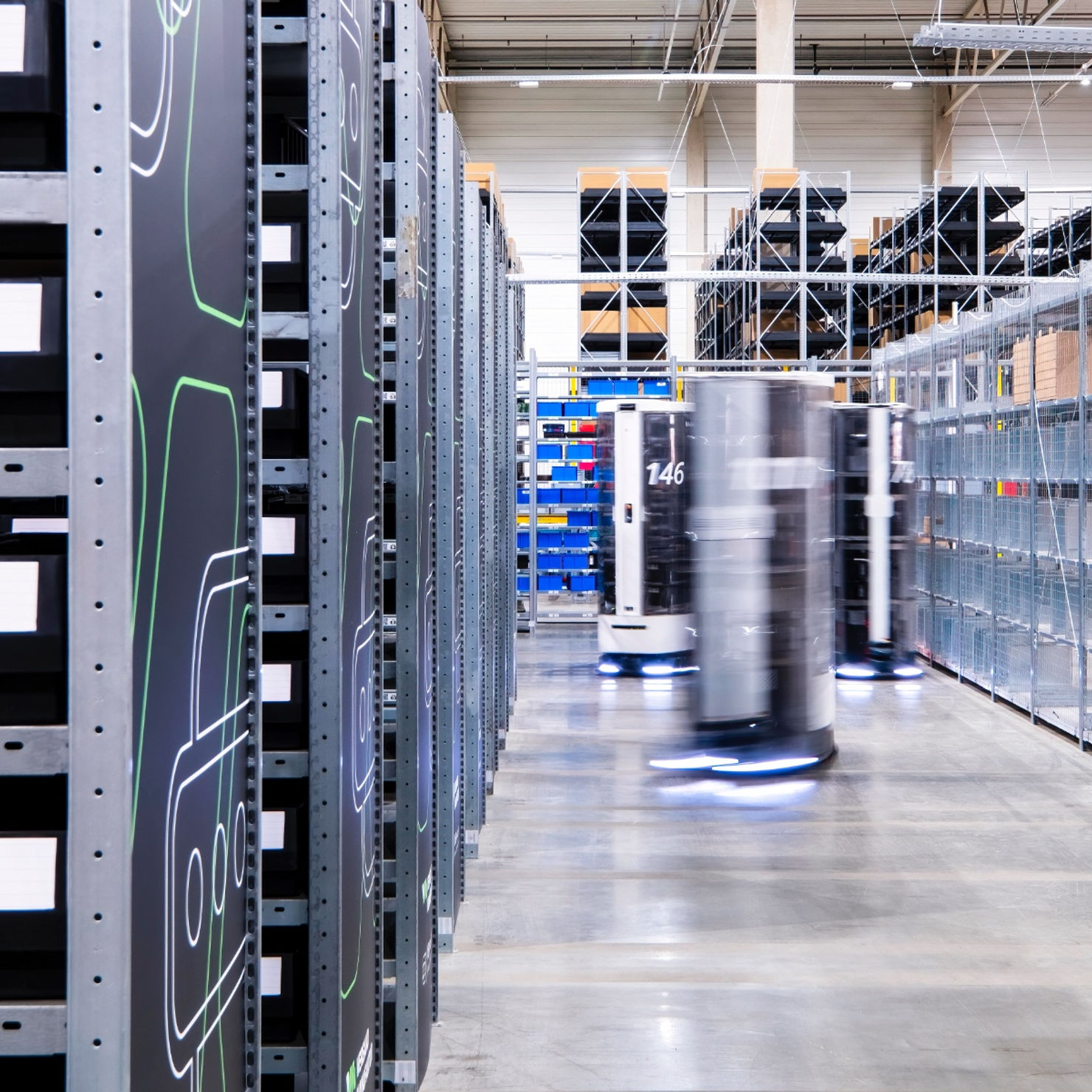
NEO takes a fundamentally different approach to WMS integration. The NEO:os platform is built on modern cloud architecture with open, standards-based interfaces - not proprietary protocols that require custom middleware.
10-15 IT development days, not 10-15 months
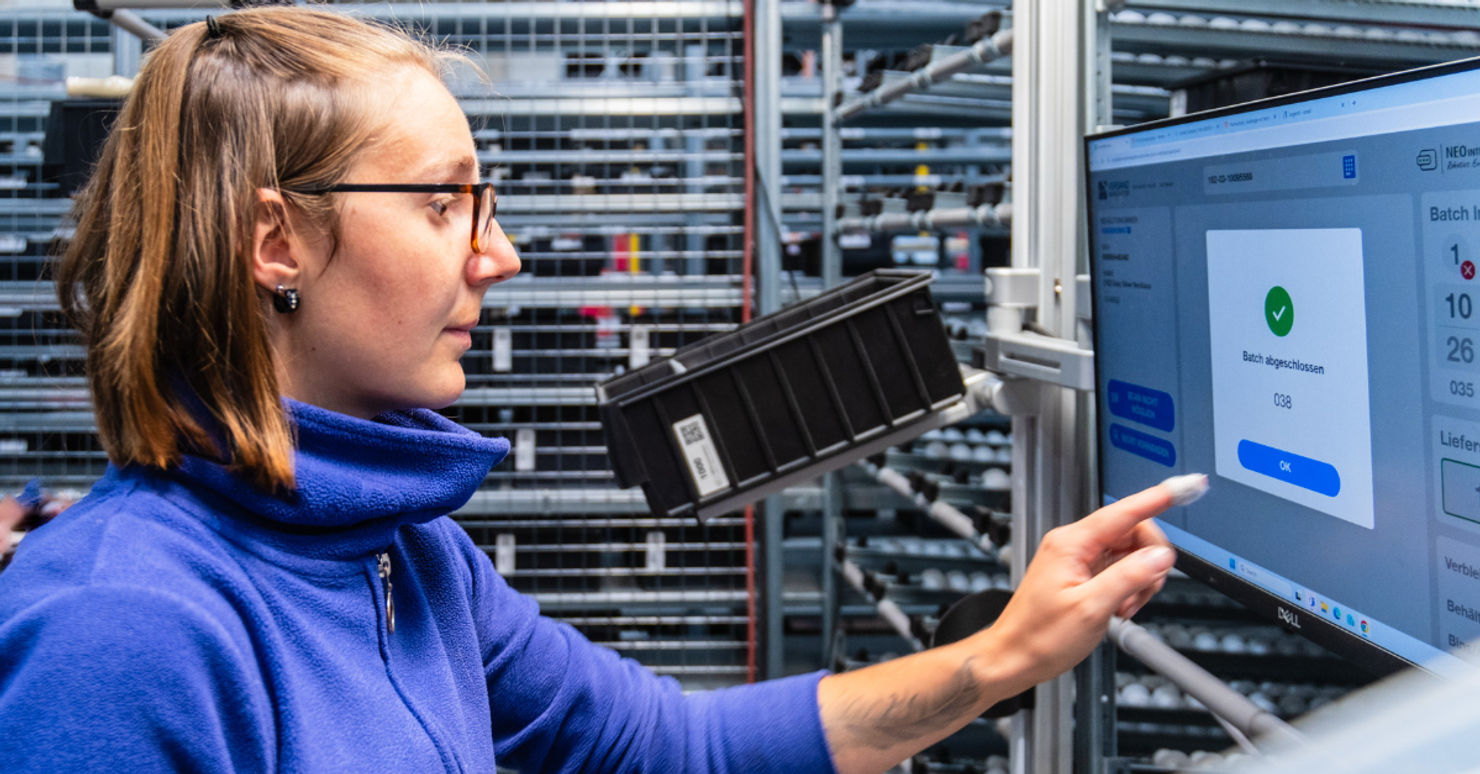
Typically, customers need only 10-15 IT development days for a full integration between their existing WMS and NEO:os. That is not a typo. While traditional automation projects consume months of IT resources for integration alone, NEO's open API architecture connects to existing systems with minimal custom development.
No WMS replacement required
NEO:os sits alongside your existing WMS - it does not replace it. The platform communicates through standard interfaces, which means your IT team does not need to re-architect the warehouse management layer. This is critical for companies running SAP EWM, Oracle WMS, or other enterprise platforms where a system swap would be a multi-year initiative.
Cloud-native security by design
Because NEO:os is built on modern cloud infrastructure, security is not an afterthought bolted onto legacy architecture. The platform meets enterprise security requirements out of the box, which accelerates the IT review process instead of stalling it.
Zero-downtime deployment
Unlike traditional automation that requires warehouse shutdowns for installation and integration testing, NEO deploys into existing shelf-based warehouses without construction or downtime. The system goes live in 6-8 weeks - including IT integration - compared to 12-18 months for conventional alternatives.
The commercial model removes IT risk
NEO's pay-per-pick model eliminates the financial risk that makes IT teams cautious. When there is no EUR 5M capital commitment on the line, the cost of a minor integration adjustment is manageable - not catastrophic. Companies pay only for completed picks, which means the automation delivers value from day one rather than after a 4-7 year payback cycle.
This also changes the pilot dynamic. With NEO, companies can start with a small deployment, validate the IT integration in a live environment, and scale only after the connection is proven. NEO customers have followed exactly this approach - starting with a pilot and expanding as integration confidence grew.
Real-world proof: what IT integration looks like with NEO
The difference becomes tangible when you compare timelines:
| Factor | Traditional automation | NEO |
|---|---|---|
| IT integration effort | 3-6 months | 10-15 dev days |
| WMS replacement needed | Often yes | No |
| Implementation timeline | 12-18 months | 6-8 weeks |
| CapEx commitment | EUR 2-10M+ | EUR 0 (pay-per-pick) |
| Payback period | 3-7 years | 1-2 years |
| Go-live risk | High (big-bang) | Low (pilot-first) |
Frequently asked questions
Does NEO require replacing our existing WMS?
No. NEO:os integrates alongside your current warehouse management system through open, standards-based APIs. Whether you run SAP EWM, Oracle WMS, or a custom solution, NEO connects without requiring a system migration.
How long does IT integration with NEO actually take?
Most customers complete the full WMS integration in 10-15 IT development days. This covers API configuration, data mapping, and testing. The entire deployment - including physical setup and integration - is typically completed in 6-8 weeks.
What security standards does NEO:os meet?
NEO:os is built on modern cloud infrastructure with enterprise-grade security. The platform supports standard authentication protocols, encrypted data transfer, and role-based access control. Specific compliance requirements can be addressed during the pilot planning phase.
Can we start small and scale the integration later?
Yes. NEO's pilot-first approach means you can validate the IT integration with a limited deployment before expanding. Additional robots, zones, or warehouse locations can be added without re-integration, because the platform is designed for incremental scaling.
How does NEO handle integration with older, legacy WMS platforms?
NEO:os uses adapter layers and standard protocols to communicate with legacy systems. The 10-15 development day estimate already accounts for the additional mapping work that older platforms require. In practice, the age of the WMS has minimal impact on the integration timeline.
Ready to see how NEO integrates with your warehouse systems? Book a demo to discuss your IT landscape and get a realistic integration timeline for your operation.